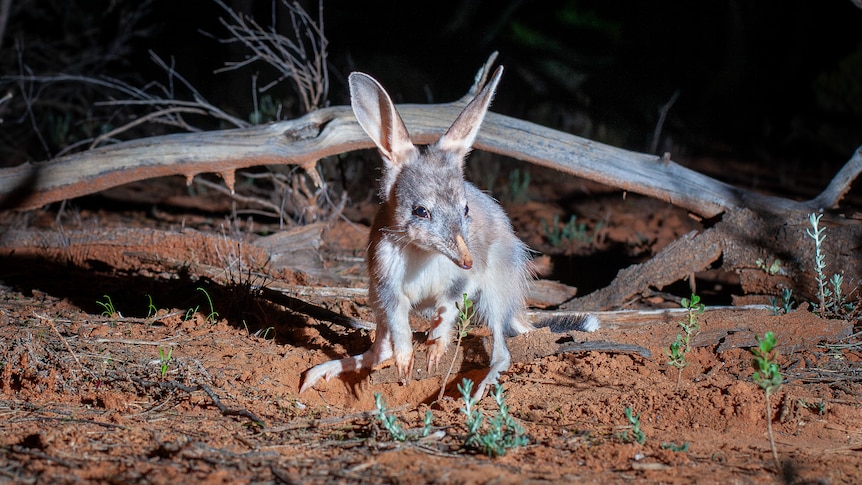

The population of greater bilbies in six Australian wildlife sanctuaries has surged fourfold since 2021, as revealed by a recent census conducted by the Australian Wildlife Conservancy (AWC).
This notable increase is partly attributed to the successful reintroduction of bilbies at the Newhaven Animal Sanctuary, located in the Tanami Desert of the Northern Territory. Despite the anticipated decline in numbers during the next drought, experts believe the population is resilient and able to recover.
The census highlighted a significant growth in greater bilbies across various conservation sites in Australia, particularly in the Northern Territory’s red center. The survey reported a total of 5,330 bilbies, commonly referred to as Easter bilbies, across the AWC’s sanctuaries in the Northern Territory, Western Australia, South Australia, and New South Wales.
According to the AWC, this increase marks the largest growth seen in recent years, with the current population being four times greater than it was in 2021. Historically, greater bilbies roamed over three-quarters of Australia, but their numbers drastically declined due to colonization and the introduction of invasive predators, as noted by the federal government.
In particular, the population at Newhaven has expanded from the initial 66 bilbies released in 2022 to 530 individuals. Additionally, Mallee Cliffs National Park in New South Wales reported a rise in bilby numbers to 1,840, significantly up from the 107 released between 2021 and 2023.
The greater bilbies at Newhaven inhabit a 9,450-hectare fenced area, free from predators, located 350 kilometers northwest of Alice Springs. This census marks the first population estimate for the sanctuary since the species was reintroduced.
Tim Henderson, a wildlife ecologist at Newhaven, explained that the fencing has effectively protected the bilbies from feral predators. Ongoing fire management, weed control, and regular fence inspections have also contributed to their success. Additionally, several years of above-average rainfall have enhanced food availability, allowing the bilbies to thrive.
“The abundance of resources and a landscape free from predation pressure from feral cats or foxes have really allowed them to flourish,” Dr. Henderson stated.
Furthermore, Dr. Henderson noted that the return of bilbies has had positive effects on the ecosystem at Newhaven, benefiting other native species as well. “Bilby diggings help aerate the soil, promoting seed growth,” he explained. This has resulted in a richer and more diverse vegetation landscape.
Other species, such as the burrowing bettong, have also benefited from the bilbies’ presence, utilizing the burrows created by the bilbies to establish communal living spaces. “It’s like transforming a single-storey apartment into a multi-storey complex filled with various entrances, supporting up to 15 or 20 individuals,” Dr. Henderson remarked.
Looking ahead, Dr. Henderson anticipates that the bilby population may stabilize or even decrease during the next drought in the region. However, he remains optimistic about their ability to rebound once the dry conditions subside. “When the next drought arrives, we expect some decline in numbers, but they should recover when the drought ends,” he concluded.