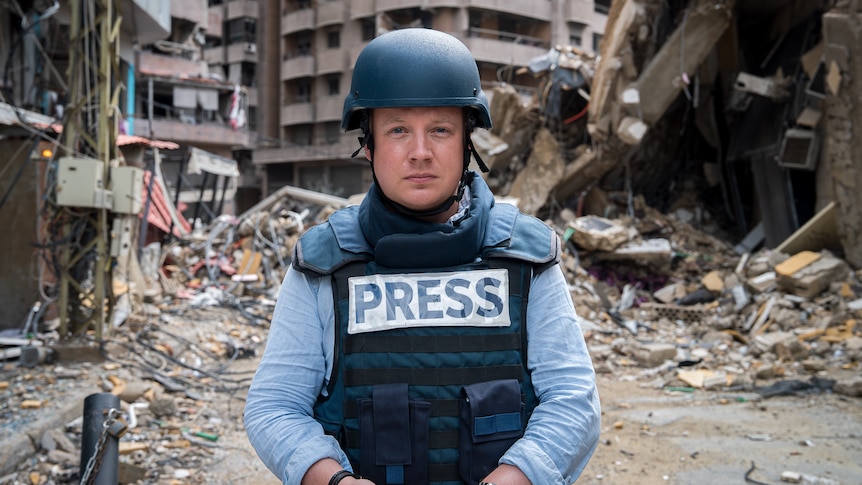

By the Middle East correspondent
As we enter the sixth week of the ongoing conflict, the repercussions are being felt both regionally and globally.
For the most current updates on the Middle East situation, please refer to our blog.
Here are the key developments for today:
Donald Trump has called for Iran to promptly reopen the Strait of Hormuz to all maritime traffic without any restrictions. In a vocally charged message on social media, he threatened to demolish bridges and power plants if the Iranian regime did not comply.
Footage circulating on social media reportedly depicts the remains of U.S. aircraft that were destroyed during a bold operation aimed at rescuing an American pilot who had been shot down in southern Iran. The F-15 fighter jet was targeted by Iranian forces last Friday, prompting a mission to recover its two crew members. One pilot was rescued hours post-attack, and Trump confirmed on Sunday that the second pilot had also been located.
Iran’s missile strikes across the region persist, with significant barrages aimed at Israel causing millions to seek shelter. Northern Israel has reported numerous missile attacks, resulting in injuries from debris from intercepted projectiles. The United Arab Emirates and Qatar have intercepted various missiles and drones, with debris from one incident landing on a petrochemical facility in the UAE, igniting a fire.
Israeli airstrikes targeting Hezbollah positions in Lebanon have continued, particularly in southern regions and Beirut. A residential building in the Jnah suburb, close to Lebanon’s Health Ministry, was struck. Local officials have frequently accused Israel of deliberately targeting healthcare facilities and personnel amid the conflict.
The death toll in Lebanon is rising sharply. By Sunday afternoon local time, authorities reported over 1,460 fatalities and more than 4,400 injuries, with a significant number of casualties being civilians, including children. The conflict has displaced roughly one-fifth of Lebanon’s population due to Hezbollah’s assaults on Israel in support of Iran.
The motivations behind Trump’s latest incendiary remarks on social media, filled with profanity, remain unclear. However, they may reflect his growing frustration as the conflict drags on without the decisive outcomes he anticipated.
Trump took to his platform on Tuesday, threatening substantial destruction of Iranian infrastructure if the nation did not lift its restrictions on shipping traffic through the Persian Gulf. He set another deadline, a date that has been marked and erased in prior weeks.
“Tuesday will be Power Plant Day and Bridge Day all in one for Iran,” he declared. “There will be nothing like it!!! Open the F***** Strait, you crazy bastards, or you’ll be living in Hell — JUST WATCH!” He concluded his dramatic message with a phrase of religious praise.
In response, Iran’s mission to the United Nations accused the organization of failing to hold the United States accountable for Trump’s threats, stating, “If the conscience of the United Nations were alive, it would not remain silent in the face of the overt and shameless threat by the war-mongering President of the United States to target civilian infrastructure.” They claimed Trump aims to drag the region into an interminable conflict and described his comments as incitement to terrorize civilians and indicative of potential war crimes.
Notably, Trump’s recent post did not mention any intention to destroy desalination plants in Iran, which had previously drawn allegations of potential war crimes due to their classification as civilian infrastructure.
Despite the aggressive rhetoric, no tangible results have emerged from this negotiating strategy. Trump has suggested that a resolution with Tehran could be achievable as soon as Monday, though history has shown that any deadlines set by the U.S. president are often rendered meaningless.
While the threat of severe military action looms, Iran has vowed to unleash chaos in the region if Trump’s threats are executed, echoing the ongoing uncertainty that has characterized this conflict.
As for Australia, the implications of limited fuel supplies may soon resonate with younger generations, who have not experienced such constraints firsthand, unlike those who lived through the oil crises of the 1970s.
For more updates on the situation in Iran and globally, please stay tuned throughout the day.
Thank you for your attention. I will provide further updates at the same time tomorrow.