
In the aftermath of a cyclone that recently impacted the Northern Territory, the streets of Katherine and Pine Creek, located south of Darwin, have become a tragic scene filled with deceased and distressed flying foxes. Wildlife rescuers are mobilizing efforts to rehabilitate the native fruit bat population, although plans to transfer some bats to specialized care in other states have been thwarted due to biosecurity concerns.
Veterinary experts are raising alarms about the potential long-term environmental effects of this unprecedented mass mortality event. However, officials from the Northern Territory government remain optimistic, asserting that the flying fox population is likely to rebound.
Following the devastation caused by ex-Tropical Cyclone Narelle, hundreds of juvenile flying foxes have been found abandoned and in dire condition. Many of these young bats were left to fend for themselves as their parents fled the area before the extreme weather struck.
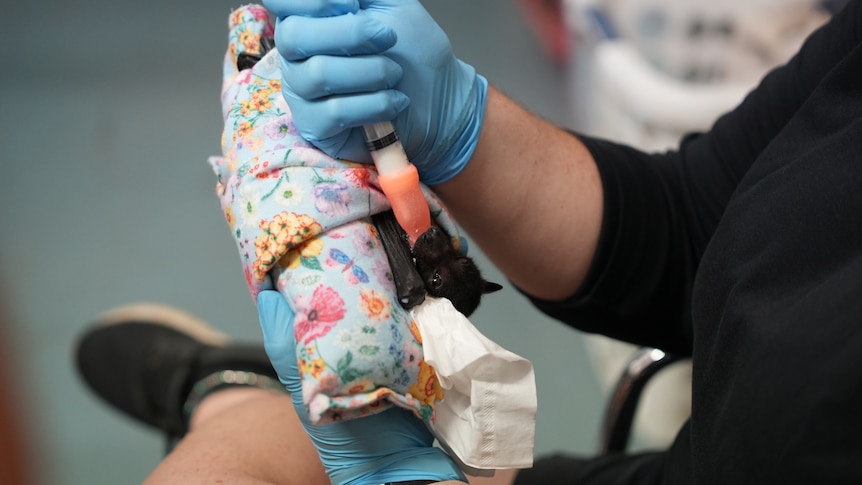
A dedicated team of over 20 wildlife workers and volunteers has been tirelessly engaged in rescue operations, working almost daily to save as many of the surviving pups as possible, spanning the distance between Darwin and small outback communities.
Kacey Farris, the practice manager at Wild North Veterinary Hospital, described the situation as “heart-wrenching,” noting the distressing sounds of the abandoned bats. “It’s devastating to hear them crying for their mothers,” she remarked. “We’ve witnessed countless fatalities, and it’s heartbreaking to see them fall around us while we attempt to rescue others.” This scale of loss, particularly among the young, is unprecedented in her experience.
Despite the hard work of the veterinary team, who are covering their own travel and care costs, efforts to receive assistance from NT Parks and Wildlife have not yielded positive results. Farris indicated that the Country Liberal Party government has declined to provide additional resources or funding, opting instead to collect a few carcasses for autopsy in an effort to investigate the cause of death.
The local veterinarians also sought permission to transfer some of the surviving bats for specialized care across state lines, with volunteers ready to receive them. However, this request was denied. A representative from NT Parks and Wildlife cited “potential animal welfare and biosecurity risks” that outweighed any benefits, given that the species is not classified as threatened and is considered abundant.
The chief veterinary officer, Rob Williams, is currently investigating the high mortality rates and has not dismissed the possibility of disease, including lyssavirus. Nonetheless, preliminary assessments suggest that starvation linked to recent weather events is the likely cause of death, which is viewed as a natural ecological occurrence that could happen intermittently. Experts believe that bat populations will recover as food becomes available again.
Wildlife veterinarian Rebecca Webster echoed these preliminary findings, stating that the adult bats likely fled the area prior to the cyclone, leaving their young behind. “The scale of this flying fox crisis is quite extraordinary for the Northern Territory,” she noted, emphasizing the ecological importance of these bats as key pollinators, crucial for forest regeneration.
Even with disease concerns potentially ruled out, Webster warned of the public health risks posed by the deceased bats, particularly if children or pets come into contact with them. Vicki Krause, director of the NT’s Centre for Disease Control, acknowledged the ecological role of bats but urged residents to maintain distance. “While Australia is free from rabies, bats can harbor various viruses, including the Australian bat lyssavirus, which has the potential to cause rabies-like infections,” she explained, noting that there have been only four reported cases of this disease in Australia, the most recent occurring in 2025.
In terms of rescue efforts, approximately 160 pups have been saved and transported to Darwin, yet only about half are expected to survive in the long term. Veteran wildlife carer Ally Syzac, among the many volunteers, has been taking in bats to care for them at home. “The pups require multiple feedings throughout the day, which makes mornings quite hectic,” she shared, balancing her responsibilities as a full-time worker and a caregiver.
These volunteers are committed to ensuring the pups receive proper nutrition to enhance their chances of eventual release. Some are working around the clock, with one local caretaker housing as many as 45 bats. “This is the largest natural event I’ve witnessed regarding flying foxes since I arrived in the Territory,” Syzac reflected. “Our passion for animals drives us, but the emotional toll of this situation is immense.”