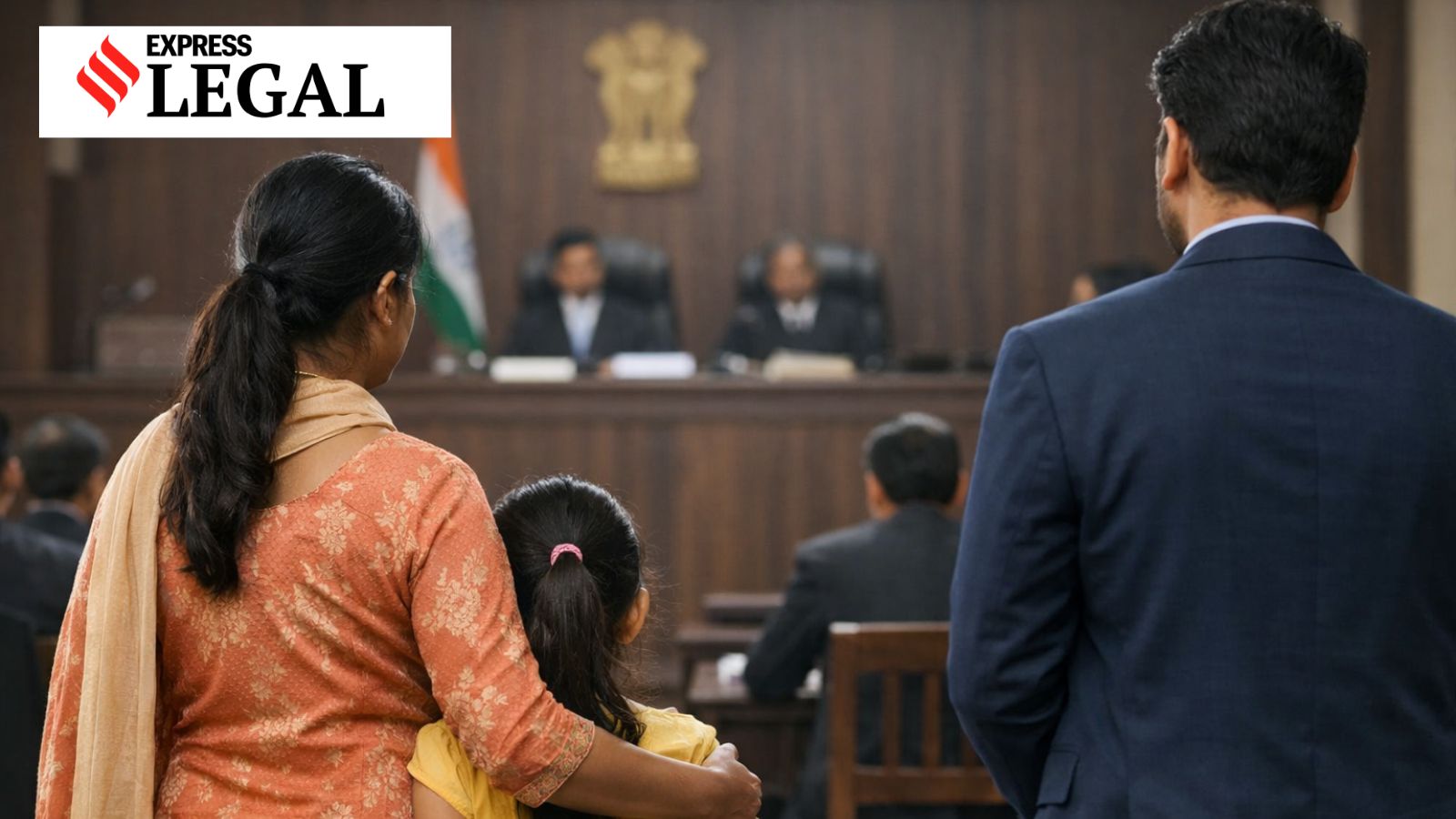

The Andhra Pradesh High Court recently made a significant ruling in a custody dispute, expressing concern over the language used in a UK family court order that it deemed to reflect a “colonial mindset” and foster a “culture of subordination.” As a result, the court refused to enforce the UK order granting custody of a minor daughter to her father residing in England and instead allowed the child to remain in India with her mother.
Justices Cheekati Manavendranath Roy and Tuhin Kumar Gedela stated that the revival of such a colonial legacy is unacceptable and cannot be imposed upon the autonomy of the Indian judiciary. They emphasized that the independence of Indian courts should be upheld without the influence of outdated colonial attitudes.
The case arose from a petition filed by a man from the UK who sought an order to produce his daughter before the court and to transfer custody to him. However, the court underscored the fact that the emotional and biological needs of a growing girl cannot be effectively met by a father living alone abroad. It highlighted the necessity for the mother’s involvement in the child’s life, especially regarding her development during puberty and other sensitive matters.
The court reiterated that child welfare is paramount, recognizing that children are not just the future but must also be safeguarded in the present. It asserted that children hold significant value in society and should be regarded as individuals deserving of immediate attention and care.
Furthermore, the court pointed out that the legal framework surrounding child custody is distinct, with the welfare of the child being the primary concern, rather than the nationality or citizenship of the parents. It maintained that Indian laws govern custody matters as long as the child resides in India, emphasizing the importance of a nurturing environment for children, particularly at a young age.
The bench noted that the custody of the child with her mother cannot be considered unlawful, especially given that her father had previously consented to the arrangement during his visit to India. The father had left the child in the care of her maternal grandparents, which was acknowledged by the court as a legitimate decision.
The court also recognized that the father had previously highlighted the importance of a family setting for the child, particularly with her grandparents, during proceedings in the UK family court. While the court acknowledged the father’s concern and affection for his child, it reaffirmed its role as the protector of the child’s welfare, which remains the foremost consideration in such cases.
Addressing the international elements of the case, the court noted that principles from the Hague Convention are relevant but must not supersede the essential focus on the child’s welfare, particularly as the child has developed strong emotional attachments in her current environment in India.
The couple married in Tirupati in November 2017. The father is a British citizen who lived in the UK for work, and the mother joined him in March 2018. Their daughter, born in the UK, is currently nearly six years old. The father claimed that marital disputes arose soon after their marriage, citing the mother’s alleged cruelty and harassment towards him and his family, which persisted despite attempts at reconciliation.
In 2023, the mother moved to Saudi Arabia for employment, leaving the daughter in the UK with the father. She returned to the marital home in November 2024, but the situation remained unchanged, leading the father to file for divorce in January 2025 in the UK family court, which is still pending.
During a visit to India, authorized by a UK court, the father had temporarily entrusted the child to her maternal grandparents. However, a dispute ensued when the child was not returned to him, prompting the father to file a habeas corpus petition with the Andhra Pradesh High Court, claiming illegal custody.
Richa Sahay serves as a Legal Correspondent for The Indian Express, specializing in clarifying the complexities of the Indian legal system. With her advanced legal education, she aims to bridge the gap between intricate court decisions and public comprehension, ensuring that readers are well-informed about the dynamic legal landscape.