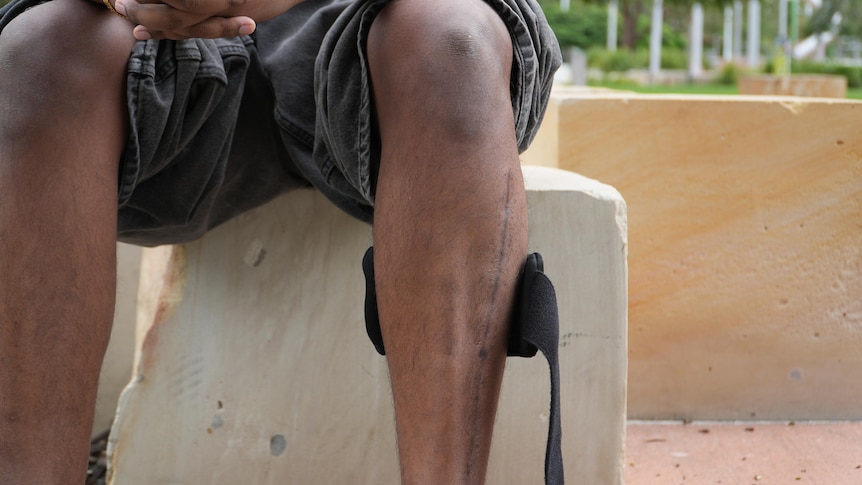

A man from Perth is contemplating legal action due to delays in the diagnosis and treatment of his compartment syndrome at two different hospitals in the area.
An internal review revealed that he was discharged from Armadale Health Service without a proper diagnosis and only returned to the hospital four days later.
The East Metropolitan Health Service acknowledged the situation has undergone a clinical review and expressed regret for the distress experienced by the patient.
The individual, who is a candidate for the Australian Navy, reported that he nearly lost his leg after the delay in addressing his critical medical condition.
Referred to as Jack*, he presented at the Armadale Health Service emergency department with severe pain in August of the previous year. His condition, known as compartment syndrome, arises when excessive pressure builds within a muscle, which can lead to permanent damage or even amputation if not treated promptly.
According to the internal investigation, the 21-year-old was sent home that night without a diagnosis and did not receive appropriate medical care until he returned four days later. It took an additional 24 hours to perform the necessary surgery at Royal Perth Hospital.
Due to these delays, Jack has been unable to proceed with his recruitment as a Navy submarine engineer and is now considering legal recourse.
On the day of his injury, Jack was late for a soccer match and stumbled while climbing stairs. He described arriving at the emergency department barely able to walk, feeling numbness and tingling in his toes along with an intense pressure sensation.
He reported that the nurse who assessed him seemed dismissive of his pain, making him feel as though he was exaggerating. The clinical incident investigation report indicated that his pain was rated as “10/10.”
The report noted that the medical staff did not properly follow guidelines for assessing and observing a patient’s pain level. Jack’s demeanor—described as respectful and reserved—may have led to an underestimation of the severity of his condition by the healthcare providers.
During his initial visit, Jack was neither seen by a doctor nor a physiotherapist. The report suggested that the management of his case might not have changed due to the rarity and atypical presentation of his condition.
Upon being discharged, he was advised to ice his leg and to consult a general practitioner if his symptoms did not improve within three to four days. The report posited that Jack’s strict adherence to this advice further delayed his return to the emergency department.
The review panel highlighted that “cultural factors” influenced how Jack understood the discharge instructions, noting that he comes from a background that holds medical professionals in high regard, often following their advice without question.
Unable to see his doctor over the weekend, Jack returned to the emergency department the following Tuesday with an urgent referral indicating he had compartment syndrome. The report stated that staff at Armadale Health Service faced significant challenges in facilitating his transfer to Royal Perth Hospital.
Delays in obtaining additional imaging further impeded his access to necessary specialist evaluation and treatment, as outlined by the SAC 1 review. Collectively, these issues contributed to the serious harm he experienced.
After undergoing two more surgeries, Jack had a significant portion of his calf muscle removed. He expressed that the situation could have been mitigated if staff had paid closer attention to his concerns and adhered to established protocols.
A spokesperson for East Metropolitan Health Service confirmed that a comprehensive clinical review of the case had been conducted and reiterated their apologies for the distress caused to Jack.
The spokesperson stated, “East Metropolitan Health Service is dedicated to implementing the findings from clinical reviews to ensure our hospitals enhance their services and provide excellent care to the community.”
Suresh Rajan has been assisting Jack’s family throughout the complaint process and has connected them with legal representation. He emphasized the necessity for every emergency department to have a patient advocate who understands the medical system and can communicate effectively with clinicians, especially when patients feel unheard.
Rajan has submitted a proposal to fund this initiative in the forthcoming state budget.
*Jack is a pseudonym used to protect the individual’s identity and avoid any stigma associated with his decision to speak out.