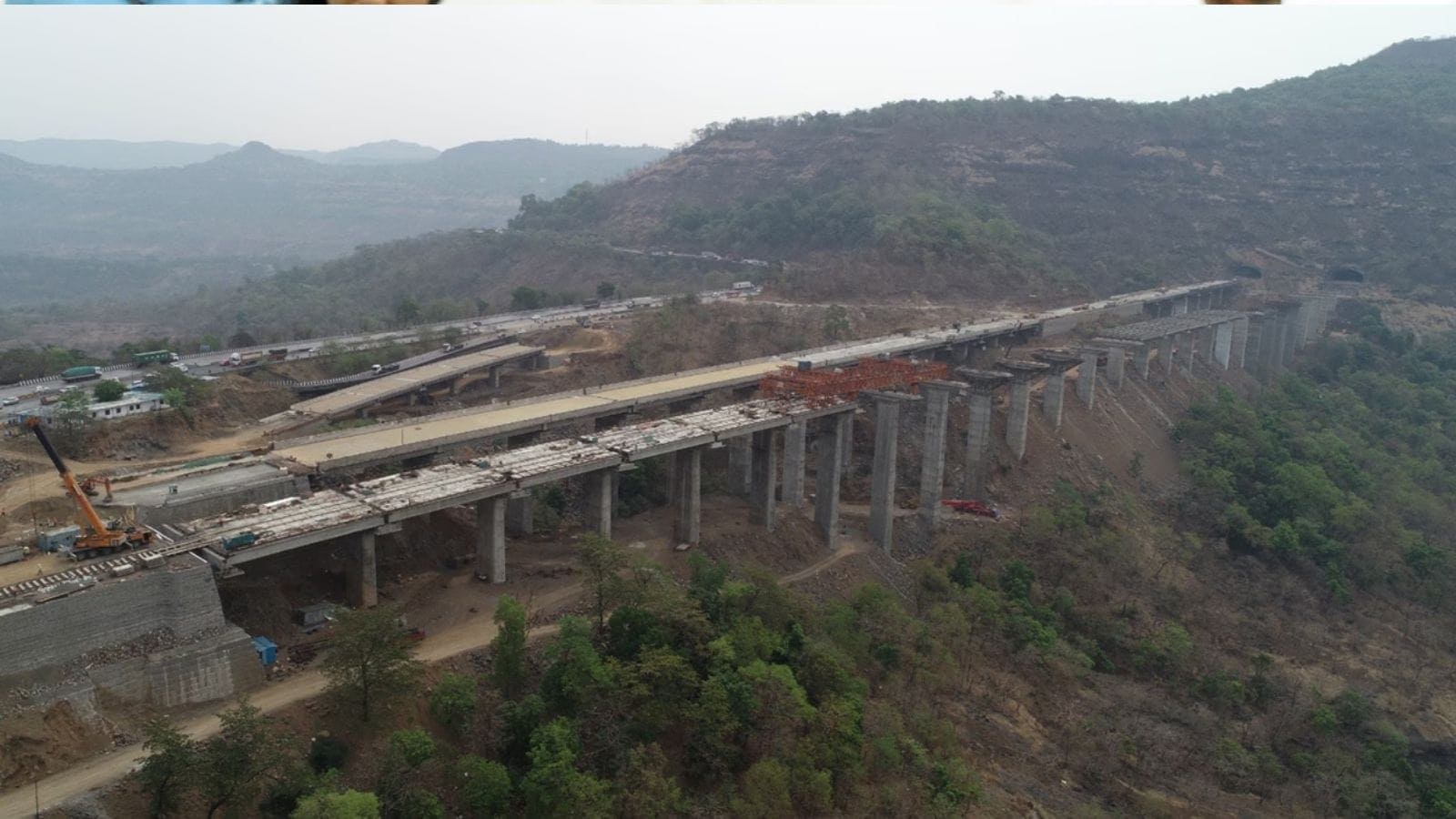

The Maharashtra State Road Development Corporation (MSRDC) announced on Tuesday that it has initiated load testing on the long-awaited segment of the Mumbai-Pune Expressway, which had been missing. Concurrently, the corporation is conducting regular inspections along the fully connected route, indicating that this significant infrastructure endeavor is now in its final operational phase ahead of the official opening.
Rajesh Patil, the Joint Managing Director of MSRDC, stated, “We are continuously inspecting the area using our evaluation vehicles. With the two segments now completely linked, vehicles can traverse the bridge in either direction.”
Patil confirmed that the two bridge decks have been successfully integrated, saying, “Both corridors are now connected.”
When questioned about the traffic management plan post-inauguration, Patil detailed a phased strategy. “During the initial three months, only light vehicles will be allowed. In the subsequent three months, heavy and passenger vehicles will be permitted. After monitoring the traffic patterns over the first six months, we will make further determinations regarding the entry of commercial vehicles,” he clarified.
In February, the Raigad highway traffic police indicated that vehicles transporting flammable materials such as petrol, diesel, LPG, CNG, and other chemicals would be prohibited from using the new link.
Officials emphasized, “According to guidelines from the Indian Road Congress (IRC), extensive tunnels are categorized as high-risk. In the event of a fire, the danger of suffocation is significant and could lead to disastrous outcomes. A similar incident in Japan resulted in fatalities due to suffocation. Ensuring passenger safety is our utmost priority.”
While the state government has suggested May 1, Maharashtra Day, as a possible opening date, MSRDC representatives noted that the final decision will be made by state authorities.
This project establishes a connection between Khopoli and Kusgaon, circumventing the convoluted and steep Khandala-Lonavala ghat section, which has historically been a major bottleneck on one of India’s busiest expressways. The distance between these two points is currently about 19.8 km; the new link reduces this distance by over 6 km, allowing commuters to save approximately 25 to 30 minutes on their journeys.
Implemented by MSRDC at an estimated cost of Rs 6,695 crore, the alignment begins at the Khopoli exit with a 900-meter viaduct bridge that stands approximately 60 meters above ground, leading into the first tunnel, which is 1.64 km long. This is followed by one of the project’s most impressive engineering feats: a 650-meter cable-stayed bridge spanning Tiger Valley, supported by two pylons that rise to 180 meters.
The valley floor is situated nearly 184 meters below. The pylons have been purposefully designed to reduce the number of supports needed, thereby enhancing both structural integrity and the stability of the surrounding landscape.
After crossing the bridge, vehicles enter the second tunnel, which is about 9 km long and leads directly to Kusgaon on the Pune side. The new link boasts four lanes, one more than the existing ghat section, which is expected to alleviate the longstanding congestion that has troubled this route for years.
Shubham Kurale is a journalist based in Pune, having studied journalism at the Ranade Institute. He primarily covers transportation topics and is interested in civic issues, sports, gig worker rights, environmental matters, and LGBTQ+ issues. You can follow him on X: @ShubhamKurale1.