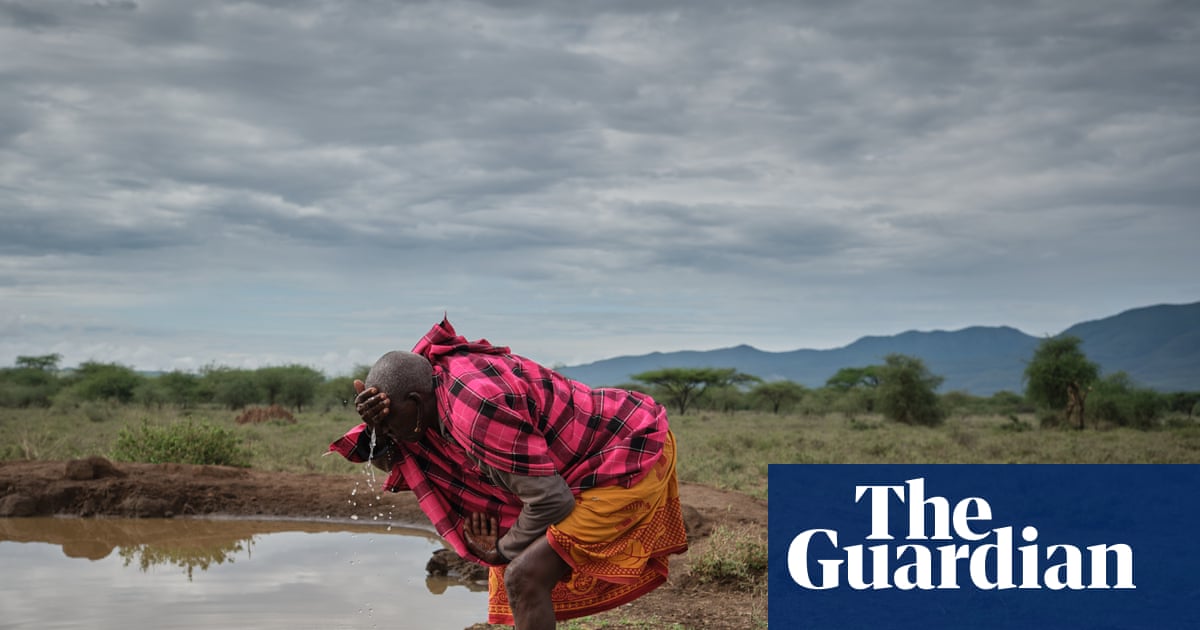

On a sweltering and parched day, the ground remains unexpectedly pliable. “We received our first rainfall yesterday after enduring four months of drought,” shares Abraham Kampalei, a Maasai elder. “All we can do now is hope for more rain.”
Kampalei, who has spent more than half a century in Oldonyonyokie, a small settlement located in Kajiado County, southern Kenya, has observed the gradual deterioration of local pastures. “I moved here for the plentiful grass for my livestock,” he recalls. “Now, there is nearly nothing left.”
Drought is a recurring challenge in Kenya, particularly affecting communities in the northern and northeastern arid regions. Each year, these areas face diminishing rainfall, resulting in livestock fatalities. The ramifications are profound: children leave school as families redirect funds toward food, and poverty can lead to displacement and early marriages.
With climate phenomena like La Niña and El Niño becoming more severe, the impact of drought is increasingly widespread. Kajiado, which has historically been less affected by drought than northern Kenya, is now experiencing livestock losses, dwindling pasture, and water shortages, marking an alarming shift in climate conditions.
According to Kenya’s National Drought Management Authority, ten counties, including Kajiado, are currently in a state of drought, with Kajiado being classified in the “alert” phase.
“This area has faced drought before, but the current severity is unprecedented, exacerbated by extreme heat, two factors that rarely coincide yet are now amplifying each other’s effects as temperatures rise,” explains Joyce Kimutai, a meteorologist in Kenya.
Kimutai attributes the unusually warm and dry conditions to La Niña, further aggravated by human activities. “The increasing heat levels are surpassing what humans can endure, driven by greenhouse gas emissions and fossil fuel-related warming, and we can anticipate even harsher conditions in southern Kenya,” she warns.
With his herding stick in hand, Kampalei reflects on the harsh realities of drought: people are forced to migrate in search of better conditions, livestock succumb to thirst, and educational institutions shut down. He notes that this year’s drought feels particularly prolonged and intense.
“Despite the rain we received yesterday, the drought continues, and conditions may worsen. My livestock have traveled far in search of grazing, and I’ve already lost ten cows along the way,” he laments.
Nearby, three young girls are washing clothes at an underground water tank fed by a rainwater harvesting system established by the Ministry of Water Development in Oldonyonyokie during the 1990s.
“We hadn’t visited this place in over a year; it was completely dry,” says 18-year-old Sian Diana.
A dead goat nearby highlights the urgency of the crisis caused by four consecutive failed rainy seasons in East Africa. This situation worsened following the inadequate short rains in the October to December 2025 season, leading to over 2 million people in Kenya facing increasing food insecurity, as reported by the World Health Organization.
Diana, who has just completed her studies at Noonkopir Secondary School in Kajiado, plans to pursue chemistry at Mount Kenya University. However, the drought has significantly hindered her aspirations. “We lost 22 cows this year,” she reveals. “I fear my family might consider marrying me off for the dowry. It’s frightening.”
Although child marriage is illegal in Kenya, statistics from Girls Not Brides show that 12.5% of girls marry before the age of 18, with 2.2% marrying before 15. In Kajiado, recurrent droughts are exacerbating economic pressures on families, increasing the likelihood of such marriages.
Nevertheless, attitudes towards child marriage in communities where it has been traditionally accepted are evolving. A UNICEF study from 2024 indicates that this practice is being reevaluated in light of changing social norms, particularly regarding access to education, which plays a vital role in prevention.
Due to water scarcity in Oldonyonyokie, Diana rides her donkey weekly to collect water from roadside drums refilled periodically by the General Service Unit, part of Kenya’s National Police Service, and Tata Chemicals, an Indian multinational corporation, as part of their community support initiatives.
About 30 kilometers to the north, in Olorgesailie, the air carries the scent of moist earth. When the initial light showers of the year arrived two weeks ago, Kakure Ole Kundu, a 70-year-old Maasai elder, eagerly called his sons to inform them, “You can come back now.”
They had departed months earlier with their animals to Narok in search of better grazing. “If there were no drought, they would be here, in the Olorgesailie pastures, but now they are barren,” he remarks, noting the loss of over 100 cows in the past two years.
Ole Kundu observes that the changing climate has transformed their way of life. “Maasai never used to take on casual jobs, but now we are compelled to: we herd livestock for others, construct fences, farm elsewhere, and even work as security guards in Nairobi… These shifts are a direct consequence of the drought.”
James Sankaire, who previously worked for Kenya’s National Drought Management Authority and retired three years ago, reflects on the changes he has witnessed. “Today, dry spells persist much longer than in the past. The contrast with three years ago is stark; areas that once flourished with grass are now barren terraces.”