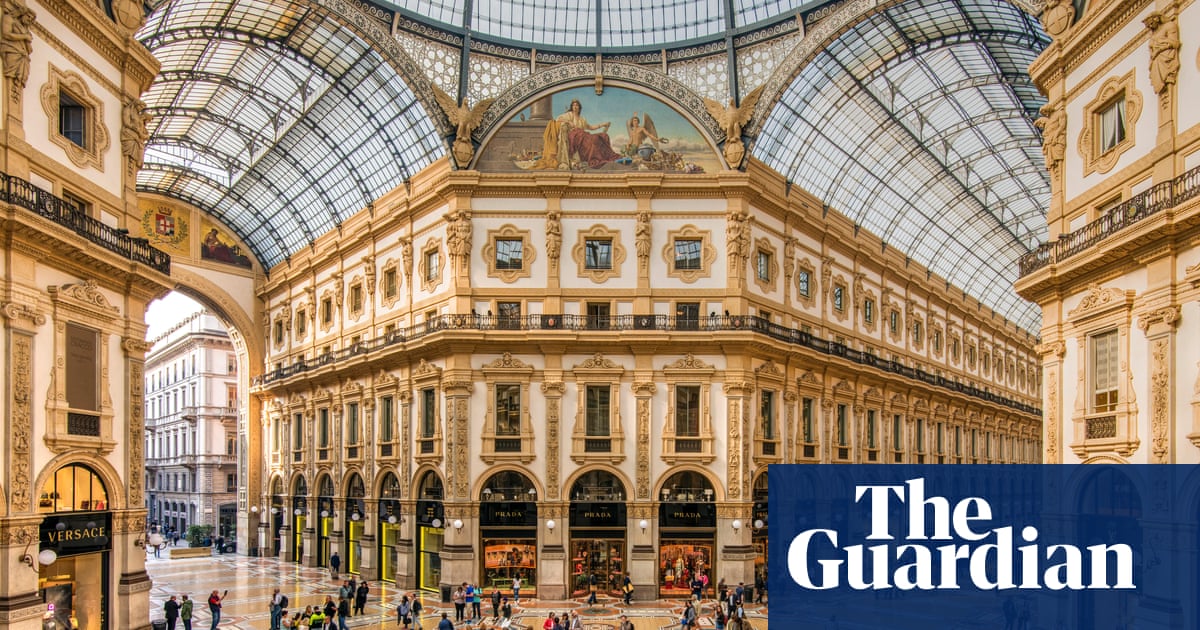

In recent weeks, Dubai emerged as a favored location for affluent Britons seeking relocation. The city has long been recognized for its tax-free income opportunities, offering a lifestyle filled with luxury hotels, fine dining, and upscale shopping experiences.
However, the current geopolitical tensions involving the United Arab Emirates and Iran are beginning to tarnish Dubai’s image as a sanctuary for the global elite, a perception heavily influenced by expatriate influencers. As a result, many wealthy UK nationals are now considering a return to Europe, with Milan, Italy’s financial hub, gaining significant attention.
“Italy presents compelling advantages: a flat tax and an excellent quality of life,” notes Armand Arton, a consultant who assists high-net-worth families with investment-based citizenship relocation. “Individuals leaving the UAE can easily envision themselves residing in cosmopolitan cities like Rome or Milan.”
Milan, already home to some of Europe’s wealthiest bankers, lawyers, and investors, is a logical choice for many. The Italian flat-tax policy allows foreign residents to pay a fixed annual rate of €300,000 (approximately £259,620) on their global income, a modest sum for the ultra-rich.
As more affluent individuals turn their sights towards Milan, the question arises: can the city become the new sanctuary for the ultra-wealthy?
The ongoing conflict in the Gulf has already triggered a migration of wealthy UK nationals, with many opting not to return to their home country. For numerous Europeans, Italy stands out as the most strategic choice. Unlike the UK’s stringent regulations, new Italian residents who have not been taxed in the country for at least nine of the last ten years are exempt from taxation on their foreign income, provided they pay the €300,000 flat fee. They will, however, be taxed on their Italian income and capital gains from investments within five years of choosing this tax option.
Marc Acheson, from Utmost Wealth Solutions, points out that Italy’s allure has increased as the UK has become less attractive for the wealthy. There is even informal talk in Milan referring to the Italian tax policy as “svuota Londra,” or “evacuate London.”
“Despite having a flat-tax system since 2017, initially set at €100,000, it did not draw a significant number of people,” he explains. “The real surge in interest came after the UK eliminated its non-dom regime, coinciding with Portugal tightening its tax laws.”
Roberto Bonomi, a partner at the law firm Withers, adds that Italy has shed its past reputation for political instability. Although Giorgia Meloni, Italy’s populist prime minister since 2022, initially took a far-right stance, she has since moderated her approach.
Estimates from Maisto e Associati, a law firm specializing in tax matters, suggest that around 5,000 individuals have enrolled in Italy’s flat-tax program to date. Initially, many of these applicants were Italians returning from London, according to Marco Cerrato, a partner at the firm.
Arton notes that a new wave of interest is emerging from the Gulf region. “Italy has a swift application process, making it particularly appealing to those leaving the area who wish to relocate to Europe while enjoying the benefits of the flat tax and a high quality of life.”
The influx of wealthy newcomers is already impacting property prices in Milan, which have surged by 38% over the past five years, according to research conducted by Knight Frank. The city has recently surpassed Venice as Italy’s most expensive locale, with an average cost of €5,171 per square meter as of November 2025, as reported by the Italian property portal Idealista. The price hikes are even more pronounced in highly sought-after neighborhoods like Sant’Ambrogio, Brera, San Marco, and the Cinque Vie, near the Duomo.
Giorgolo estimates that the number of international buyers in the market has increased by 30% to 40% compared to two years ago. “Previously, international buyers sought second homes in Milan or perhaps Lake Como, but now they are pursuing residency in Italy, looking for proximity to quality international schools and major airports.”
Additional tax incentives include the “Il rientro dei cervelli” (Return of the Brains) program, which allows new or returning residents who meet specific criteria to be taxed on only half of their income for five years, with some residents eligible for even greater reductions.
However, the key question remains whether there is a limit to Italy’s flat-tax regime, which has increased from €100,000 in 2017 to €200,000 in 2024, and now stands at €300,000 at the beginning of this year. “The Italian government has indicated that they wish to raise the flat tax to enhance the country’s development while avoiding unfair competition with other nations,” Bonomi concludes.