
The families of Dr. Naomi Mayers and Ann Weldon have granted permission for the publication of their names and images. Dr. Mayers, affectionately known as Aunty Nay, significantly influenced Aboriginal healthcare nationwide, establishing self-determination as a foundational model for care still employed by Aboriginal-controlled medical services, from the Kimberley region of Western Australia to urban Sydney.
The esteemed health advocate, activist, and original member of the singing group The Sapphires passed away at the age of 84 on Saturday. Born in 1941 at Erambie Mission near Cowra in New South Wales, Dr. Mayers immersed herself in the Aboriginal rights movements of the 1960s while in Melbourne, working with the Aborigines Advancement League.
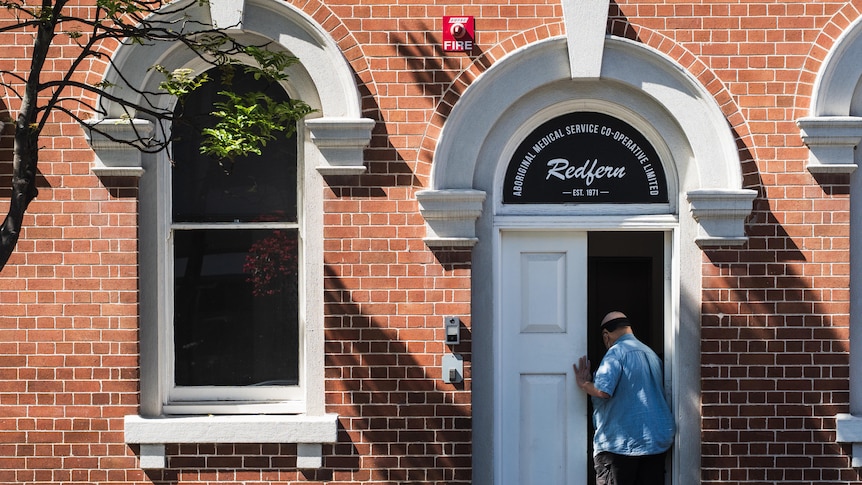
At just 18 years of age, she began her nursing career at the Royal Women’s Hospital and the Royal Children’s Hospital in Melbourne. Later, she became one of the founding members of the first Aboriginal Community Controlled Health Service in Australia, situated in the Sydney suburb of Redfern.
In 1972, Dr. Mayers took on the role of the inaugural administrator of the Aboriginal Medical Service (AMS) Co-operative Limited, eventually becoming the CEO until 2017, dedicating over 45 years to the organization. LaVerne Bellear, the current CEO of AMS Redfern and a Bundjalung woman, collaborated with Dr. Mayers for more than a decade, noting that the AMS was established in response to the pervasive racism within an inaccessible healthcare system.
Ms. Bellear described Dr. Mayers as a “visionary” who profoundly impacted many lives by establishing community-controlled health services, a collaborative model she developed with others across the country. Dr. Mayers often dispatched small teams comprising a doctor, an Aboriginal health worker, and occasionally a nurse to regions lacking healthcare support, assisting communities in forming their own AMSs in locations such as Broome, Cairns, Perth, and Brisbane.
“Once she established the AMS or a health service in a local community, she returned that organization to the people, embodying the principle of community control,” Ms. Bellear stated. “Before the AMS, the terms ‘Aboriginal’ and ‘health’ were rarely mentioned together.”
The Aboriginal Health and Medical Research Council of New South Wales expressed its sorrow over Dr. Mayers’ passing, recognizing her “steadfast commitment to community-controlled health.” Her contributions also extended to the establishment of the Aboriginal Children’s Service, Aboriginal Housing Company, and Australia’s first Aboriginal Legal Service.
Dr. Mayers held significant positions with the national body for Aboriginal Community Controlled Health Services and the National Aboriginal and Islander Health Organisation, now known as NACCHO. In recognition of her service to the community, she received an Order of Australia Medal in 1984 and was appointed chair of the National Aboriginal Health Strategy Working Party in 1988, which developed the National Aboriginal Health Strategy policy in Australia. Three years prior to her passing, she was honored with the NAIDOC Lifetime Achievement award for her decades of dedication.
Alongside her activism for equal rights and the transformation of Aboriginal healthcare, Dr. Mayers also nurtured a family. Her daughter, Tamara Bellear-Mayers, a Yorta Yorta woman, described her mother as “the kindest, most generous, and loyal person,” deeply invested in the happiness of her children. “She would give anything to anyone who asked and helped countless people,” Ms. Bellear-Mayers reflected, noting that many have reached out to share how her mother had assisted them years earlier.
Ms. Bellear-Mayers emphasized that their participation in protests was a lesson instilled by Dr. Mayers. “From my earliest memories, we were involved in demonstrations,” she recalled. “Now, we continue to march together, following the path she laid, not just for Aboriginal rights but for justice overall.”
Dr. Mayers was also passionate about music and was one of the founding members of The Sapphires, an all-girl Aboriginal group formed in the 1950s alongside Beverley Briggs and Laurel Robinson in the Shepparton Cummeragunja area of Victoria. Their performances gained popularity at various venues, including entertainment halls, army barracks, and universities throughout Melbourne. Reflecting on their community’s response to their success, Dr. Mayers noted in a 2012 interview with Australian Geographic that many were unaware of their achievements due to the prevailing White Australia policy, which kept many Aboriginal people isolated in rural areas until after the 1967 referendum.
The Sapphires’ story later inspired a stage play and the 2012 musical comedy film featuring Jessica Mauboy, Deborah Mailman, and Miranda Tapsell.
Alongside Dr. Mayers throughout her journey was her friend and relative, Ann Weldon, a Wiradjuri woman and “fierce trailblazer,” who passed away just a day after Dr. Mayers at the age of 73. Born in 1952 in a segregated section of Cowra Hospital, she grew up alongside Dr. Mayers at Erambie Mission. Since the 1970s in Redfern, both women protested for change, challenged the status quo, and created organizations to empower the Aboriginal community.
Ms. Weldon played a crucial role in developing the Aboriginal Medical Service in Redfern, as well as Australia’s first Aboriginal Legal Service, the Aboriginal Housing Company, and the Aboriginal Children’s Service. Her daughter, Yvonne Weldon, a City of Sydney Councillor, noted that her mother was also the first formative CEO of the NSW Aboriginal Land Council.