
Four years ago, the United States acknowledged the genocide against my people, prompting a global response of support. Today, we urge the international community to reaffirm that commitment. What we seek is assistance that will not only save lives but also protect the local environment and provide cost savings for Rohingya refugees.
My name is Ajas Khan, and I hail from Rakhine State in Myanmar. In my childhood, my friends and I enjoyed playing football, sharing laughter, and dreaming about our futures. However, everything changed when I was 13, as the Rohingya community faced unimaginable atrocities at the hands of Myanmar’s military. Armed forces devastated our villages, took lives, and aimed to obliterate my people’s existence. My family, along with over 750,000 other Rohingya, fled to Bangladesh, leaving behind only grief and sorrow. It is now impossible to reconnect with the friends I once cherished.
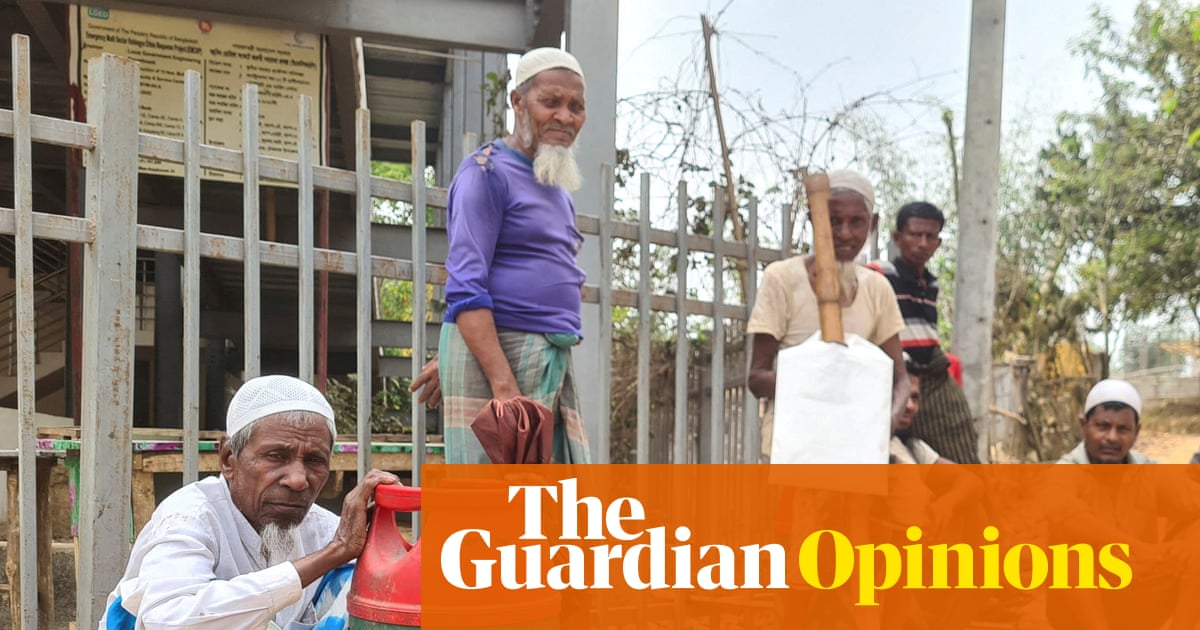
The crisis gained significant international attention in 2017, leading to aid agencies directing hundreds of millions of dollars toward our basic needs in the Cox’s Bazar camps for two years. However, no organization provided cooking fuel. As a result, we resorted to using plastic waste, discarded clothing, and wood from the nearby Teknaf forest for cooking, which led to deforestation, strained relationships with local communities, and kept Rohingya children out of school as they had to gather firewood. Fortunately, in 2018, the UN High Commissioner for Refugees and the International Organization for Migration agreed to supply cooking fuel in the form of liquefied petroleum gas (LPG), alleviating many of these issues.
Currently, however, funding for fuel has declined as international aid resources have shrunk, jeopardizing food security for the Rohingya and the remaining forest resources. In 2024, the United States was the largest contributor to the Rohingya Joint Response Plan, donating nearly $145 million (£110 million). Yet, despite the ongoing needs of our community, U.S. funding was cut by almost a third to $100.7 million in 2025, resulting in the Rohingya plan receiving only 46% of the required funding, down from 68%. Prioritization of critical services has left LPG funding seriously strained.
In July, Babar Baloch, a spokesperson for the UNHCR, stated that without an urgent influx of funds, LPG supplies would deplete. While countries like China and South Korea have stepped in to help, their assistance is limited; China’s plan only spans until October and excludes over 80,000 households, while South Korea’s support covers only 17 out of 33 camps. While any aid is appreciated, all Rohingya require access to fuel, and without additional support, my community will be forced to rely on firewood, plastic, or other waste for cooking.
To avert these challenges, restoring the LPG program is essential. Prior to recent developments, the camps were more sustainable, and hope was more palpable. However, it appears that the U.S. has decided that fostering this hope is not aligned with its interests, which is a misguided perception.
The harsh realities of life in the camps are undeniable, compounded by the fact that Rohingya individuals are barred from work or pursuing higher education in Bangladesh. Under these dire circumstances, refugees depend on aid for their most basic needs.
While various fuel alternatives exist, such as electricity or biogas, reinstating LPG distribution remains the most feasible solution. Although some refugee camps worldwide have employed biogas and electric systems, a 2025 study by the International Centre for Diarrhoeal Disease Research in Bangladesh and Stanford University indicates that these options would be hard to implement in the camps due to limited land and infrastructure. Micro-grids for electricity and small-scale biogas solutions could decrease reliance on fossil fuels, but they are costly and untested in humanitarian contexts. Though LPG is not entirely free from pollution, its emissions are significantly lower than the extensive deforestation and toxic burning that occur when refugees resort to cooking with debris and waste.
Investing in the Rohingya community holds financial significance that extends beyond immediate cost savings. The funding cuts from last year have disrupted an already fragile social and natural environment, dramatically increasing the cost of restoring stability in the future. As crises have become a norm for Rohingya refugees, the reduction in humanitarian assistance creates a new instability that could result in loss of life, especially during inevitable emergencies such as severe weather or economic hardships.
“Shocks will always impact those on the ground severely,” said Joe Phillips, a country director at Amideast, a U.S. development charity. “However, as donor funding diminishes, these shocks will have an even greater impact.” For the Rohingya, the availability of funding will determine the severity of future challenges.
When my family and I finally escaped the peril and devastation in Myanmar, it was humanitarian assistance that enabled us to find safety in the Bangladeshi camps. Within three years, I completed high school, and although little progress has been made regarding my community’s dignity, my education empowered me to advocate for my people. Since then, I have founded the Rohingya Green Nature Society, focusing on environmental sustainability and education for my community. The same support that allowed me to start my journey can help ensure that the next generation will not have to choose between gathering firewood and attending school.
Reinstating LPG for my community is a straightforward yet impactful solution; often, the simplest ideas can lead to the most significant changes.
Additional research provided by Gavin Nalu and Chloe Chan.