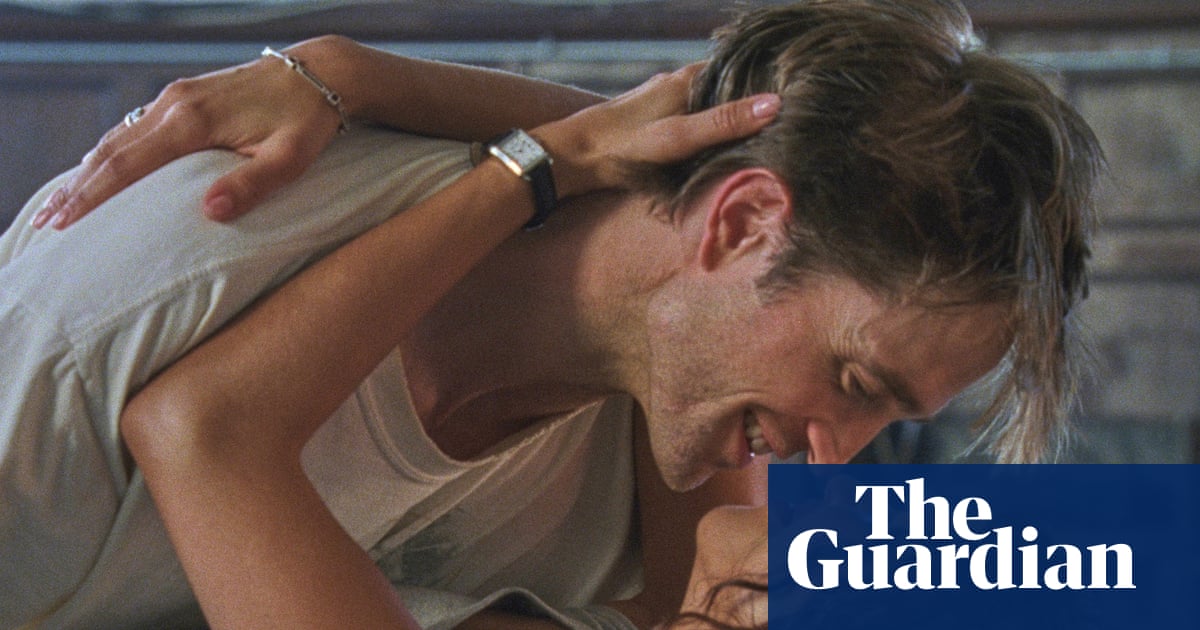

Since the release of its initial trailer, and even prior to that in specific online forums, The Drama has generated considerable buzz across the internet. A24, the production company known for its innovative approaches, has intriguingly marketed writer-director Kristoffer Borgli’s dark film as a sharp romantic comedy. It features Zendaya and Robert Pattinson as a seemingly perfect couple whose impending wedding is thrown into chaos by a shocking revelation just a week before the ceremony. The two actors, who are part of a dwindling group of prominent young stars, even staged a mock wedding announcement in the Boston Globe. Zendaya’s rumored relationship with Tom Holland became a talking point during promotional events, where she creatively incorporated the traditional wedding theme of “something old, something new, something borrowed, something blue” into her wardrobe, progressively shifting to darker colors to hint at the film’s unsettling tone.
Borgli’s second film in English explores what can be described as pre-wedding anxiety through a lens of psychological disintegration infused with surreal elements. The Drama is beautifully shot, features exceptional performances, and is sharply edited, yet much of the attention is likely to focus on its highly contentious and intentionally provocative premise, which has been somewhat compromised by a pre-release headline from TMZ referencing a recent tragic event in America. Discussing this film inevitably leads to “the twist”; rather than serving as a mere plot twist, it manifests as a disturbing revelation that raises questions about the film’s justification for its narrative choices. Be warned, spoilers are ahead, so proceed with caution if you haven’t seen it yet.
The story begins with Pattinson’s character, Charlie, and Zendaya’s Emma, meeting in a sunlit Boston café. Emma is engrossed in a book while Charlie is nervously plotting how to approach her. After gathering his courage, he attempts to speak with her, but she cannot hear him—one ear is occupied with music while she is deaf in the other. After a brief awkward moment, she suggests, “Can we start over?”—a phrase that ominously resurfaces throughout their relationship. This charming encounter is noted by Charlie as he prepares his wedding speech, incorporating numerous nostalgic flashbacks highlighting their journey together, including their first date, kiss, and night spent together.
The couple epitomizes youthful love, appearing successful and attractive, enjoying a vibrant relationship, and residing in a stunning apartment complete with a spiral staircase. However, this idyllic picture unravels in a slow-motion fashion during a wine-fueled gathering with their closest friends, Mike and Rachel, who are part of their bridal party. Rachel initiates a game of “what’s the worst thing you’ve ever done?” Mike recounts a lapse in chivalry, Rachel mentions a childhood act of cruelty, and Charlie admits to some minor cyberbullying. Then, under the influence, Emma discloses a shocking secret: as a troubled teenager in Louisiana, she once contemplated a mass shooting, even bringing her father’s gun to school. Her hearing loss, she explains, resulted from an accident while practicing shooting in the woods. Although she did not follow through, she reveals she was in a deeply troubled place at that time.
Emma’s revelation is met with immediate discomfort. Mike is visibly shocked, while Rachel expresses outrage, particularly due to her own family’s experience with gun violence. Charlie, in disbelief, struggles to process the shocking news. Emma is left feeling ill and desperate to retract her confession. This revelation fractures their friend group, with Rachel declaring Emma irredeemable. Pattinson delivers a standout performance as Charlie grapples with his reactions, rationalizing and fantasizing about the implications of Emma’s past. The film poses challenging questions: what if the person you love revealed violent thoughts? What can you forgive? How much do you truly want to understand? This dynamic creates moments of dark humor and tension, particularly during a poorly timed engagement photoshoot. However, it places Zendaya’s character in a position of emotional stagnation, as Emma must endure Charlie’s struggle to come to terms with her past, making the narrative predominantly focused on his journey rather than hers.
It’s important to mention that Borgli is known for his provocative storytelling; his previous film, Dream Scenario, critiqued the perceived excesses of cancel culture. In The Drama, he engages with the complex issues surrounding gun culture in America, specifically addressing the painful reality of school shootings, aiming to spark controversy and dialogue. By placing the burden of a violent past on a Black woman, rather than her white male fiancé, Borgli offers a provocative reexamination of the typical narrative surrounding gun violence, shifting the conversation from toxic masculinity to the broader question of personal transformation. Critics, like Chris Murphy in Vanity Fair, argue that this portrayal may be historically misleading.
Borgli likely anticipated that some media outlets would react strongly to the film’s handling of sensitive subjects, as evidenced by the TMZ headline stating, “Zendaya’s ‘The Drama’ Condemned by Parent of Columbine Victim.” Tom Mauser, who lost his son in the 1999 Columbine shooting, expressed his disgust towards the film’s plot, labeling it as “awful” and particularly offensive…