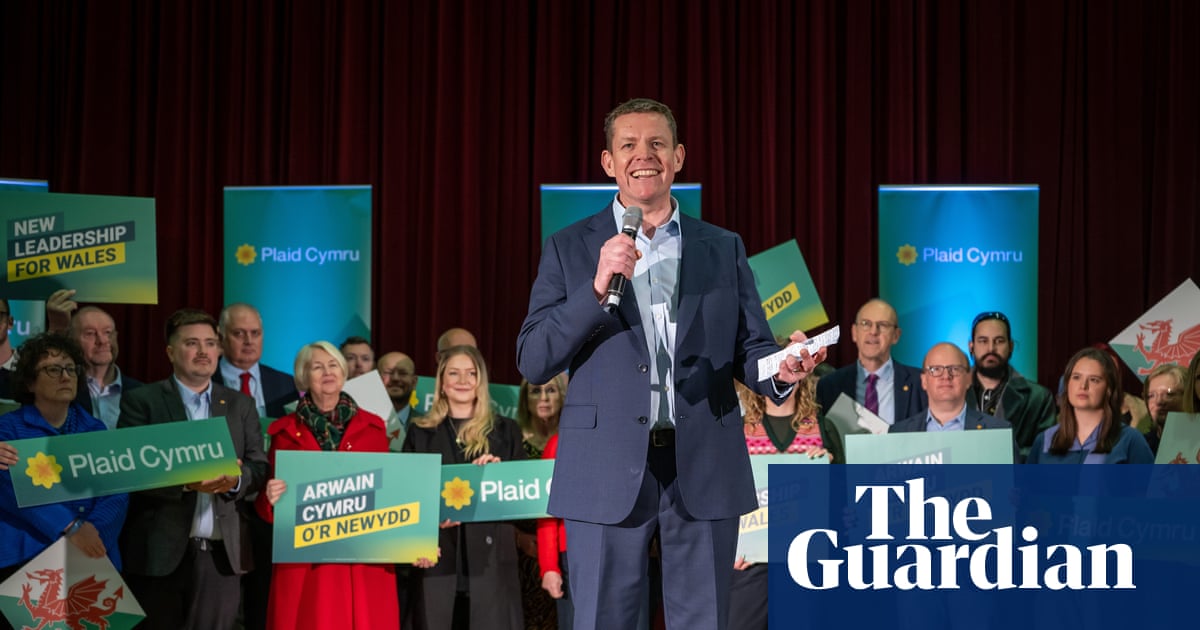

In just four weeks, the landscape of British politics is poised for substantial transformation. For the first time, nationalist parties aiming for the dissolution of the United Kingdom are anticipated to govern Scotland, Wales, and Northern Ireland concurrently. Angus Robertson, a prominent figure in the Scottish government, remarked that such a shift would be profoundly impactful.
Recent opinion surveys indicate that after the elections scheduled for May 7, England will find itself surrounded by nations led by dynamic centre-left nationalist parties: Plaid Cymru in Cardiff, the Scottish National Party (SNP) in Edinburgh, and Sinn Féin in Belfast, which shares governance with the Democratic Unionist Party (DUP).
This situation raises the possibility of significant constitutional challenges that could place Keir Starmer’s Labour government in London—or his potential successor—into a precarious position. It has been reported that the three nationalist parties are in discussions about collaborating to confront the UK government on matters including fiscal policy, taxation, welfare, and the possibility of rejoining the European Union. Meanwhile, Starmer may find himself dealing with an increasing number of English local authorities governed by Reform UK, which advocates a specific form of British nationalism.
If the SNP secures an overall majority in the forthcoming elections, this could lead to demands for a second independence referendum, potentially as early as 2028. Although some polls indicate this scenario is plausible, the proportional voting system in Holyrood still makes it an uncertain prospect.
Robertson emphasized the need to recognize that with three nationalist first ministers across four UK nations, the current state of affairs is untenable. He asserted that a significant shift in how the UK interacts with its constituent nations is essential.
After nearly two decades of collaboration between Plaid Cymru and the SNP at the Westminster level, recent efforts by Scottish ministers have aided Plaid in preparing for governance in Cardiff, sharing strategic insights and experiences from their time in power in Edinburgh.
Rhun ap Iorwerth, the leader of Plaid Cymru, is gearing up to urge Starmer to grant Wales powers that have long been exercised in Scotland, such as devolved authority over policing, justice, seabed management, and increased funding.
Ap Iorwerth criticized the Labour Party for becoming overly focused on maintaining power, losing sight of its foundational purpose and the communities it represents. He expressed a determination to pursue a different path, stating, “We are not here to repair Labour. We are here to replace them.”
In another indication of the evolving constitutional dynamics within the UK, Scotland’s First Minister, John Swinney, has formed a tentative alliance with Sinn Féin’s deputy leader, Michelle O’Neill, who heads Northern Ireland’s power-sharing government. This partnership, once considered politically impossible, reflects a growing collaboration between the two parties.
During a recent meeting, O’Neill supported Swinney’s call for an urgent summit to address the energy crisis exacerbated by the conflict in Iran. There are also expectations that Sinn Féin will leverage potential victories by Plaid Cymru and the SNP in the upcoming elections to amplify its push for a referendum on Irish reunification by 2030, which would be a central theme in its campaign for the Northern Ireland elections in May 2027.
A senior Labour source has noted that centrist politicians in Northern Ireland believe that if Nigel Farage and Reform UK win the next general election, support for a border poll and reunification could rise significantly, even among their own ranks.
These developments have raised concerns among some of the UK’s western allies, with certain diplomats worrying that renewed constitutional tensions might further destabilize Starmer’s government amid a backdrop of global uncertainty. Conversely, other diplomats and experts in British constitutional matters are more optimistic about the stability of the UK.
Michael Keating, an honorary professor associated with Aberdeen and Edinburgh universities, posited that victories for nationalist parties would serve as a significant test for the UK Labour government, rather than an immediate threat to the territorial integrity of the nation. He pointed out that in other countries, regional nationalist parties function within the framework of their central governments without posing existential threats. Examples can be seen in Canada and Spain, where regional nationalists engage with national governments effectively.
Keating noted that while the political temperature in Spain may be high, the established rules allow for a functioning democracy, normalizing devolution and the concept of a plurinational state.
He further argued that Brexit has intensified the long-standing conflict between Whitehall’s inclination to assert its authority and the increasing demand for localized autonomy in Scotland and Wales, which have enjoyed 27 years of devolution.
Previously, all parts of the UK adhered to the same EU regulations, but since Brexit, Whitehall has taken ultimate control, much to the dissatisfaction of the devolved nations.
Starmer assumed office in 2024 with a commitment to mend the fractured relationships among the Scottish, Welsh, and UK governments that developed under the Conservative Party. While his administration initially succeeded in fostering a collaborative atmosphere with Scotland, relations have recently soured under the current Scottish secretary, Douglas Alexander, who is perceived as a staunch defender of Westminster’s interests.
In March, ap Iorwerth brought attention to a leaked UK cabinet memo during a session in the Senedd, highlighting the ongoing tensions in the political landscape.