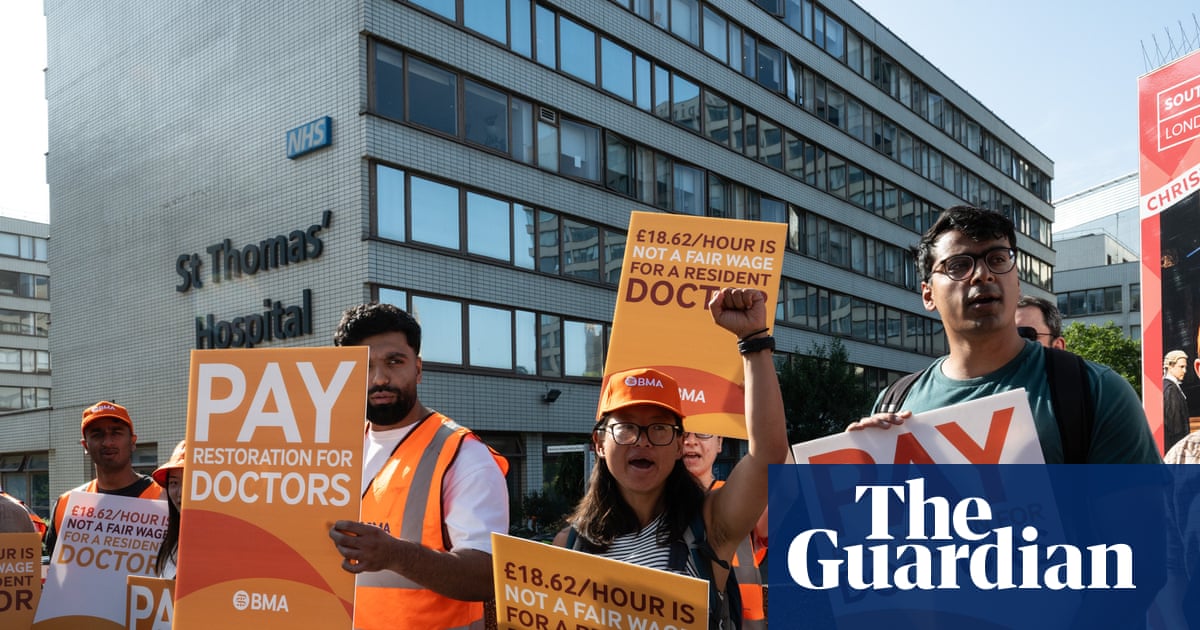

Wes Streeting has criticized resident doctors for undermining their own salary increases and training opportunities by initiating another strike, as tens of thousands of doctors commenced a six-day work stoppage in England. The Health Secretary acknowledged the validity of concerns regarding employment and remuneration but asserted that the British Medical Association (BMA) had derailed negotiations by rejecting a significant government proposal aimed at improving working conditions for medical professionals.
The resident doctors began their most extended strike to date at 7 AM on Tuesday, following the collapse of discussions intended to resolve the ongoing dispute. This marks the fourth consecutive year of strikes, and the 15th instance of industrial action since March 2023, as they advocate for “full pay restoration.”
NHS officials informed the Guardian that the strike could potentially cost the health service approximately £300 million, result in the cancellation of appointments, and lead to longer wait times for tests, treatments, and surgeries. Health leaders have urged patients not to avoid seeking necessary care during this period.
As a result of the ongoing strikes, financial implications for the NHS are projected to exceed £3 billion since 2023. Tuesday’s action marked the 60th day of industrial action by resident doctors in the past three years, according to analyses by the Times and the Telegraph. While the NHS did not provide official figures, it did not dispute the £3 billion estimate presented by the Guardian.
Negotiations held on Tuesday and Wednesday of the previous week failed to yield a compromise that could have led the BMA to suspend or call off the strike. The union and ministers remain significantly divided on critical issues, particularly regarding pay.
Prior to the strike, Streeting remarked that the BMA had not only eliminated chances for improved salaries and job opportunities for doctors but also jeopardized the progress made by the NHS in reducing wait times. “After months of thorough negotiations and compromises, we proposed a deal that would have provided an average pay increase of 4.9% this year, a minimum boost of 6.2% for the lowest-paid doctors, and an overall average raise of 35.2% compared to four years ago,” he stated.
Furthermore, the government had addressed issues related to career advancement and training bottlenecks, presenting a “serious plan,” according to Streeting. “We expedited emergency legislation to prioritize UK graduates for training positions, reducing the competition ratio significantly. This agreement would have introduced up to 4,500 additional specialty training slots over three years, including 1,000 starting this April, along with assistance such as reimbursement for mandatory exam fees that can be quite costly,” he added.
However, instead of accepting this proposal, the BMA outright rejected it and announced immediate strike action. Streeting expressed that this decision not only jeopardizes the salary increases and training positions available to resident doctors but also threatens the recovery of the NHS.
The BMA has been advocating for a 26% pay increase distributed over several years and initiated the six-day strike in response to what it described as the government “shifting the goalposts” after weeks of constructive negotiations. The Guardian reported that the abrupt end of talks was triggered by a dispute regarding the timeline for resident doctors to receive £700 million in additional “progression pay,” which Streeting had agreed to provide to meet their salary demands.
Streeting indicated that this amount should be distributed over the next three years, while the BMA aimed to receive the full sum in the current NHS operational year, which commenced last Wednesday.
On Monday, Dr. Jack Fletcher, chair of the BMA resident doctors committee, expressed his commitment to resolving the dispute and attributed the breakdown of talks to the government. “My colleagues and I have been negotiating for months, and a deal was taking shape, yet at the last moment, the government quietly diminished it, reducing the financial offer and extending the remaining amount over too many years to be beneficial,” he stated.
Fletcher added that it was difficult to understand why the government had withdrawn the offer to create 1,000 additional specialist medical training positions this year. Streeting, in a letter to the BMA last week, stated that he had rescinded his offer for these extra training slots because it was contingent upon the BMA accepting the government’s latest proposal, which they rejected the previous week.
Before the strike commenced on Tuesday, Streeting commented, “Having declined the deal, the BMA now complains that the proposed training positions are not being established. They cannot reject the deal and simultaneously claim the benefits.” The strike is scheduled to conclude at 7 AM next Monday. Patients have been advised to attend their scheduled appointments unless notified of cancellations, and those facing life-threatening emergencies should still contact emergency services or go to A&E.