
The prolonged conflict in West Asia has reached a temporary halt following an announcement by U.S. President Donald Trump regarding a two-week ceasefire with Iran. This truce was established after Iran agreed to a 10-point proposal. The hostilities began on February 28, triggered by strikes from the U.S. and Israel against Iranian targets.
Trump revealed the ceasefire shortly after issuing a warning to Iran, threatening to “wipe out” its “entire civilization” if safe passage through the Strait of Hormuz was not permitted. This pause in fighting comes after an extended period of attacks on military bases and vital infrastructure by both Iranian and U.S.-Israeli forces. Just before a self-imposed deadline for further assaults, Trump characterized Iran’s proposal as a “significant step” that could serve as a “workable basis” for negotiations, a shift from his previous position.
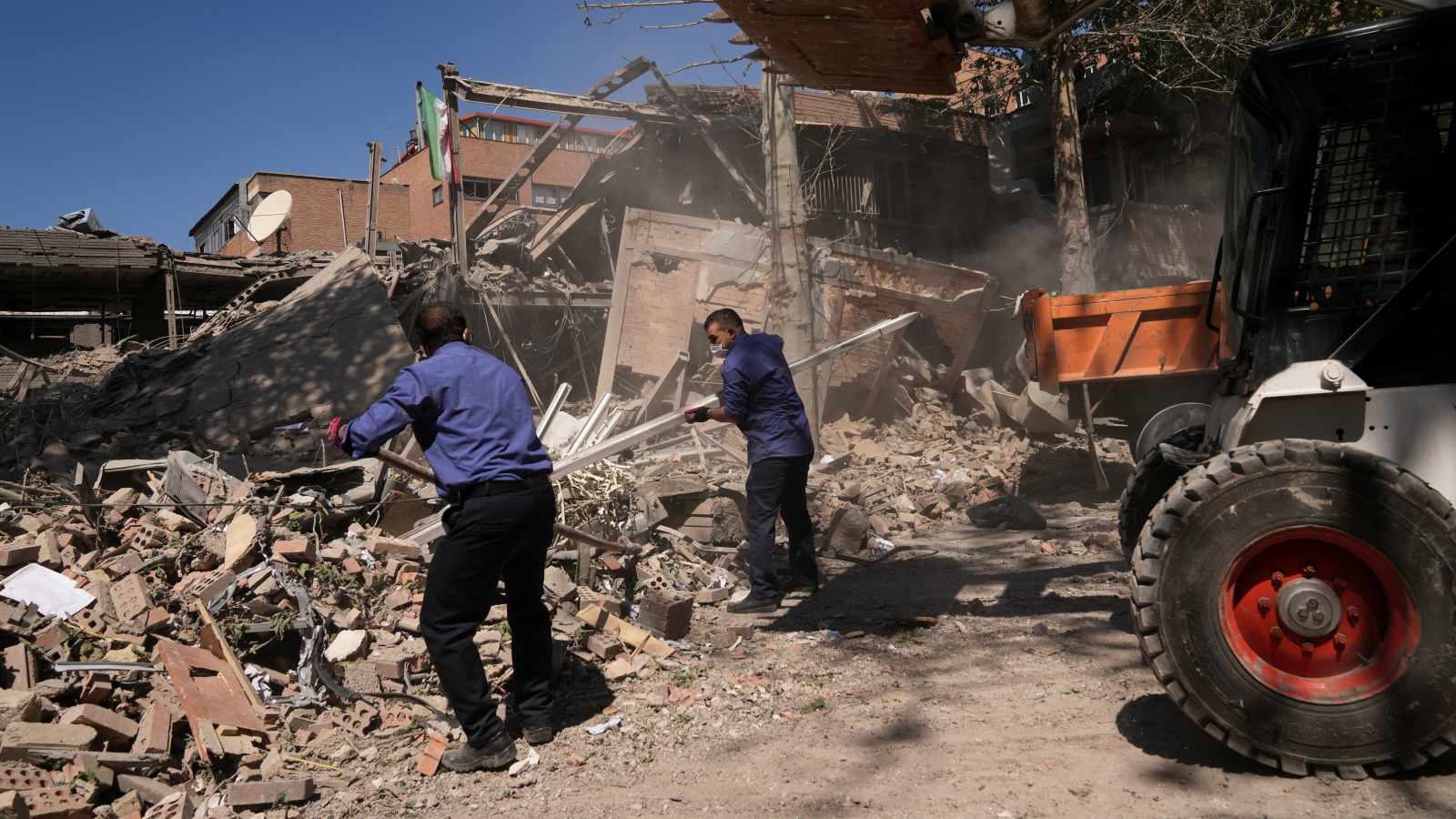
Prior to the ceasefire, the U.S. and Israel had targeted essential Iranian infrastructure, with Israeli Prime Minister Benjamin Netanyahu confirming that strikes were aimed at railways and bridges associated with the Revolutionary Guards.
Pakistan played a mediating role in facilitating the ceasefire, suggesting the two-week pause during which Iran consented to permit oil and commercial vessels to transit through the Strait of Hormuz. The Iranian National Security Council has corroborated the agreement, with discussions scheduled to continue on April 10 in Islamabad.
Coordinated attacks by the United States and Israel targeted various sites in Iran, including a government complex in Tehran and numerous military installations, occurring shortly after nuclear talks in Geneva concluded without a resolution. These strikes reportedly resulted in the deaths of several high-ranking Islamic Revolutionary Guard Corps (IRGC) officials, including Supreme Leader Ayatollah Ali Khamenei.
The strikes also caused civilian casualties, with at least 175 individuals, predominantly girls, killed in an attack on a primary school in Minab, located in Iran’s Hormozgan province. Initial reports indicated 51 fatalities, but this number rose significantly later, with U.S. media suggesting that the attack may have been a miscalculation by American forces.
Iran’s foreign ministry condemned these military actions, labeling them as “renewed aggression” occurring during an active diplomatic dialogue. The attacks followed persistent pressure from the White House urging Iran to cease its nuclear enrichment activities, a demand Tehran has consistently rejected.
In retaliation, Iran launched strikes against U.S. and Israeli assets in various Gulf states, heightening tensions and disrupting global energy markets. These actions also impacted shipping routes through the vital Strait of Hormuz, essential for international trade.
Ayatollah Ali Khamenei, who led Iran for over thirty years and was instrumental in shaping the nation’s stance against the U.S. and Israel, was confirmed dead following the U.S.-Israeli airstrikes on February 28, at the age of 86. President Trump stated that Khamenei was killed during targeted attacks aimed at Iran’s leadership.
Khamenei emerged as a prominent figure during the 1979 Islamic Revolution that led to the Shah’s overthrow. After the passing of Ruhollah Khomeini in 1989, he was appointed as the supreme leader despite not holding the highest clerical rank at that time.
In response to the strikes led by the U.S., Iran intensified its assaults on American targets throughout the Gulf region, including attacks on U.S. consulates in the UAE and Saudi Arabia. Notably, an Iranian drone strike on Port Shuaiba in Kuwait resulted in the deaths of six U.S. soldiers, marking the first American fatalities in the ongoing conflict. These casualties remain the only confirmed U.S. military deaths since the onset of hostilities against Iran.
The U.S. military later identified four of the deceased as Army Reserve members: Captain Cody Khork (35), Sergeant Noah Tietjens (42), Sergeant Nicole Amor (39), and Sergeant Declan Coady (20), as reported by the BBC.
The UAE reported over 1,000 Iranian attacks in the wake of the U.S.-Israeli offensive on February 28, which resulted in three fatalities and injuries to 58 individuals of various nationalities, most of whom sustained minor injuries, according to the UAE’s Defence Ministry.
Hezbollah, backed by Iran, also escalated the conflict into Lebanon, launching rockets at Israel in retaliation for the death of Khamenei. Additionally, Saudi Aramco temporarily shut down its Ras Tanura refining facility after it was targeted by a drone, which ignited a small fire that has since been managed. Reports from Reuters indicate that Saudi Arabia also intercepted Iranian missiles aimed at Riyadh’s international airport and the Prince Sultan Airbase, which accommodates U.S. forces.
Following Khamenei’s assassination, his second-eldest son, Mojtaba Khamenei, was designated as his successor on March 9. President Trump criticized this succession, deeming Mojtaba an “unacceptable” leader and a “lightweight,” while asserting that the new leader would require U.S. approval to maintain stability. He further suggested his involvement in the appointment process, drawing parallels to past U.S. interventions in Venezuela.
Iran’s officials firmly opposed external interference, with Foreign Minister Abbas Araghchi stating, “We will allow nobody to interfere in our domestic affairs.” In a significant escalation, Iran’s Revolutionary Guards proclaimed that the Strait of Hormuz would be closed to vessels from the U.S., Israel, Europe, and other Western allies, as traffic through this crucial maritime route sharply declined due to the conflict. The IRGC emphasized that, in times of war, Iran reserves the right to control passage through the Strait of Hormuz, as reported by the state broadcaster IRIB.
In another critical development, Iran accused the United States of committing an “atrocity at sea” following the sinking of an Iranian warship by a U.S. submarine in international waters. Reports indicated that at least 87 individuals perished after the vessel, which was returning from a naval exercise with the Indian Navy, was torpedoed off the southern coast of Sri Lanka.