
In Venice, local officials sought to implement social distancing measures by shuttering all bars and prohibiting merchant boats from selling wine along the canals. Meanwhile, in Gloucester, authorities attempted to enforce a lockdown by restricting travel to and from Bristol, located 40 miles to the south. However, tensions escalated among thirsty residents in Italy, and the quarantine in Gloucester was breached—though it’s unclear how many were simply traveling for reasons like checking their eyesight. In London, there was a significant surge in the sales of personal protective equipment, particularly gloves.
Historian Thomas Asbridge’s comprehensive examination of the Black Death reveals numerous parallels with the Covid-19 pandemic, while also underscoring how fortunate society was in recent years. The plague was significantly deadlier, decimating about half of the population in the regions it impacted between 1346 and 1353, leading to an estimated 100 million fatalities. As Asbridge notes, this event was “the most lethal natural disaster in human history.” Should a pathogen with a similar fatality rate emerge today, it could result in billions of deaths.
Asbridge contends that the Black Death was more widespread than traditionally perceived, arguing that it was “not solely, or even primarily, a European phenomenon, but rather a disaster that affected nearly all of the medieval world.” He vividly recounts the plague’s trajectory, taking readers from Sicily to Egypt—where reports indicated “bodies scattered under palm trees and in front of shops”—to Marseille, Syria, Spain, Sweden, and even Russia. Evidence of abrupt population declines in Ghana, Nigeria, and Burkina Faso suggests the plague’s reach extended deep into Africa. Tunis was hit particularly hard, with the scholar Ibn Khaldun surviving to assert that “lethal plagues played an essential role in the rise and fall of civilizations,” long before Jared Diamond’s influential work, Guns, Germs, and Steel.
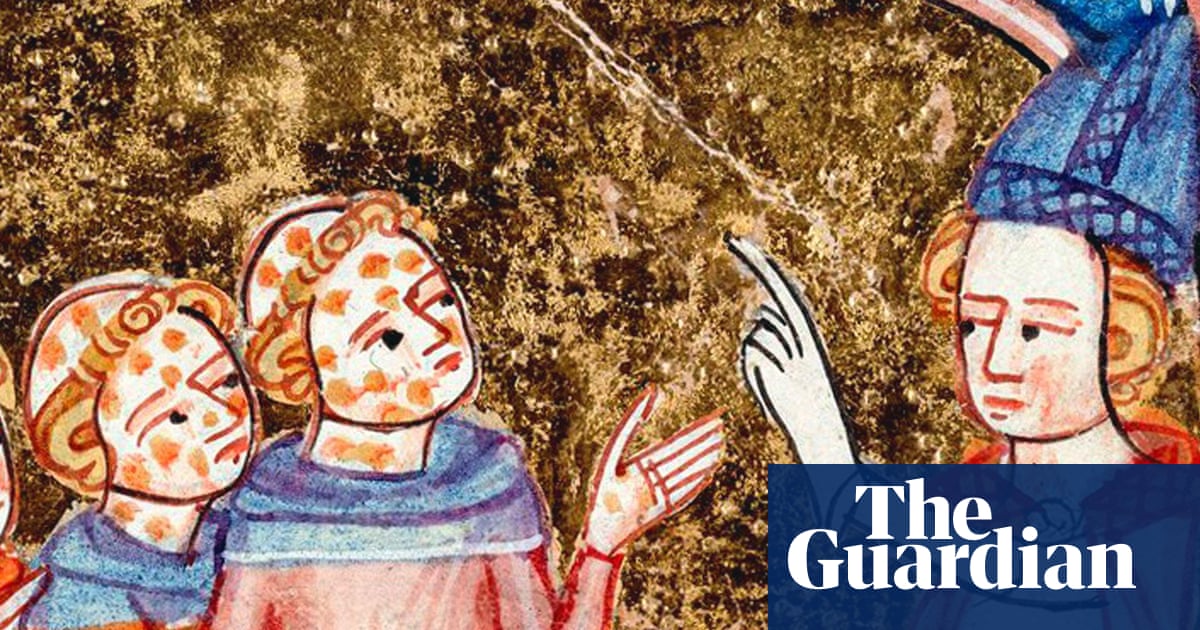
Asbridge creates a sense of terror and empathy by highlighting “micro-histories” of individuals caught in the turmoil. These narratives span various social classes. For instance, Princess Joan of England, the daughter of Edward III, contracted the Black Death in Bordeaux and passed away at just 14 years old. Ysabeta Ugolini, from a family of artisans in Bologna, reportedly lost her husband, father, mother, brother, and brother-in-law within a single month. The author employs rich contemporary chronicles to convey the confusion and horror experienced by the populace. Lacking a germ theory, some believed that merely seeing a victim could lead to infection.
Through meticulous examination of bureaucratic records, Asbridge demonstrates that certain areas were more severely affected than previously thought. Florence, for example, was assumed to have escaped the worst, yet Asbridge discovers a notable increase in the drafting of wills, indicating a potential spike in patient numbers and mortality rates. In Bologna, the number of wills recorded in 1348 was five times higher than the average from earlier years.
Being a notary during such tumultuous times was undoubtedly perilous; nevertheless, Asbridge notes that most continued their work. Society did not completely collapse; while some individuals abandoned sick family members, the majority remained devoted, and essential public services persisted. Even when churchyards overflowed and funeral services became impractical, it appears that care was taken in burying the deceased in the mass graves that were required, such as those in Smithfield, London.
However, a particularly grim social contagion associated with the plague was the scapegoating of Jews, leading to horrific massacres of innocent Jewish men, women, and children in locations such as Toulon, Strasbourg, and across the Iberian Peninsula. Murderers often destroyed their victims’ financial records to eliminate their own debts. Many Jews were also unjustly found guilty of poisoning wells and subsequently executed by fire. Asbridge estimates that “tens of thousands” were killed during the Black Death, prompting many Jews to migrate to Eastern Europe.
Like the persistent virus of antisemitism, the Black Death did not vanish after 1353; it became endemic. The plague resurfaced in London in 1665 and continued to appear in various locations well into the 19th century. The long-term repercussions of the 14th-century pandemic included labor shortages that contributed to the decline of serfdom. Recurrent outbreaks likely weakened Constantinople, hastening the fall of the Byzantine Empire, and Asbridge suggests they may have even spurred the Protestant Reformation by compelling the faithful to confront the immediacy of death and the urgent need for spiritual redemption. Even today, the threat remains, with Madagascar experiencing outbreaks in 2014 and 2017 that claimed nearly 300 lives. As for the long-term social impacts of Covid, it is still too soon to assess, as we await the next potential pandemic.
The Black Death: A Global History by Thomas Asbridge is published by Allen Lane (£40). To support The Guardian, copies can be purchased at guardianbookshop.com, though delivery charges may apply.