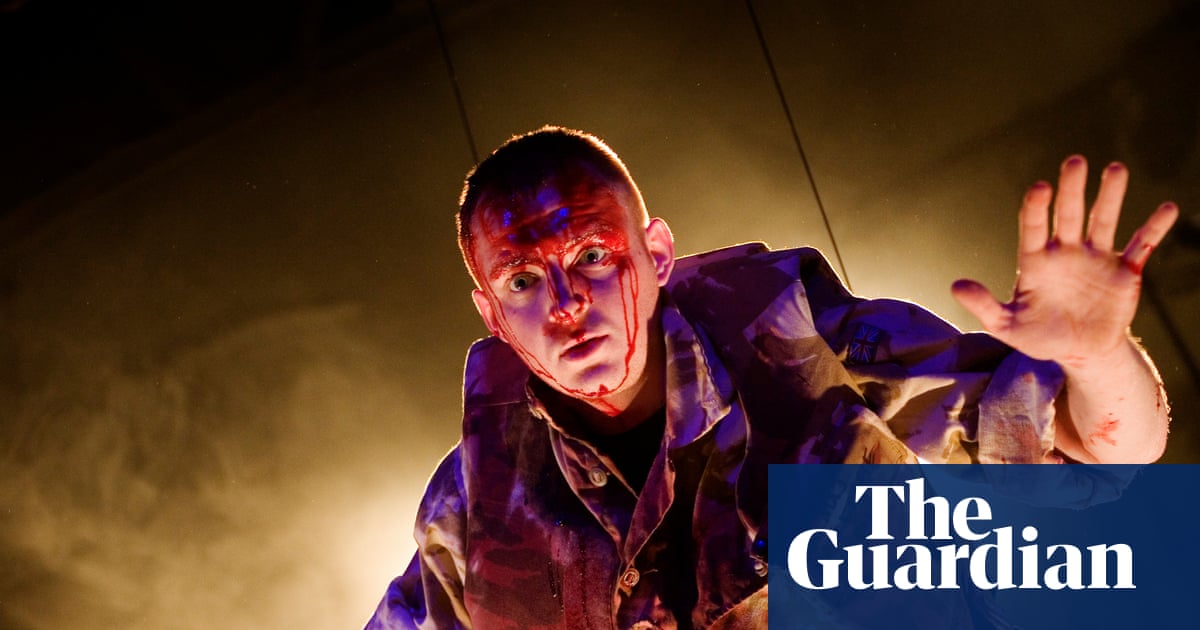

Within just six months of its inception in 2006, the National Theatre of Scotland (NTS) achieved remarkable success with its production of Black Watch. This powerful play drew inspiration from tragic incidents at Camp Dogwood in Iraq, offering a poignant look at the experiences of young soldiers on the battlefield. The transformation of a pool table into a tank helped convey the journey from a pub in Fife to a war-torn environment, where nothing could evoke more emotion than receiving a letter from home.
Vicky Featherstone, the founding artistic director, recalls her first day at NTS in 2004 when she encountered a Glasgow Herald article on the front page discussing Tony Blair’s decision to dissolve Scotland’s individual regiments in favor of the Royal Regiment of Scotland. A heart-wrenching story on page three detailed the deaths of three soldiers from the Black Watch regiment due to an IED explosion alongside an Iraqi translator. Featherstone recognized there was a compelling narrative to be told in the space between those two stories and immediately contacted playwright Gregory Burke to pursue it.
Gregory Burke, who grew up in the same areas as the soldiers, felt a deep connection to their experiences. He remarked, “While I didn’t know them personally, one soldier recognized me by saying, ‘Oh, you know my sister,’ which established a link.”
Featherstone highlighted the play’s foundation in Scottish theatrical tradition, referencing works like Bill Bryden’s The Ship and John McGrath’s The Cheviot, the Stag and the Black, Black Oil. “It’s a blend of laughter, tears, music, and unexpected moments,” she noted.
Director John Tiffany expressed his vision to Burke, saying he wanted to create a major Scottish theatre event rather than a conventional play, although he admitted that he was uncertain about how to achieve this. This became evident during the early weeks of rehearsals.
Burke explained that finding suitable interviewees—those of the right age who had experienced the war in Iraq and were articulate—was a lengthy process. He wanted to ensure their stories could be effectively woven into the narrative.
Featherstone recalls a pivotal evening when Tiffany, together with movement director Steven Hoggett, sought clarity on their vision. Over glasses of red wine, they discussed the importance of discovering the essence of the project, which ultimately led to breakthroughs in their creative process.
Actor Brian Ferguson noted that his character, Cammy, was inspired by a soldier who shared his story with the cast for an hour, significantly influencing their portrayal.
Tiffany found the soldiers they met to be insightful and generous, challenging his assumptions about their motivations for joining the military. He realized that conveying these truths to the audience was essential.
While the production was marketed as verbatim theatre, Burke took creative liberties to enhance the narrative. He believed the story extended beyond the soldiers’ individual experiences to encompass the broader history of Scottish military heritage and the identity of the Black Watch within the British armed forces.
Actor Emun Elliott emphasized the theatricality of the piece despite its serious subject matter, noting how Tiffany grounded the performances in reality while allowing for imaginative expressions, such as miming letter exchanges with loved ones.
Designer Laura Hopkins described how the pool table served as a versatile element, transitioning between the pub setting and battle scenes. A significant realization occurred when they discovered that the dimensions of a tank matched the footprint of the table, leading to the creative decision for soldiers to emerge from it.
Elliott recalled the emphasis on authenticity, stating that they needed to appear as soldiers rather than as actors portraying soldiers. Hoggett guided them through intense physical training to prepare them for their roles.
Tiffany mentioned that they learned military marching from a Black Watch regimental sergeant major, whose strict approach left a lasting impression. They were proud to showcase their training outside the rehearsal space.
The production was designed for Edinburgh’s drill hall, intending to blur the lines between reality and performance. Hopkins aimed for a light touch without overwhelming the piece with too much complexity.
On the eve of their dress rehearsal, Elliott shared a moment of uncertainty with Ferguson, both questioning their commitment to the project. However, fellow actor Paul Higgins expressed optimism about the uniqueness of their work.
Burke acknowledged that they had not yet completed a full dress rehearsal. However, the first preview went exceptionally well, eliciting gasps from the audience during a crucial scene involving the pool table. Tiffany and Burke exchanged looks, realizing they had struck a chord.
The audience’s emotional engagement was palpable, with numerous attendees rising to their feet in appreciation.
Featherstone reflected on a run-through with makeshift costumes that felt remarkably polished. Watching the initial preview was a profound experience for her, reaffirming her belief in the power of theatre.
Tiffany remarked on the show’s capacity to resonate broadly, noting that even though only 270 seats were available, many people claimed to have witnessed the performance, including notable figures like Sean Connery and King Charles, who expressed interest but faced logistical challenges.
Elliott shared that seasoned actors advised them to savor the extraordinary audience response, a sentiment they initially dismissed but later recognized as insightful after two decades.
Producers eagerly expressed their desire to tour Black Watch, which had initially been conceived as a one-time performance. The production ultimately toured for seven years to widespread acclaim.
Tiffany concluded by recalling a moment in Glenrothes when family members of fallen soldiers attended, highlighting the profound impact and lasting legacy of the play.