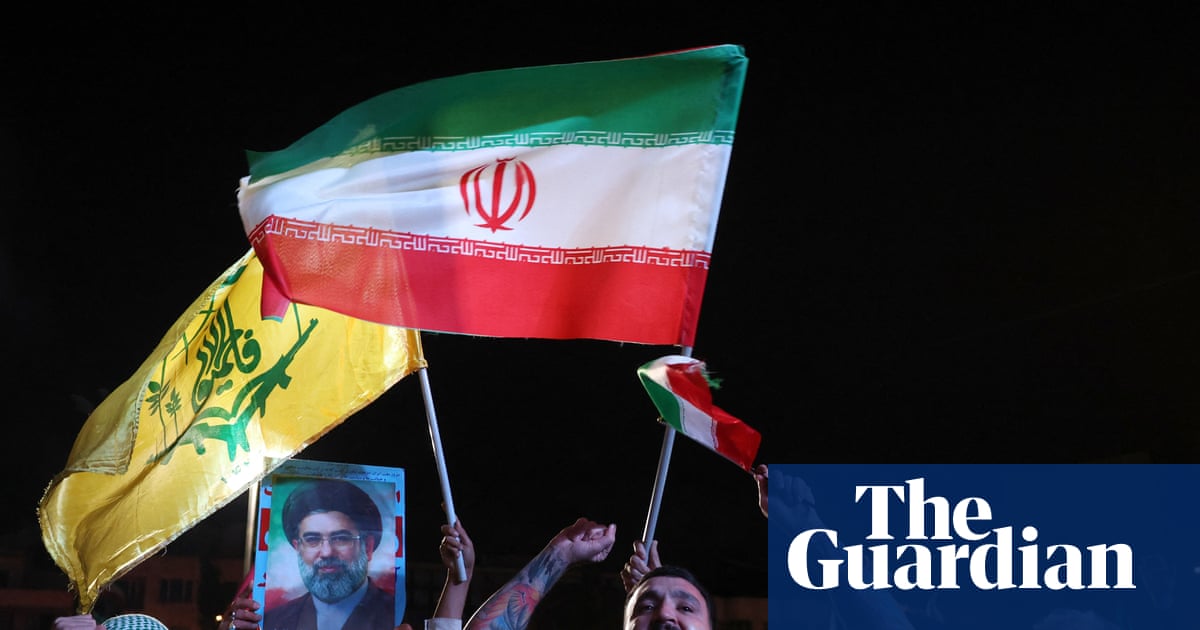

The recent declaration of a two-week ceasefire has prompted Donald Trump to proclaim the reopening of the Hormuz Strait as a herald of a promising new era. However, it is Iran that enters the upcoming peace discussions with a more advantageous position.
The Iranian government approaches the scheduled negotiations on Friday in Pakistan with resilience, despite suffering setbacks. It retains a significant reserve of highly enriched uranium, which has been a central issue in its conflict with the United States, Israel, and their allies. Furthermore, Iran asserts partial control over the strategic strait, having showcased its ability to close this crucial waterway and manipulate global trade.
Trump has quickly reasserted himself as a pivotal figure in this unfolding narrative, having previously issued dire warnings that a “whole civilization will die.” Shortly thereafter, he claimed to have made a significant pivot toward achieving a lasting peace in the Middle East.
His comments resulted in a decline in oil prices and a rally in global stock markets, indicating that he still possesses the ability to influence short-term financial trends.
Nevertheless, the specifics of the ceasefire remain ambiguous, with conflicting interpretations emerging. Pakistan’s Prime Minister, Shehbaz Sharif, stated that the ceasefire extended “everywhere including Lebanon,” only to be swiftly contradicted by Israeli Prime Minister Benjamin Netanyahu, who insisted that military operations along Israel’s northern borders would continue.
Trump emphasized that the ceasefire depended on the “complete, immediate, and safe opening of the Hormuz Strait.” In response, Tehran agreed to allow shipping through the waterway, albeit under the condition that the Iranian military would oversee the passage.
Regional reports indicate that Tehran intends to pursue its earlier proposition to share control of the strait with Oman, suggesting a toll of $2 million per vessel. This marks a significant shift from the pre-conflict norm of free passage, positioning Iran as a key gatekeeper and creating a new revenue stream.
The uncertainty surrounding the future of the strait is likely to prompt the many ships currently stranded in the Gulf to depart, while far fewer will venture into Hormuz due to concerns about being caught in the conflict. Additionally, shippers may hesitate to pay tolls to Iran for fear of violating US sanctions.
Throughout the five-week conflict, Trump has issued increasingly extreme threats, culminating in a dire warning about the potential end of Iranian civilization, seemingly aimed at coercing Tehran into making last-minute concessions.
However, this tactic appears to have failed. At the critical moment, it was Iran’s ten-point plan, rather than Trump’s fifteen-point proposal, that was accepted as the foundation for discussions in Pakistan. After previously dismissing the Iranian plan, Trump later referred to it as “a workable basis on which to negotiate.” Iran’s ten points encompass demands such as the removal of all sanctions, payment of war reparations, and the recognition of its right to enrich uranium—conditions that have previously been considered unacceptable by Washington.
The Iranian government included the right to enrich uranium in the Farsi version of the ceasefire terms but omitted it from the English translation, suggesting it was intended for domestic audiences to display a sense of victory.
It is evident that Iran will insist on this right as a non-negotiable condition in discussions regarding a long-term settlement, as it has consistently done in negotiations with Western powers. The country’s possession of 440 kilograms of highly enriched uranium, theoretically enough for multiple nuclear warheads, will serve as a formidable bargaining chip.
During negotiations that were disrupted by the US-Israeli attack on Iran on February 28, Tehran appeared willing to consider relinquishing its uranium stockpile. This situation reflects how the US has emerged from the conflict in a weaker position compared to the last talks held in Geneva just days before hostilities began.
The Iranian delegation will arrive in Islamabad having demonstrated to both the international community and its own citizens that the regime can withstand significant pressure from its adversaries, despite suffering substantial losses, including the death of the supreme leader. Iranian forces remain actively engaged in the conflict, countering assertions of their defeat, with missiles still being launched at Israel and other US allies.
The upcoming negotiations will be conducted amidst a new status quo, with Iran positioned as a co-custodian of the Hormuz Strait and a beneficiary of its tolls. While the US delegation may express strong objections and threaten to withdraw over Iran’s stipulations, it will be acutely aware of Iran’s capability to inflict considerable economic pain on the Trump administration through its control over oil flows.