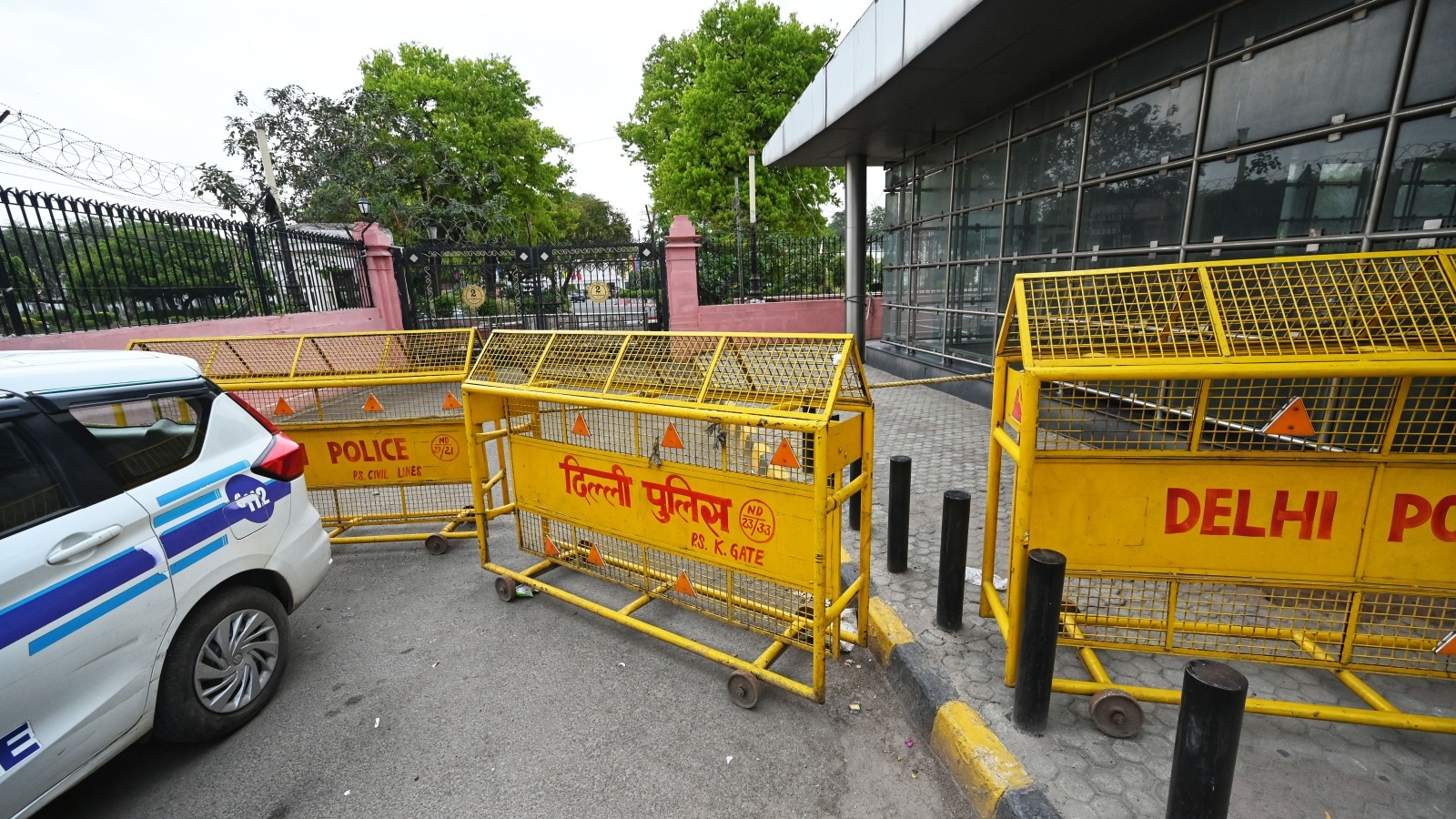

Sarabjit Singh, a 37-year-old man, was placed in police custody for eight days by a court on Tuesday following an incident on Monday where he drove an SUV through a boom barrier at the Delhi Assembly complex.
During the court proceedings, the Delhi Police suggested that there might be a potential terrorist motive behind Sarabjit’s actions. Special Public Prosecutor Atul Kumar Srivastava informed the court that Singh attempted to run over a Central Reserve Police Force (CRPF) head constable stationed at Gate 2 of the Assembly. He also mentioned that Singh had been seen inside a VIP vehicle.
“The possibility of a terrorist act cannot be dismissed without a thorough investigation,” Srivastava stated. The court was also informed that Sarabjit had reportedly discarded his mobile phone in a river in Kurukshetra, which has not yet been retrieved.
The Delhi Police requested Sarabjit’s custody to uncover the full extent of the conspiracy related to the incident and to investigate any possible links to terrorism. They emphasized the need to trace his movements across various locations in Punjab and Uttar Pradesh. The police expressed the necessity to understand the reasons behind Singh’s entry into the Assembly and explore the involvement of any other individuals in the event.
According to police reports, Sarabjit’s family indicated that he had been experiencing depression. Additionally, it was noted that he had acquired the SUV used in the incident just a month prior.
Judicial Magistrate First Class Kartik Taparia, presiding at Tis Hazari Court, remarked on the severity of the allegations against Singh. He stated that based on the initial evidence provided by the investigation, it did not seem that the accused was mentally incapable of understanding the implications of his actions.
“Moreover, the fact that the accused hired two taxi drivers for Rs 2,000 indicates that he was fully aware of his actions and had intentionally entered the Delhi Assembly with hidden motives,” he concluded before remanding Singh to eight days of police custody.