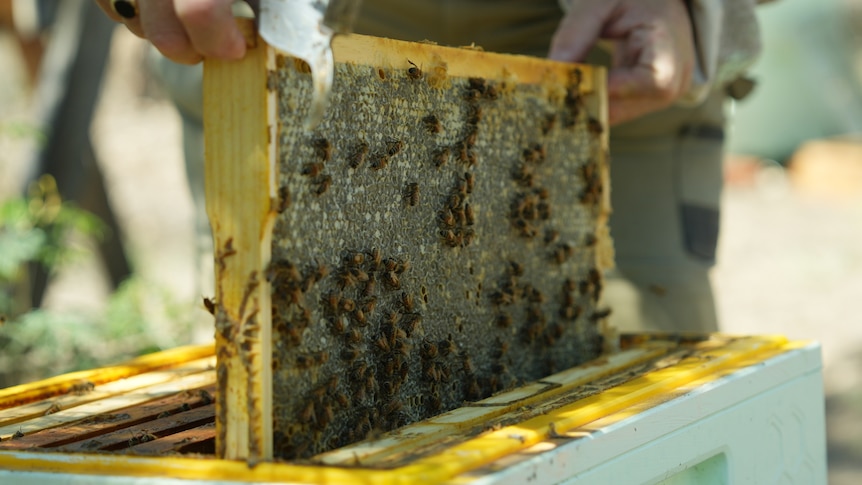

Experts are urging residents of Canberra to inspect their beehives and officially register as beekeepers, following the destruction of over 1,000 hives in the Australian Capital Territory (ACT) due to the varroa mite. The ACT’s Biosecurity Engagement Officer emphasizes that hives affected by the mite can endure long-term if properly managed, although this demands consistent effort and vigilance.
The ramifications of the varroa mite extend beyond just beekeepers; the decline in pollinator populations is likely to affect local fruit and vegetable harvests. According to specialists, around half of the ACT’s approximately 6,000 beehives have been influenced by this rapidly spreading parasite, leading to the loss of more than 1,000 hives.
These tiny parasites, measuring just 1 to 2 millimeters, attach themselves to honey bees, ultimately leading to the demise of both the individual bees and their colonies. The varroa mite was initially detected in the ACT in April of the previous year, and Micah Wood, the ACT Biosecurity Engagement Officer, has reported that it has now become widespread throughout the region.
“It is likely that varroa is present across the entire territory,” Mr. Wood stated, noting its prevalence in New South Wales as well. Reports indicate that it has been found in major suburbs across all areas of the ACT.
Mr. Wood mentioned that many amateur beekeepers have faced significant losses, stating, “Some of the hives we’ve visited have been severely impacted, with the bees abandoning them.” He explained that the mites introduce viruses that compromise the health of the hives, making it difficult for bees to cope with other pests like wax moths and hive beetles. The added stress from the varroa mites weakens the overall health of the colonies.
To safeguard their hives, beekeepers must act promptly, as hives affected by varroa can survive if managed correctly. Mr. Wood urged immediate testing, cautioning that those who do not will likely suffer losses. “If you are not testing, it is probable that you have varroa, and your bees may leave or perish,” he warned.
The ACT government’s biosecurity department is ready to assist beekeepers lacking the resources to deal with the mite. “We strongly encourage people to register as beekeepers so we can maintain contact and provide support while keeping you informed about the situation across the territory,” Mr. Wood added. “We will provide you with a link to a tool that can help you evaluate your beekeeping practices and inform you of various methods available to protect your bees, including both chemical and manual approaches.”
Mark Paterson, president of the Canberra Regional Beekeepers Association, who previously managed 30 hives in California while dealing with varroa mites, believes that the mite will likely infiltrate every hive in the ACT within the next 18 months. He also indicated that the fallout would affect not just beekeepers, but also home gardeners who may notice a decline in pollination of their plants.