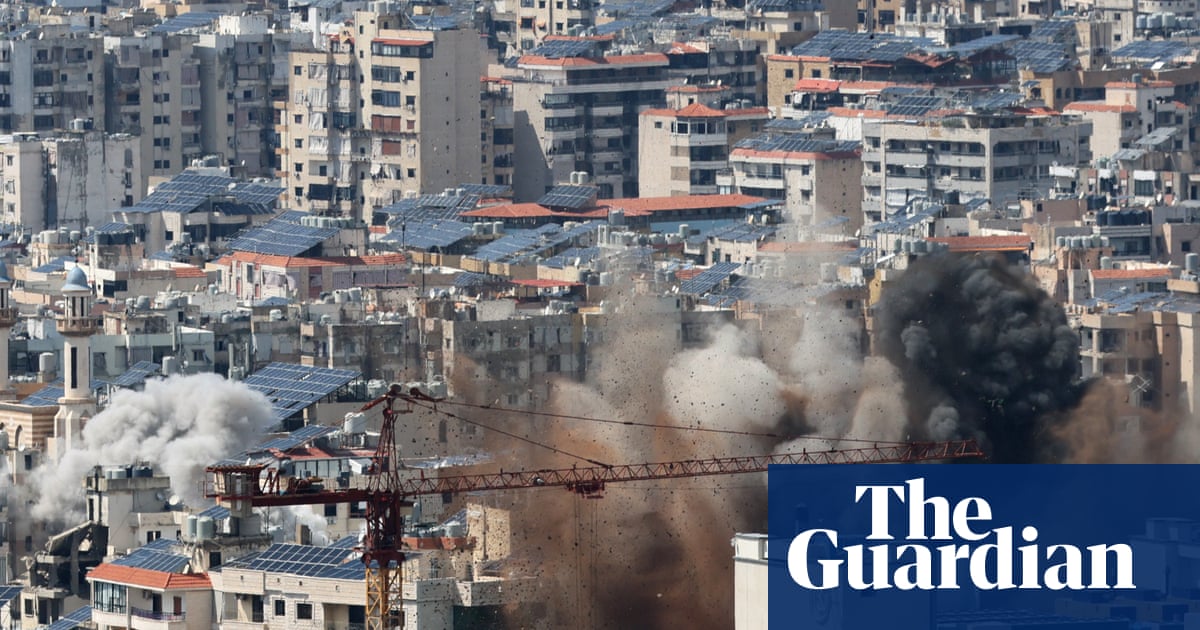

On Wednesday, the status of the two-week ceasefire in the ongoing conflict involving Iran appeared precarious, as conflicting accounts emerged from both parties regarding the terms of the agreement. Israel escalated its military operations in Lebanon, launching an extensive bombing campaign, while Iran suspended the transit of oil tankers, citing an alleged violation of the ceasefire by Israel.
Both Iran and Pakistan, the mediators behind the last-minute ceasefire, claimed that it encompassed Lebanon. However, Israeli Prime Minister Benjamin Netanyahu rejected this assertion, leading Israeli forces to conduct their most intensive assault of the conflict to date, targeting over 100 sites and resulting in at least 254 fatalities.
According to Iran’s Fars news agency, the movement of oil tankers through the Strait of Hormuz was halted in response to what they termed Israel’s breach of the ceasefire. Initially, Iran was expected to reopen the strait during the ceasefire period, and oil prices had significantly declined below $100 a barrel shortly after the announcement, which had buoyed global stock markets.
However, the situation did not alleviate the plight of numerous oil tankers stranded in the Gulf, which were awaiting insurance approvals before resuming operations, and they reported ongoing disruptions to their satellite navigation systems.
In a related development, the United Arab Emirates stated that its air defenses intercepted 17 ballistic missiles and 35 drones allegedly fired by Iran on the day following the ceasefire announcement. Additionally, reports indicated that Iran targeted a Saudi oil pipeline leading to the Red Sea just hours after the truce came into effect.
The Islamic Revolutionary Guard Corps (IRGC) of Iran claimed responsibility for striking multiple regional targets with missiles and drones, including oil facilities belonging to U.S. companies in Yanbu, Saudi Arabia.
In a series of early morning social media posts, former President Donald Trump presented a different interpretation of the ceasefire agreement compared to his earlier statements. Initially, he characterized Iran’s 10-point proposal as a “workable basis for negotiation,” emphasizing the reopening of the Strait of Hormuz.
This interpretation surprised officials in Washington, as Iran’s proposals diverged significantly from U.S. interests, including demands for uranium enrichment rights, complete sanction relief, war reparations, and a framework for joint control of the Strait of Hormuz with Oman.
Later, Trump suggested that the ceasefire was actually predicated on a distinct 15-point U.S. proposal, asserting that many elements had already been accepted. He emphasized that uranium enrichment would not be permitted and that the U.S. and Iran would collaborate to address Iran’s stockpile of 440kg of highly enriched uranium (HEU), which he referred to as “nuclear dust,” sufficient for creating numerous nuclear warheads.
Trump’s earlier warning that failure to reach an agreement by 8 p.m. Washington time on Tuesday could result in catastrophic consequences drew widespread condemnation, perceived by many as a threat amounting to war crimes.
Iran issued two contrasting interpretations of the ceasefire agreement. The Farsi version acknowledged Iran’s right to enrich uranium, while the English translation did not include this point. Iran’s Foreign Minister, Abbas Araghchi, corroborated Trump’s assertion regarding the reopening of the Strait of Hormuz but noted that vessels would need to coordinate with Iranian military forces for safe passage.
The Strait, previously a freely navigable waterway, was closed by Iran in response to a U.S.-Israeli attack on February 28 and is now imposing a toll of $2 million per ship for passage. Tehran indicated that the ceasefire would permit shipping to resume while maintaining the toll arrangement, with plans to share the revenue with Oman as a co-custodian of the strait.
Pakistan is set to host discussions on Friday aimed at solidifying the ceasefire into a more lasting peace agreement, although as of Wednesday, the White House had not confirmed its participation. The discrepancies between the parties’ positions seemed as vast as ever, even wider than during the last round of talks before the conflict erupted in Geneva on February 26, where mediators and observers noted significant progress.
U.S. Vice President JD Vance, during a visit to Hungary, described the situation in the Gulf as a fragile truce and urged Iran to engage in genuine negotiations.
At the Pentagon, Defense Secretary Pete Hegseth suggested that, without a resolution regarding Iran’s HEU stockpile, U.S. forces would take action to neutralize it. Any such operations would be complex and hazardous, given that the uranium is believed to be stored in canisters buried deep underground. Trump had previously chosen not to pursue such a mission during the five-week conflict, claiming that monitoring could be conducted via satellite.
General Dan Caine, the chair of the Joint Chiefs of Staff, indicated that U.S. forces remain prepared for a return to combat, stating, “A ceasefire is a pause, and the joint force is ready if called upon.” He remarked that the U.S. air campaign in Iran had successfully met its military objectives, having targeted over 13,000 locations, and nearly destroyed Iran’s naval capabilities.
Hegseth asserted that the U.S. and Israel had effectively obliterated Iran’s industrial infrastructure, citing a final wave of 800 airstrikes on Tuesday night. He mentioned several Iranian leaders who were reportedly killed during the conflict, including Supreme Leader Ali Khamenei, while claiming that his son and potential successor, Mojtaba Khamenei, had sustained injuries.
Without providing evidence, Hegseth alleged that Iran had “begged for this ceasefire.” The Iranian government portrayed the ceasefire as a significant victory, with senior political figure Ali Akbar Velayati stating, “America was forced to accept a ceasefire,” suggesting a triumph over U.S. influence.