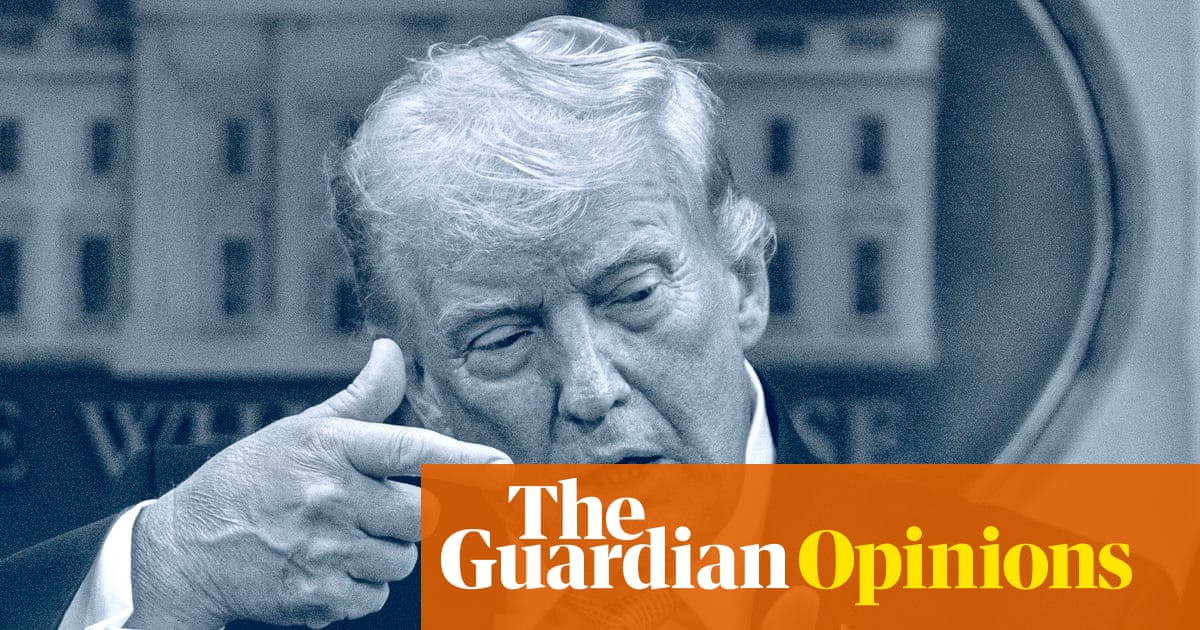

Donald Trump embodies a dictatorial approach, while the United States is founded on democratic principles. Both statements can coexist, but this situation cannot persist indefinitely. Currently, there exists a stalemate between a president aspiring for monarchical power and a constitution designed to reject such authority. This conflict is critical; it represents a struggle that could either undermine the republic’s integrity or reinforce it against tyranny.
As the leading global power, the resolution of this conflict will have significant implications for nations like the United Kingdom, which rely on American support for their security needs.
Trump’s harsh criticisms of Keir Starmer and other European leaders, particularly regarding their hesitance to participate in military actions against Iran, highlight the futility of attempting to maintain a partial alliance with a leader who demands complete loyalty. The president’s self-acknowledged authority stems solely from his own beliefs. Earlier this year, when questioned about potential limitations on his global actions, he stated, “My own morality, my own mind.”
Aligning with such a figure necessitates the abandonment of legal frameworks in favor of his directives. This choice has been embraced by the Republican Party domestically and is the only position available for international allies.
The response from Europe has been a confusing blend of submission and strategic evasion. Efforts have been made to charm Trump into reaffirming NATO commitments and to prevent a total abandonment of Ukraine. European nations have adjusted their defense budgets to demonstrate their financial commitment to the alliance, aiming to persuade him to maintain U.S. support.
This approach has a strategic basis. By preparing for the worst-case scenario—Europe left vulnerable to an aggressive Russia—such preparations may reduce the likelihood of that outcome, as increased military spending can act as a deterrent to Moscow and appease Trump. However, elements of fear and denial also complicate the situation. There remains a lingering hope among Europeans that the previously amicable transatlantic relationship can be restored, rather than permanently altered.
There is a psychological inclination to view the chaos instigated by Trump as an aberration—an extraordinary event akin to the Covid pandemic; disruptive and painful, yet not indicative of a lasting shift in the global order. The president is not invincible; his authority may be limited if Democrats succeed in the upcoming midterm elections. Diplomatic resolutions can be achieved. Blocked waterways can be reopened. Supply chains can be reestablished.
However, the effects of the “Trumpdemic” are more intricate. The U.S. underwent a significant exposure to these issues following the 2016 election, culminating in the violent assault on democracy on January 6, 2021. This severe episode has not equipped the political landscape with sufficient immunity to prevent a second term that is already demonstrating an even more aggressive approach towards ethical governance than the first.
There is no assurance that Trump’s successor will restore traditional constitutional principles, assuming such a successor would even be inclined to do so. Former allies of the U.S. would welcome a more stable president, but there is no guarantee that rational governance would endure beyond a single election cycle. Trust has eroded.
American conservatism is deeply entrenched in paranoid, apocalyptic ideologies, viewing European liberal democracy as a threat to civilization and a consequence of Muslim immigration that erodes white, Christian culture. From this perspective, appeals to international institutions and multilateralism are dismissed as the whining of geopolitical weaklings.
European leaders have been aware of this rhetoric for years. Their miscalculation was in believing they could still operate within a special framework reserved for historical allies, under the assumption that Trump’s extreme rhetoric and favoritism towards authoritarian leaders would not consistently characterize U.S. foreign policy. When he expressed willingness to forcibly take Greenland—a move that would undermine NATO—European leaders recognized they were dealing with someone who regards partners as targets and only concedes under pressure.
A unified European response, combined with market concerns about a potential transatlantic trade war, prompted Trump to back down. This incident marked Starmer’s initial public disagreement with the White House, where he labeled Trump’s threats regarding Greenland as “completely wrong” and asserted that he would “not yield” to American demands for a more compliant stance. Nevertheless, the Prime Minister maintained his strategy of balancing relations between Europe and the U.S., without committing to a clear preference.
The crisis surrounding Iran has shattered this pretense. The decision Starmer believed he could avoid has been thrust upon him by Trump’s insistence on absolute support for an unlawful conflict. By rejecting this demand and facing Trump’s ire, the Prime Minister has shifted Britain’s foreign policy focus towards Europe. This shift is further supported by economic and geographical factors, as the proximity to the single market draws Britain closer to the continent.
The new necessity for solidarity does not eliminate the existing barriers to deeper integration. Brexit has created a complex web of legal challenges to reestablishing connections. Within the EU, competing priorities among its 27 member states, each with unique economic situations and historical backgrounds, complicate cooperation. Additionally, tensions arise between national demands—such as the need for spending on non-military areas or sourcing cheaper gas than Russia offers—and the benefits of collective, supranational coordination.
Europe has not presented a unified stance regarding the Iran conflict. German Chancellor Friedrich Merz appeared almost mute during a tense Oval Office meeting, while Trump harshly criticized Starmer and Spain’s Prime Minister Pedro Sánchez. In contrast, Irish Taoiseach Micheál Martin responded with dignity, defending Starmer as a “very earnest, sound person.”