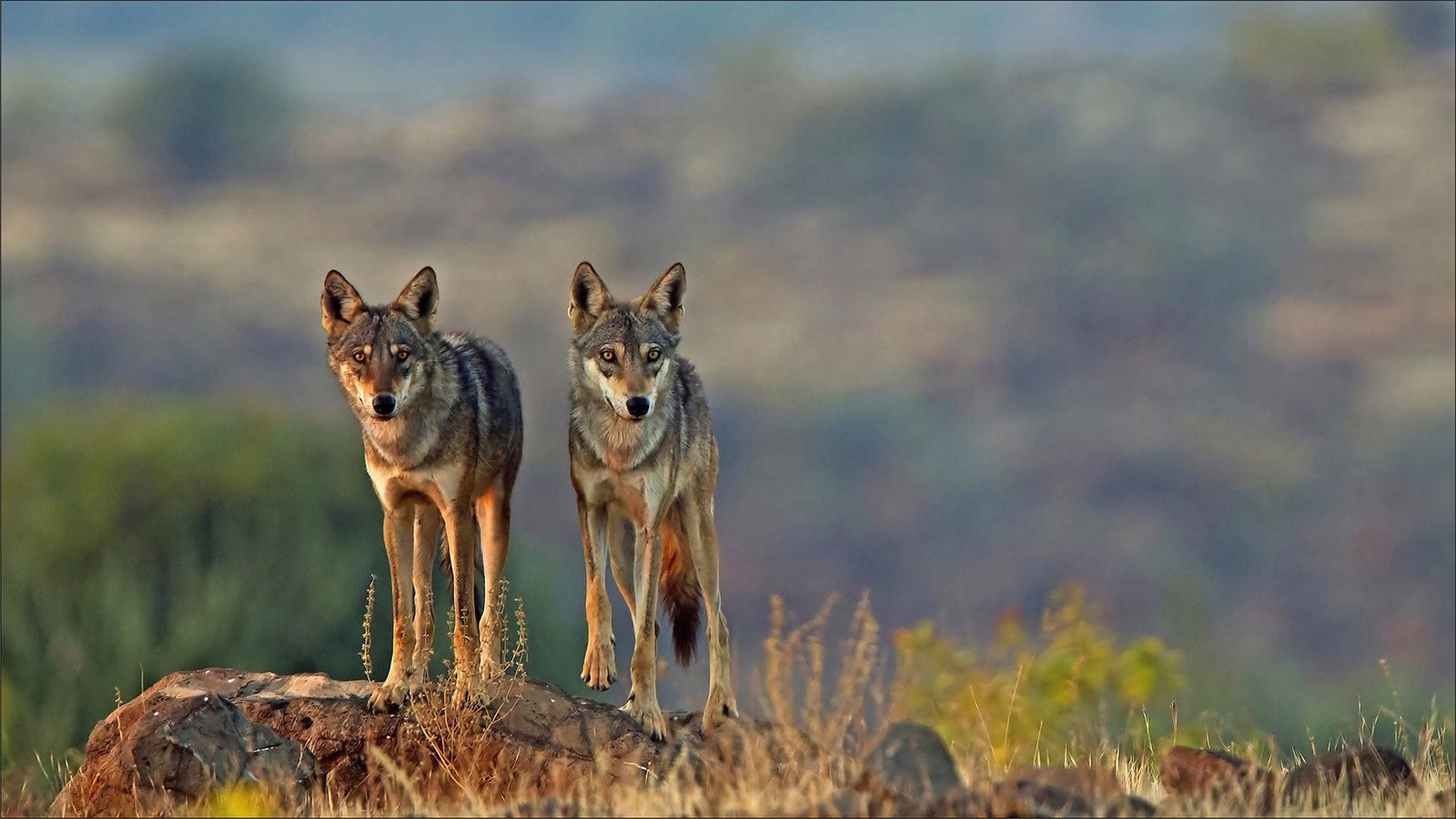

As you journey towards the outskirts of Pune, the urban landscape gradually gives way to the expansive vistas of the Deccan Plateau. The area features open fields, gentle hills, ponds, and stretches of deciduous vegetation. However, the eastern fringes of Pune are sparsely populated with trees, pathways, or campsites.
What you might encounter instead are patches of dry grass and thorny shrubs. If you are observant, you could catch a glimpse of a pack of wolves seeking shade or a chinkara sprinting across the terrain. With a stroke of luck—or perhaps misfortune—you might even spot a bibtya (leopard). In contrast to the lush hills and forests found to the west of the city, these grasslands are often overlooked, yet they harbor a surprisingly diverse range of wildlife that remains largely unrecognized by urban dwellers.
Frequently labeled as semi-arid ‘wastelands,’ these regions are intricate and valuable grassland ecosystems that serve as habitats for numerous species, including a significant population of Indian grey wolves, hyenas, chinkaras, foxes, porcupines, and countless bird varieties.
These animals rely on the grasslands, which face various threats such as overgrazing, urban development, mining activities, invasive plant species that disrupt the ecosystem, and insufficient policy protection.
In response to these challenges, The Grasslands Trust (TGT) has emerged as a key organization focused on uniting passionate conservationists and motivated change-makers. Their collective goal is to restore and safeguard endangered savanna grasslands and support the communities that depend on them. TGT’s initiatives span the regions of Kendur, Purandar, Saswad, and the Morgaon Belt, emphasizing both conservation and the recognition of these vital areas.
The frontline defense for both vegetation and wildlife lies with the local communities. TGT equips residents with essential field kits and guides, with those demonstrating strong reporting skills receiving additional resources like binoculars and cameras.
Currently, TGT’s primary focus involves employing camera traps across extensive landscapes arranged in a grid system, along with local observations to confirm wildlife sightings. They are also engaged in imaging and mapping the breeding territories of Indian wolves to facilitate future conservation endeavors in these critical habitats.
“We utilize drones for imagery development, and artificial intelligence aids in identifying individual animals within the grasslands,” explained Mihir Godbole, the organization’s founder. The integration of AI technology has revolutionized individual animal identification, allowing drones to capture video footage over vast areas, which significantly improves accuracy in counting animal populations.
This innovative approach not only conserves time but also minimizes human error, proving vital for the conservation of the Indian wolf species.
“Pune district alone has around 11 breeding sites, surpassing the total number recorded in Rajasthan, Gujarat, and Karnataka combined,” noted Godbole.
High-resolution images reveal unique physical traits, such as fur markings, enabling tracking of individuals outside their packs. This data assists in monitoring movements and understanding pack dynamics, social behavior, and decision-making processes. Additionally, identification and mapping efforts extend to nighttime using thermal cameras, which is crucial since many grassland species are active after dark, marking a significant advancement in conservation efforts.
“The datasets currently being compiled encompass all species in the region; we aim to identify every individual animal within the grasslands, not just wolves,” added Godbole.
Dr. Sachin Anil Punekar, a conservation biologist and founding president of Biospheres, an organization committed to biodiversity conservation through research and advocacy, remarked, “TGT has made substantial contributions to research that highlights the grassland ecosystem and its biodiversity. Their ecological studies on species such as leopards, Indian grey wolves, hyenas, and Bengal foxes have had a notable impact.”
Nonetheless, he emphasized that further efforts are necessary. “Government records often label grasslands as wastelands, which undermines their ecological significance. Proper conservation-focused recognition is essential, along with a pressing need to document plant-animal interactions to grasp the ecological services these areas provide.”
While wildlife is reliant on their habitats, the local population also depends on these natural spaces for grazing livestock, which in turn sustains their livelihoods.
“The country’s economy is intrinsically linked to its ecology,” Punekar concluded.
Pranoy Mishra is currently an intern with The Indian Express.