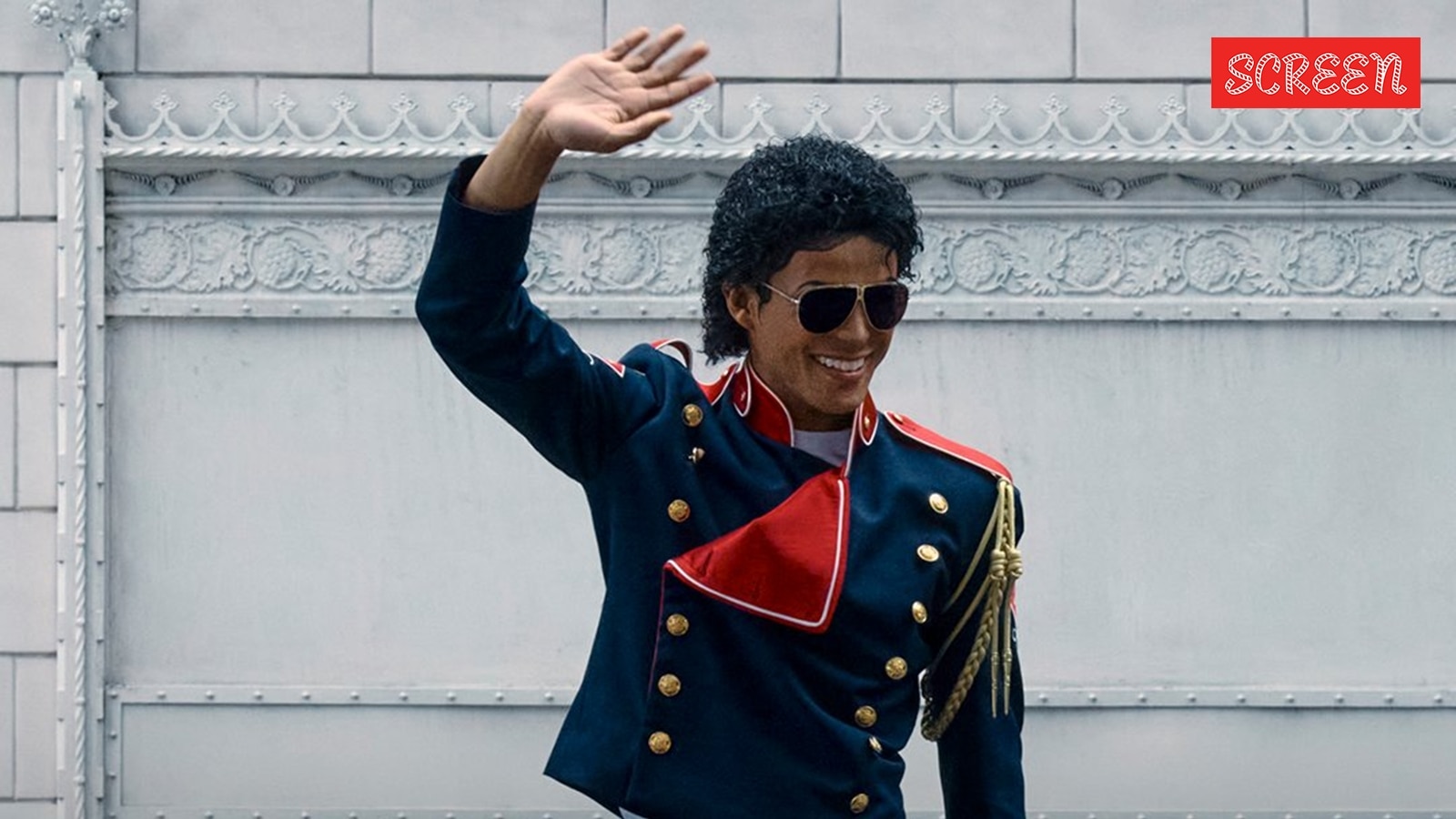

The anticipated Hollywood biopic, titled “Michael,” which chronicles the life of the iconic singer Michael Jackson, has been under development for several years. Principal photography concluded in May 2024, but subsequent revisions led to a complete reworking of the film’s third act. Notably, the final version excludes references to the child molestation allegations that plagued Jackson during the latter part of his career. Production teams have attributed this omission to a legal oversight by the attorneys representing the Jackson estate.
This oversight triggered one of the more costly adjustments in recent Hollywood history, involving a significant overhaul of the film’s concluding segment, which necessitated 22 additional days of shooting and incurred expenses estimated between $10 million to $15 million. The film’s release date has also been adjusted multiple times. “Michael,” directed by Antoine Fuqua and featuring Jaafar Jackson, Michael’s nephew, is now scheduled to premiere in the United States on April 24, 2026. The journey to this point has been as intricate as the life of its subject.
The initial iteration of “Michael” focused on a pivotal moment in Jackson’s life, reportedly starting in the midst of a crisis. Sources indicate that the film was set to open with a striking scene from 1993, where Jackson is depicted gazing at himself in a mirror, illuminated by flashing police lights. This scene coincided with the first allegations of child molestation. The earlier draft included a significant portion dedicated to the repercussions of these allegations, featuring a sequence where investigators arrive at Jackson’s famed Neverland Ranch to seek evidence. Ultimately, however, this content was excluded from the final cut.
Legal representatives for the Jackson estate, which has a producing role in the film, uncovered a stipulation in a settlement agreement with accuser Jordan Chandler that explicitly prohibited any depiction or mention of him in film productions. This revelation came late in the process, necessitating the removal of all related narrative elements.
The case in question from 1993 involved Evan Chandler, who accused Jackson of sexually abusing his then-13-year-old son, Jordan. An initial inquiry yielded no evidence against Jackson, and the family reached a financial settlement in early 1994. Jackson’s legal team has consistently argued that this settlement did not imply guilt. However, the settlement’s specifics had not been adequately scrutinized prior to production.
The cast reconvened for an additional 22 days of filming in June 2025, with the costs of these reshoots falling between $10 million and $15 million. The Jackson estate covered these expenses, acknowledging their attorneys’ failure to identify the problematic clause. Consequently, the estate now possesses an equity stake in the film, prompting some observers to view the project as an attempt to rehabilitate the public image of the late artist.
Lionsgate initially approved the film’s production with a budget of $155 million, which now incorporates the added costs from reshoots. The additional filming took place in Los Angeles rather than the originally planned location of Santa Barbara and, importantly, did not qualify for state tax incentives, further increasing overall expenses. The project also faced delays when screenwriter John Logan’s home was affected by the Palisades fire. The film’s release schedule has shifted from an initial date of April 18, 2025, to October 3, 2025, and ultimately to its current date in April 2026.
Reports indicate that the revised version of “Michael” concludes at a notably different juncture in Jackson’s life, with the final scene set during his “Bad” tour as he prepares to perform. The narrative now emphasizes his musical contributions and the dynamics of his relationship with his father, Joe Jackson, who often resisted his son’s individual aspirations for the sake of the Jackson 5. Additionally, the film addresses Jackson’s recovery from severe scalp injuries that resulted from a pyrotechnics incident during a 1984 Pepsi commercial shoot.
Colman Domingo portrays Joe Jackson, while Nia Long takes on the role of Katherine Jackson. Miles Teller appears as attorney John Branca, and notably, Janet Jackson is not represented as a character in the film. Michael’s son, Prince Jackson, has served as an executive producer and has been actively involved throughout the production process.
Even prior to the public revelation of the reshoots, the film faced criticism. One of the most vocal detractors was Dan Reed, the director of the 2019 HBO documentary “Leaving Neverland,” which featured testimonies from Wade Robson and James Safechuck, who allege that Jackson abused them as children. After reviewing an early draft of the biopic’s script, Reed condemned it as a “complete whitewash,” stating that it attempts to entirely rewrite the allegations and includes numerous inaccuracies. He noted that the film fails to depict Jackson in compromising situations, despite the fact that he had shared his bed with young boys for many years.
In response, Lionsgate has committed to providing an authentic portrayal of Jackson, stating in press releases that the film will capture both his “undeniable creative genius” and his “human side and personal struggles.” Director Antoine Fuqua expressed his intention to present a truthful account of Jackson’s life as an artist and as an individual.
Jackson consistently maintained his innocence throughout his life and was acquitted of child molestation charges in 2005.
Despite the challenges faced during production, early indicators suggest strong commercial potential. The teaser trailer, released by Lionsgate in November 2025, garnered 116.2 million views within its first 24 hours, surpassing the previous record set by “Taylor Swift: The Eras Tour,” which had 96.1 million views.
Early box office predictions, as reported by Variety, suggest an opening weekend gross exceeding $55 million domestically, which would surpass the $51 million opening of “Bohemian Rhapsody” in 2018. However, drawing direct comparisons is challenging due to changes in the film landscape following the pandemic.