
The former Buxton landfill site, once marred by neglect, has transformed into a thriving woodland characterized by a mix of willows and birches. This area, which boasts an impressive array of 870 species, primarily consists of insects, flourishing amidst a vibrant display of summer flowers. The rich biodiversity here is attributable to the presence of these two pioneering tree species, known for their ability to attract a variety of invertebrates.
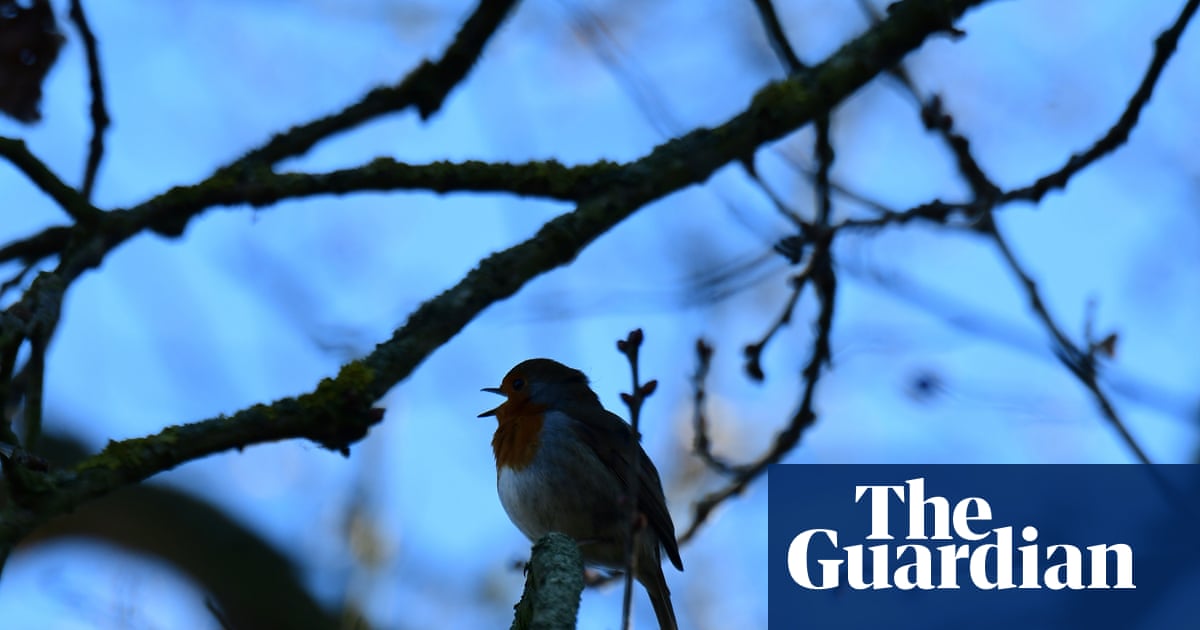
The abundance of insects creates an ideal environment for birds, as their songs are largely supported by the protein-rich invertebrates. Recently, we hosted a dawn-chorus walk which revealed a chorus of 20 different bird species during early spring. Among the avian performers were song thrushes, mistle thrushes, dunnocks, wrens, bullfinches, and greenfinches—all of which are either red- or amber-listed by the British Trust for Ornithology due to their conservation status.
Interestingly, the term “dawn chorus” might not fully capture the phenomenon, as noted by a participant from our group who monitors badgers. He pointed out that bird songs often begin as early as 3:40 AM, peaking around 4:30 AM, well before dawn breaks. While the term “chorus” may be fitting, it requires further clarification.
The songs serve as a means for birds to establish their territories and attract mates, resulting in a competitive atmosphere among the various species. In his insightful book, *The Great Animal Orchestra*, Bernie Krause discusses how the soundscape of a particular area embodies a form of collective harmony. Each bird or creature occupies a unique frequency range, and over time, the members of any natural habitat have adapted to share these auditory spaces. Thus, Hogshaw represents a harmonious blend in multiple regards.
It is disheartening, then, that the local authority, High Peak Borough Council, has introduced discordant elements into the Hogshaw soundscape. While it deserves recognition for acknowledging a nature emergency in Britain, it paradoxically expressed reluctance to safeguard Hogshaw, proposing instead to designate it as a “land bank” for future developments. Given that the council predominantly owns this site and that no comparable urban area is as ecologically rich, one must question the sincerity of an emergency declaration that lacks proactive and restorative measures.
For those interested, *Under the Changing Skies: The Best of the Guardian’s Country Diary, 2018-2024* is currently available for purchase at guardianbookshop.com.