
Located deep within the Australian outback, Narriearra-Caryapundy Swamp National Park presents a striking contrast to what one might anticipate after a lengthy 15-hour journey from Sydney. This former cattle station is positioned in the northwestern region of New South Wales and represents the first of several properties acquired by the state government in recent years, aimed at enhancing conservation efforts and attracting tourism.
However, local graziers have expressed dissatisfaction with these acquisitions, claiming they have led to unforeseen adverse effects. Many are now voicing their frustrations, insisting that the situation has become untenable.
Three hundred and fifty kilometers south of the park, a herd of black cattle is seen making its way into stockyards, their lowing echoing against the backdrop of mustering motorbikes. Among the observers is grazier Sam Beven, accompanied by his expectant wife, Erin, and their three young sons: Harvey, 6, Duncan, 4, and Walter, 2. As he watches the cattle, Sam is left contemplating the future of his family and whether his children will be able to pursue farming as a livelihood.
For Sam, farming has always been more than a job; it has been a lifelong aspiration. Having grown up at Sturt’s Meadows Station, located 70 kilometers north of Broken Hill, he has cherished the land since his family first settled there in 1951. “I have a passion for working with livestock and a deep love for animals,” he remarks. “Everything about it resonates with me.”
At 33 years old, he has successfully turned his dreams into reality. Yet, doubts linger about whether his sons will inherit the opportunity to follow in his footsteps.
In recent years, the pressures of farming have intensified, largely due to what Sam perceives as a significant threat to their way of life. Since 2020, the New South Wales government has invested approximately $200 million in acquiring 16 large outback properties, adding around one million hectares to the national park system, an area exceeding four times the size of the Australian Capital Territory.
Among these acquisitions, Thurloo Downs, located near the Queensland border, stands out as the most costly, purchased for over $108 million. This extensive 437,000-hectare property is characterized by its diverse landscapes, including rivers, salt lakes, floodplains, sand dunes, and woodlands. The NSW National Parks department envisions it as a key feature of their western estate, a refuge for endangered species and a potential tourist attraction in the future.
However, the transformation of Thurloo and other significant outback stations has raised concerns among local landholders. Many graziers believe these purchases jeopardize their livelihoods, creating a cloud of uncertainty for families like the Bevens. “What will our situation look like in 10, 20, or 30 years? Will our children have opportunities in farming?” Sam reflects, highlighting the pressing issues that arise as more properties change hands.
The rising land values further compound these worries. In 2020, the average price of rural properties in New South Wales was recorded at approximately $673,218. Recent figures from the NSW Valuer General suggest this has nearly doubled to around $1,264,400 by 2025, with some regions, including Bourke and Cobar, experiencing increases of up to 138 percent.
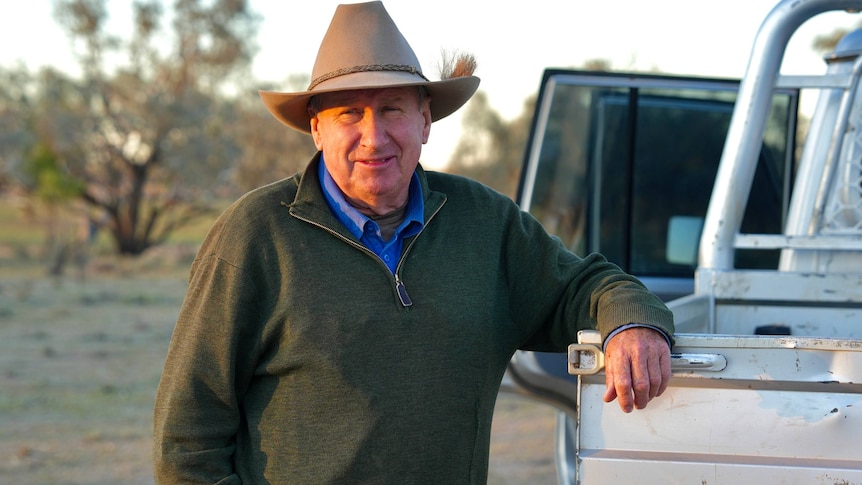
Sam Beven, who serves as the president of the Pastoralists Association of West Darling, has heard similar concerns from many within his community. “Our goal is to leave behind a better environment for our children,” he explains. “If the cost of taking over the family land becomes prohibitive, it feels as though our efforts are in vain.”
He proposes that alternative conservation strategies could be beneficial, such as allowing property owners to designate portions of their land for conservation, particularly in areas difficult to manage. “If every property set aside just one paddock for conservation, it could far exceed the land the government has bought, while still allowing us to maintain our livestock operations,” he suggests.
In the remote agricultural town of Bourke, located over 600 kilometers away, similar discussions are taking place. Renowned for its wool production and once a thriving inland port, local graziers are anxious about the implications of recent land purchases. In the past four years, seven former livestock properties in Bourke and nearby Cobar have been sold for a total of around $32 million, encompassing 105,000 hectares.
Richard Ridge, a local grazier, has been an outspoken critic of the rapid expansion of national parks. “This is eroding the social fabric of Bourke and surrounding areas,” he states, voicing concerns about the diminishing number of pastoral operations that sustain local businesses and employment.
He emphasizes the need for more residents in these pastoral areas to maintain productivity, especially during good seasons when the land thrives. Unfortunately, community consultations regarding these park acquisitions have been minimal under successive New South Wales governments, leaving graziers and local councils feeling sidelined in the decision-making process.