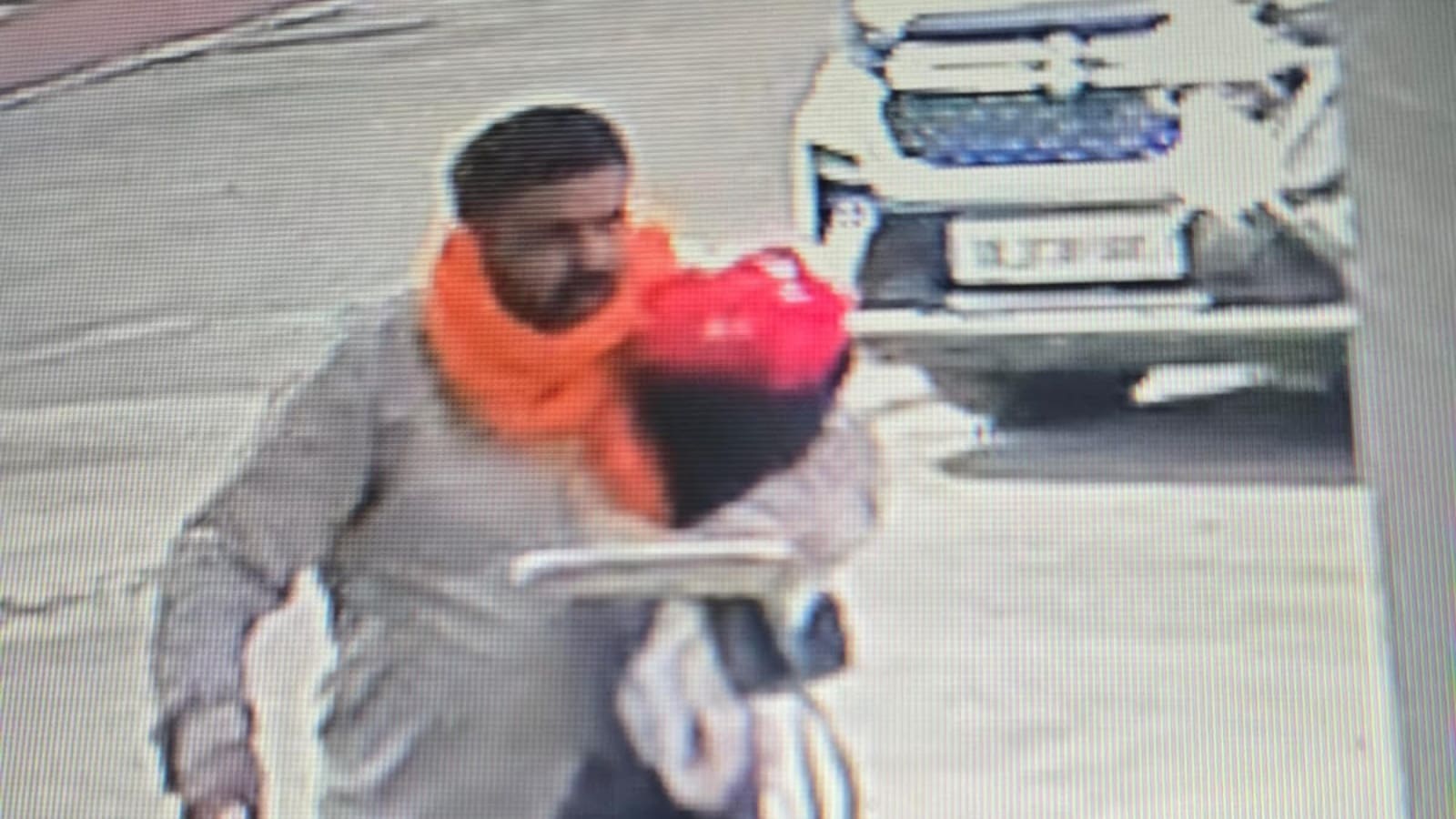

Sarabjeet Singh, who crashed his SUV through a security barrier at the Delhi Assembly complex on Monday, departed from Puranpur in the Pilibhit district of Uttar Pradesh around 2 PM on April 3. This was shortly after he discovered that his nephew, Harman Singh, was missing, as reported by police on Wednesday.
Initially, Sarabjeet traveled with two of his nephews towards Nangal in Anandpur Sahib, Punjab, which was identified as Harman’s last known whereabouts. According to an officer involved in the investigation, the trio spent the night in Bareilly and continued their journey at approximately 3:45 PM on April 4, passing through Moradabad, Ghaziabad, and Sonipat before arriving in Anandpur Sahib early on April 5.
Upon arrival, they visited a gurdwara to pray, during which Sarabjeet, who does not wear a turban or keep long hair, made a vow to don a turban and refrain from cutting his hair if Harman was found. By around 8 AM on April 5, they reached Nangal, where Sarabjeet met with Harman’s father, Harpreet Singh, who was searching for his son in the area. Despite searching multiple locations, they were unable to locate Harman.
On Monday, Sarabjeet traveled to Delhi, leaving his nephews behind. A team from the Delhi Police is currently in Nangal to gather statements from the nephews and clarify the timeline of events.
Police investigations revealed that call records, CCTV footage, and toll data indicated Sarabjeet’s journey from Nangal toward Panipat, reaching Murthal around 12:50 PM. He then drove to the Delhi Assembly, where he allegedly crashed his vehicle into Gate 2 at approximately 2:10 PM.
Authorities have indicated that various aspects of Sarabjeet’s story appear inconsistent. During a search of his vehicle, officers reportedly found a medical file belonging to a patient in a Karnal hospital, but Sarabjeet could not explain its presence or any connection to the patient. Police have contacted the hospital for further information regarding this link.
Moreover, investigators have uncovered that Sarabjeet was receiving treatment for depression in Shahjahanpur, Uttar Pradesh, although no documentation has been found to support this claim.
In response to the security breach, the Delhi Police suspended two officers from its security unit—a sub-inspector and an assistant sub-inspector—on Tuesday night.
On Wednesday, Delhi Assembly member Vijender Gupta called for immediate reforms, including the installation of hydraulic road blockers at all Assembly gates and enhancements to the existing security framework. He emphasized that the security of the Delhi Assembly must be rigorous and proactive, relying on vigilance, clear command structures, and seamless coordination among all involved agencies.
Gupta stressed the need for a unified command structure between the CRPF and the Delhi Police, advocating for a single authority to ensure coordinated responses in emergencies. He pointed out that delays in communication could weaken response efforts and instructed that real-time information sharing among all agencies be prioritized for operational efficiency. Additionally, he recommended that each gate be staffed by at least two trained personnel from the Delhi Police or CRPF.
Gupta also mandated that no vehicle should be allowed entry without adequate security clearance and verification, and proposed the deployment of a dedicated mobile patrol vehicle for rapid response and intervention, including the ability to block unauthorized access.
Responsibility for securing the Delhi Assembly is shared between the CRPF and the Delhi Police, with CRPF personnel stationed at all five gates, including the one breached by Sarabjeet.