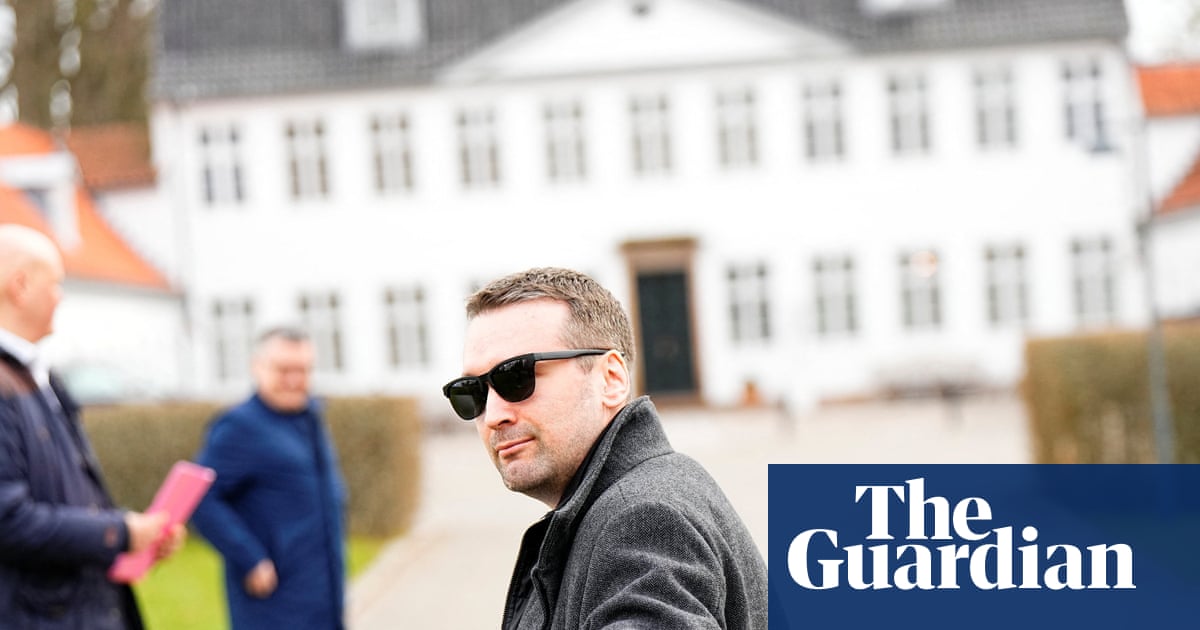

Qarsoq Høegh-Dam, a newly elected member of the Danish parliament, embraces an unconventional aspiration for a politician: he aims to render his role unnecessary. “I want to make myself as obsolete as possible,” he stated, emphasizing his commitment to his responsibilities.
Last month, Høegh-Dam made history by becoming the inaugural representative of the pro-independence Naleraq party in the Danish parliament. He envisions a future where Greenland, a largely autonomous Arctic territory, is governed solely by its own parliament in Nuuk, thereby eliminating the need for Greenland’s two parliamentary seats in Copenhagen, its historical colonial authority.
The recent Danish general election saw Mette Frederiksen’s Social Democrats secure the most votes, though without achieving a clear majority. This election followed a particularly tense period in Denmark’s history, marked by Donald Trump’s aggressive rhetoric about acquiring Greenland.
Trump’s threats escalated dramatically in January, leading Denmark to prepare for a possible military confrontation by deploying blood bags and explosives to Greenland. Although tensions have eased somewhat, ongoing discussions indicate that the situation has not yet reached a resolution.
This geopolitical turmoil has brought renewed attention to the relationship between Greenland and Denmark, as well as the historical context of their interactions.
Greenland’s modern colonization began with the backing of Denmark-Norway in 1721, despite the Inuit having inhabited the region since approximately 2500 BC. During World War II, the United States temporarily occupied Greenland while Denmark was under German control. Greenland formally became part of the Danish kingdom in 1953, and home rule was granted in 1979. Since then, while some powers have been devolved to Greenland, Denmark continues to oversee its foreign and security policies.
Høegh-Dam cautioned that the global competition for Arctic dominance, particularly from the United States and Russia, necessitates that Denmark fulfill its obligations to the Greenlandic populace. He pointed out that Copenhagen is currently falling short in its duty to maintain Greenland’s prison facilities.
While all political factions in Greenland advocate for eventual independence, Naleraq is particularly keen on achieving this goal promptly. However, Høegh-Dam stressed the importance of a smooth transition.
Since its inception in 2014, Naleraq has gained significant traction, doubling its representation in Greenland’s parliament, Inatsisartut, in the last election. The party opted not to join the coalition government and currently holds an opposition position.
Høegh-Dam hails from a politically active family; his sister, Aki-Matilda Høegh-Dam, previously served in the Danish parliament for the Siumut party before switching to Naleraq. His late uncle, Thue Christiansen, was a member of Greenland’s first cabinet and played a role in designing the national flag. His cousin, Aaja Chemnitz, also previously represented Greenland in the Danish parliament. “Politics is certainly a frequent topic of discussion at family gatherings,” he noted. “I aspire to contribute meaningfully in this arena.”
Last Tuesday, Høegh-Dam, alongside fellow Greenlandic MP Naaja Nathanielsen, met with Frederiksen, who is now serving as a caretaker prime minister while attempting to form a coalition government. Nathanielsen, who has held several significant ministerial positions in the Greenlandic government, represents the territory for the Inuit Ataqatigiit (IA) party.
Nathanielsen expressed her desire to reform the 1953 constitution, which was not ratified by Greenlanders and restricts Nuuk’s authority over its own foreign and security policies.
She further articulated that although Greenland’s foreign policy voice has grown, there are still “red lines” that limit the territory’s autonomy within the current constitutional framework.
Despite their differing party affiliations, both Greenlandic MPs have expressed a commitment to setting aside domestic disputes and collaborating closely in Copenhagen.
Høegh-Dam clarified that he is not opposed to a strong relationship with Denmark, yet he firmly advocates for Greenland’s full independence. “The existing structure, rooted in colonialism, is ineffective. We aim to optimize our situation,” he stated. “The global landscape is evolving, but we are still accustomed to…”