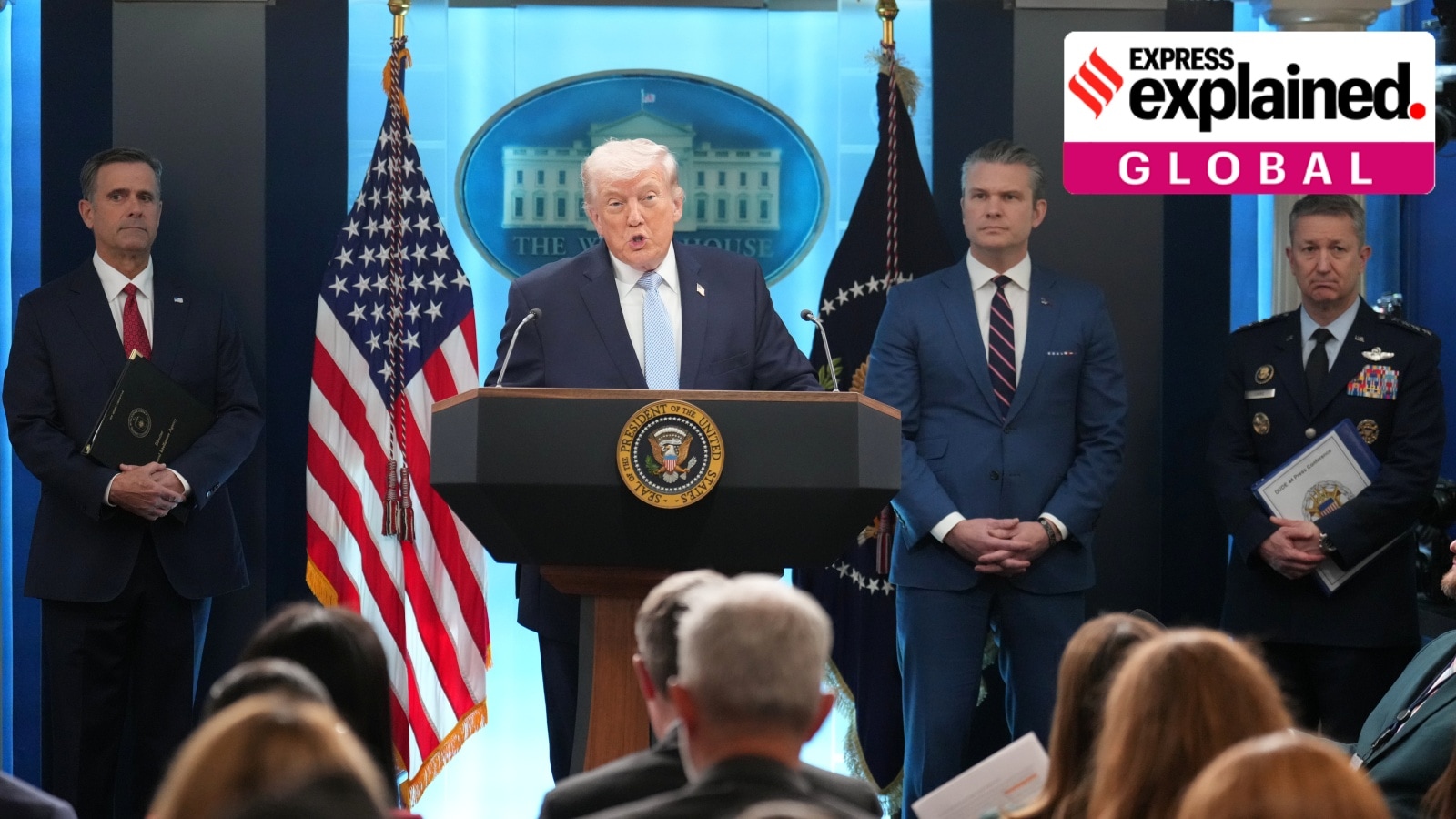

U.S. President Donald Trump was informed by senior administration officials and prominent advisors that Israeli Prime Minister Benjamin Netanyahu’s proposals regarding regime change in Iran were deemed “farcical” and “nonsense” — a full two weeks prior to the coordinated military actions taken by the U.S. and Israel against Iran.
Despite this advice, Trump proceeded with the initiative, aligning his hawkish views with Netanyahu’s over an extended period, often more so than many of his key advisors recognized.
On the day Trump declared a two-week ceasefire in the conflict with Iran, The New York Times published a report revealing the rationale behind his decision to engage in military action. This information is part of an upcoming book by NYT journalists Maggie Haberman and Jonathan Swan, titled Regime Change: Inside the Imperial Presidency of Donald Trump.
Netanyahu made a persuasive case during a meeting in the White House’s situation room, attended by Trump and his essential advisors but notably absent Vice President JD Vance, who was in Azerbaijan at the time. This meeting took place on February 11, where Netanyahu argued that Iran was on the brink of regime change and that a combined U.S.-Israeli effort could effectively dismantle the Islamic Republic.
The Israeli delegation also showcased a brief video presentation featuring potential successors to the current regime, which included the son of the former Shah, Reza Pahlavi, despite his absence from recent discussions. The Israeli argument posited that “Iran’s ballistic missile capabilities could be neutralized within weeks, rendering the regime incapable of threatening the Strait of Hormuz, with minimal risk of Iranian retaliation against U.S. interests in surrounding nations.”
Additionally, intelligence from Mossad indicated that domestic protests in Iran were likely to resurface, and with the agency’s assistance in inciting unrest, an intense bombing campaign could create a favorable environment for the Iranian opposition to initiate a regime change. The Israelis also suggested that Iranian Kurdish fighters might cross from Iraq to launch a ground offensive in the northwest, further undermining the regime’s stability, as reported by NYT.
The following day, U.S. intelligence officials reviewed and disseminated their analysis to Trump’s inner circle. Their assessment, based on extensive knowledge of U.S. military capabilities and familiarity with Iran’s political landscape, dissected Netanyahu’s presentation into four main objectives: eliminating Iran’s Supreme Leader Ayatollah Ali Khamenei, crippling Iran’s ability to project power, inciting a popular uprising within Iran, and ultimately establishing a secular leadership.
According to the report, U.S. officials concluded that the first two aims were feasible with American intelligence and military resources. However, they regarded the latter two objectives, particularly the potential for a Kurdish ground invasion, as unrealistic.
When Trump participated in the meeting, CIA Director John Ratcliffe briefed him on the analysis, labeling Netanyahu’s scenarios for regime change as “farcical.” U.S. Secretary of State Marco Rubio echoed this sentiment, stating, “In other words, it’s nonsense.” Ratcliffe further clarified that while regime change could occur unpredictably in conflict situations, it should not be viewed as a tangible goal.
Others, including Vance, who had just returned from Azerbaijan, voiced considerable skepticism regarding the likelihood of a successful regime change. When asked for his input, General Dan Caine, the U.S. Chairman of the Joint Chiefs of Staff, remarked that such proposals from the Israelis were often exaggerated and lacked thorough planning, driven by their reliance on U.S. support.
Trump evaluated this feedback and remarked that regime change would become “their issue,” though it remained unclear whether he was referring to the Israelis or the Iranian populace. Ultimately, his decision to engage in military action against Iran appeared to hinge more on the first two objectives of targeting Khamenei and dismantling Iran’s military capabilities rather than the feasibility of inciting a popular uprising or regime change.
The discussions revealed that even the more cautious members of Trump’s War Cabinet, with the exception of Vance, largely deferred to the president’s instincts and his confidence in a swift and decisive military outcome.
Despite some advisors’ mistrust of Netanyahu, the Israeli leader’s perspective aligned more closely with Trump’s views than the anti-interventionists within Trump’s team or the broader “America First” movement were willing to acknowledge. This alignment had been evident for several years.
Having returned for a second term, Trump’s faith in the capabilities of the U.S. military had only strengthened, bolstered by a successful commando operation to capture Venezuelan leader Nicolás Maduro on January 3, which resulted in no American casualties and underscored the effectiveness of U.S. forces.
As reported by NYT, Secretary of Defense Pete Hegseth emerged as the strongest advocate for military action against Iran within the Cabinet. Conversely, Rubio expressed a more ambivalent stance to his colleagues, reflecting the divided opinions within the administration regarding a potential military campaign.