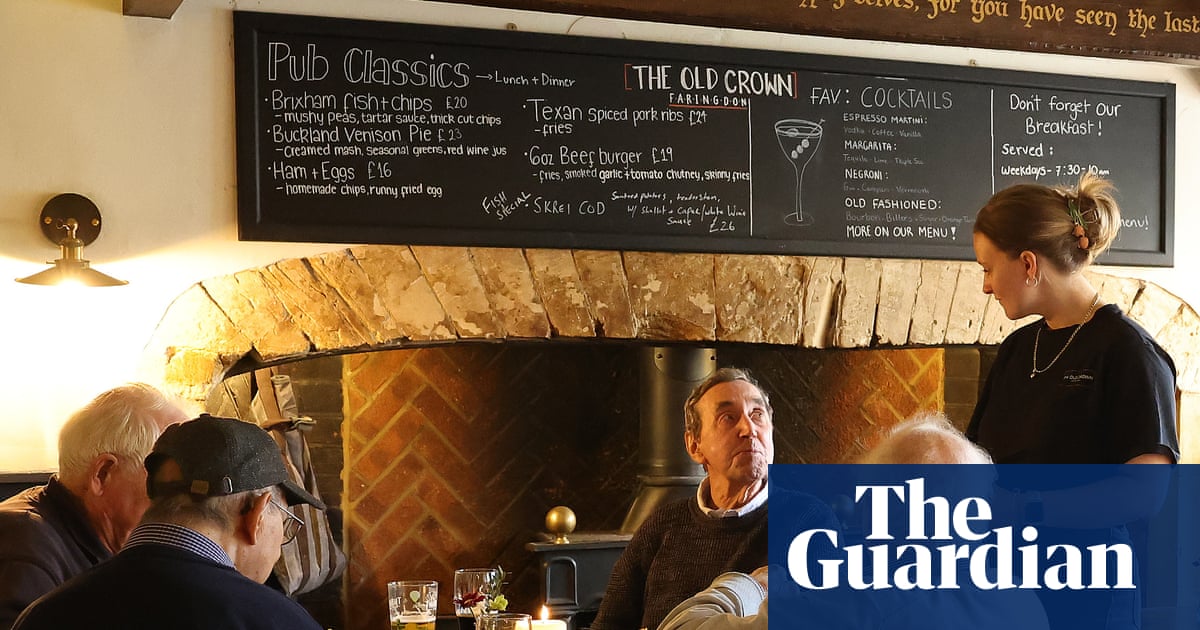

Nick Evans is diligently examining financial statements, hoping to navigate his way to profitability. As a co-owner of the Old Crown Coaching Inn in Faringdon, Oxfordshire, a historic pub and hotel with charming wooden beams and intimate spaces, he faces significant challenges.
The establishment has a storied past, having hosted notable figures such as Oliver Cromwell in 1645. A room once occupied by the infamous “hanging judge” Lord Jeffreys is now a honeymoon suite, symbolizing a shift from somber history to celebratory moments.
Evans, who previously worked as a trader in the City, is familiar with the pursuit of profit. However, the hospitality industry, which has endured numerous setbacks since the onset of the COVID-19 pandemic, is now facing a new set of difficulties.
The Old Crown is among countless hospitality establishments confronting a severe rise in expenses due to an increase in the minimum wage and heightened business rates that took effect in early April.
In addition to these challenges, the ongoing crisis in Iran has led to soaring energy prices, with oil and gas costs remaining significantly above pre-war levels despite a recent ceasefire announcement. This situation is further straining the costs associated with procuring food and heating for guests. Customers, too, are feeling the pinch, impacting their willingness to spend on dining and accommodation.
According to Evans, the only feasible way to manage costs is to simplify food preparation, allowing staff to merely heat pre-packaged meals. “That’s not why we entered this industry,” he remarked, casting a glance at his business partner, Mike Webb, who also retired from a career in finance.
The duo acquired the Old Crown for £625,000 shortly after the pandemic began and invested an equal amount in renovations to transform it into the inviting venue it is today. They not only own the freehold but also rent two additional pubs from Greene King, a brewing company.
Evans and Webb aspire to expand their business by adding six more rooms, bringing the total to 20. However, this endeavor would require an additional £350,000 investment. “This expansion would drive growth and generate employment for local tradespeople, who contribute to the tax system,” Evans explained. Unfortunately, he noted that investment in the sector has come to a halt.
Given the current economic landscape, this expansion seems unattainable. Webb’s hastily drawn financial projections underscore the issue.
The Old Crown’s annual revenue, including VAT, has risen to approximately £1.4 million from £440,000 when they first took over. However, costs for beverages and food ingredients have surged to around £430,000 and continue to climb.
Prices for key items, such as beef for steaks and beverages, have skyrocketed, forcing the establishment to consider price increases that may deter customers. “With Diageo planning to increase the price of Guinness, the cost of a pint could approach £8,” Evans stated. “We can’t raise prices further without risking a drop in patronage.”
Additional expenses include water bills, which contribute £20,000 annually, while laundry, cleaning, and maintenance costs total around £100,000, along with similar amounts for rent and insurance.
Energy costs are another looming concern. Cornwall Insight, an energy consultancy, has warned that some businesses may get trapped in high-priced energy contracts if they renew under unfavorable conditions, while others might struggle to secure fixed-rate agreements.
Ofgem, the energy regulator, has urged suppliers to treat customers fairly, but Kate Nicholls, chair of UK Hospitality, warned that the sector may be on the brink of another energy crisis.
The Crown’s annual gas and electricity bill is approximately £80,000, with a renewal of the supply contract due in July. Evans anticipates that without a resolution in Iran, the costs could rise significantly.
Despite these pressures, the business is currently achieving a modest trading profit. However, after accounting for VAT of £234,000, the financial picture changes. UK hospitality businesses face a much higher VAT rate compared to their European counterparts, a perennial issue highlighted by many in the industry. Additionally, national insurance contributions of £45,000 further complicate the financial outlook.
Rising costs and taxes, many driven by geopolitical factors, are straining the bottom line. Recent government policies aimed at boosting tax revenues to support public services and social support have exacerbated the situation.
Currently, the wage bill stands at approximately £350,000 but is expected to increase to nearly £370,000 by the end of the month due to minimum wage hikes. This comes alongside an increase in employers’ national insurance contributions, which critics have labeled a tax on employment.
While Evans supports fair wages, he emphasizes that the impact of these changes will disproportionately affect younger workers and women, who are often seeking part-time employment. “You risk pricing young people out of the job market,” he remarked, particularly regarding wage increases for workers under 21.
Evans expressed concern about the challenges faced by younger employees, noting that while they may be adept in digital communication, they often struggle with customer interactions. “We help them develop into well-rounded individuals, but now I might as well hire an adult for just a pound more,” he added.
He also pointed out that the national insurance changes could inadvertently discourage employers from hiring part-time workers, who are frequently mothers looking for flexible work. “We prefer full-time employees to avoid paying the additional contributions multiple times for part-time staff,” he noted.