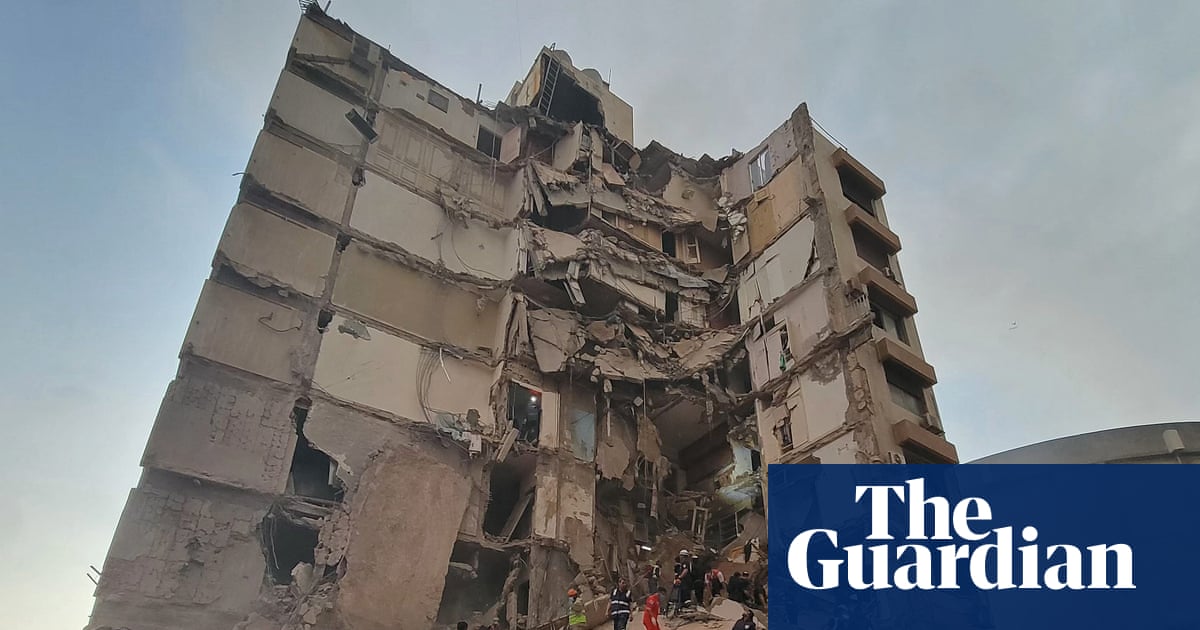

In a shocking series of events, Israel executed one of the most devastating mass attacks in Lebanon since the end of the civil war in 1990, all within a mere ten minutes.
Omar Rakha, a resident of the Barbour neighborhood in central Beirut, was startled awake by the sounds of warplanes but did not immediately grasp the severity of the situation. It wasn’t until he found himself bleeding on the street that he realized the building adjacent to his had been demolished by Israeli airstrikes. Panicked, he dashed through the burning debris in search of his sister, calling out her name.
Meanwhile, 24-year-old calisthenics instructor Shaden Fakih rushed toward the site of the explosion, desperate to locate his friend Mahmoud, who was trapped inside the destroyed building. The scene was chaotic, with the structure reduced to a mound of flames and rubble. Fakih began rescuing individuals from the nearby apartments, including an elderly woman who required assistance. Despite his efforts, there was no sign of Mahmoud, and the once-peaceful neighborhood now resembled a war-torn landscape.
As the emergency room at the American University of Beirut Medical Center (AUBMC) began receiving casualties, Dr. Ghassan Abu-Sittah noted the harrowing influx of injured individuals, including children pulled from the wreckage, many of whom were unaccompanied. “The youngest was just 11 months old. I had to perform surgery to relieve pressure from his head,” stated Abu-Sittah, who serves as a surgeon at AUBMC.
During this brief but devastating aerial assault, Israel targeted over 100 sites across Lebanon, resulting in a reported death toll of at least 254 and injuring 1,165 individuals, according to preliminary figures from Lebanon’s civil defense. This toll exceeds that of the 2020 port explosion in Beirut, which was one of the largest non-nuclear explosions in history.
The Israeli military claimed the strikes were aimed at Hezbollah’s “command and control centers” as part of their operation named “Operation Eternal Darkness.” However, local residents and officials contended that the bombings primarily affected civilians, with Lebanon’s Prime Minister, Nawaf Salam, condemning the actions as violations of international law, targeting densely populated areas.
Dr. Abu-Sittah remarked that the rapid influx of patients appeared to be a deliberate tactic to overwhelm the healthcare system, drawing parallels to his experiences with mass casualty events in Gaza. Dr. Firass Abiad, a surgeon and former health minister, reported that approximately 70 injured individuals arrived simultaneously, many in critical condition, including victims with severe crush injuries and elderly individuals. “There was a 90-year-old man I just attended to who succumbed to his injuries… We were powerless to save him,” Abiad lamented. “These civilians faced an unimaginable horror, as their entire apartment building was obliterated without warning.”
First responders in Barbour labored tirelessly to locate those trapped beneath the debris. Firefighters doused the smoldering remnants of the building while forklifts cleared wrecked cars from the roads to facilitate ambulance access. One emergency worker noted that they had yet to discover any survivors, only remnants of those caught in the disaster.
A father FaceTimed his son, showing him the wreckage of what used to be a Volkswagen, now unrecognizable amid the twisted metal. “You said it was a Volkswagen?” he asked, bewildered as he surveyed the scene.
As Rakha observed the emergency responders at work, he expressed disbelief that such violence could occur in his neighborhood. “I never thought something like this would happen here. Nothing of this magnitude occurred during the last war, which is why so many refugees sought safety here,” said the 38-year-old supermarket owner, his head bandaged and stained with blood.
Barbour, along with other areas in Beirut targeted by airstrikes, is a diverse community where Hezbollah’s influence is minimal. With over 1.1 million individuals displaced by Israeli bombings in the past month, local schools opened their doors to shelter families seeking refuge.
Previously considered safe from the ongoing conflict, Barbour has now found itself within the crosshairs, as Israel’s military indicated that such neighborhoods were being scrutinized for Hezbollah infiltration.
Israeli spokesperson Avichay Adraee stated that the Israel Defense Forces (IDF) had observed Hezbollah militants relocating from their traditional strongholds to mixed areas in northern Beirut. He pledged that Israel would persist in pursuing Hezbollah operatives, regardless of their location.
The Israeli military’s statements and subsequent bombings dashed any hopes that a ceasefire with Iran might extend to Lebanon. The conflict, ignited by Hezbollah’s rocket attacks on Israel on March 2, has resulted in approximately 1,800 fatalities and 5,873 injuries across Lebanon.
Residents of Barbour dismissed Israel’s justifications for the aerial attacks, asserting that such actions only drive even the critics of Hezbollah closer to the group. Fakih voiced his frustrations, saying, “It’s absurd. There’s no Hezbollah presence here; the Israelis seem pleased to bomb civilians. If they want to target Hezbollah, fine, but they should spare innocent lives. Their actions are fueling animosity toward Israel, and we may feel compelled to defend our country in a manner similar to Hezbollah. All I desire is to live peacefully.”
As night descended, the community began to process the tragic events of the day, with images of dust-covered infants rescued from the rubble circulating on social media as families searched for their loved ones.