
AP Photo/Emilio Morenatti
By Middle East correspondent
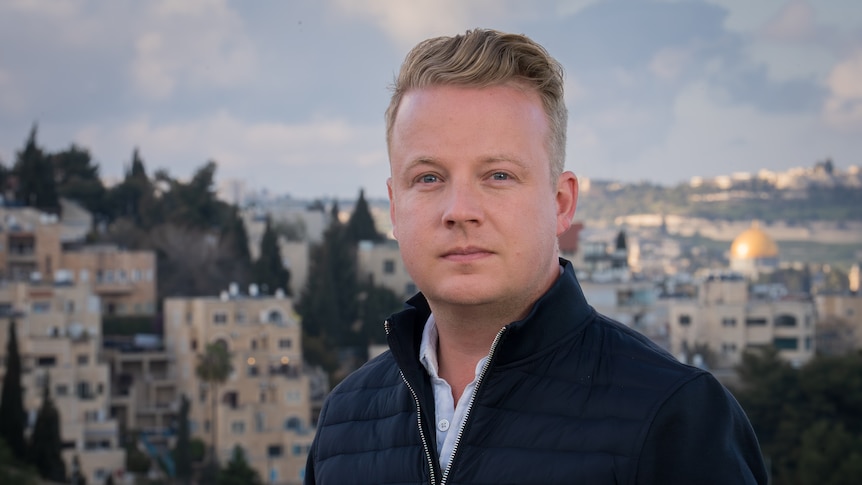
Greetings from Jerusalem, I am Matthew Doran, the ABC Middle East correspondent.
Today marks the 40th day of ongoing conflict involving the United States, Israel, and Iran. Although it appeared that the region was on the verge of avoiding a significant disaster, the delicate ceasefire is now precariously positioned as new developments arise.
Current updates on the situation in the Middle East indicate that Iran is contemplating retaliatory strikes following a considerable offensive by the Israel Defense Forces (IDF) targeting what they assert are Hezbollah installations in southern Lebanon and Beirut. The latest reports indicate a death toll of 254, with approximately 700 individuals reported injured.
This escalation is partly due to uncertainties surrounding whether Lebanon is included in the ceasefire agreement facilitated by Pakistan. While both Iran and former President Donald Trump contended that the agreement did not encompass Lebanon, Iran interpreted it as part of the fragile peace arrangement.
The peace accord was also intended to facilitate the reopening of the Strait of Hormuz, a critical shipping lane previously obstructed by Iran. Although the backlog of vessels in the Persian Gulf was expected to take time to resolve, Iran has now reclosed the strait in response to Israeli strikes, a claim the White House has contested.
Additionally, Iranian assaults in the Gulf continue, with reports of strikes targeting locations such as Saudi Arabia. Sources within the Saudi oil sector have indicated that a pipeline was also impacted.
Future discussions regarding the ceasefire are anticipated to occur in Pakistan on Friday, assuming conditions allow. Social media reports suggest that the Speaker of the Iranian Parliament may participate on behalf of the regime, with US Vice President Kamala Harris also expected to attend.
The current situation may leave many feeling disoriented, as what seemed to be a moment of relative calm in the Middle East quickly spiraled back into violence and chaos. Much of this turmoil, though not exclusively, relates to Israel’s actions.
Shortly after the ceasefire was established, the Israeli Prime Minister’s office released statements indicating respect for the agreement, but with a crucial exception. They maintained that the ceasefire did not pertain to Lebanon, where Israeli forces have been targeting Hezbollah for over a month.
These comments stood in stark contrast to those made by Pakistani Prime Minister Shehbaz Sharif, who was involved in negotiating the deal, asserting that Lebanon was indeed included in the truce. Hours later, Israeli Prime Minister Benjamin Netanyahu’s remarks were met with reality as the IDF launched a significant wave of attacks across Lebanon.
While there are often warnings issued regarding evacuations—notifications on social media advising individuals to vacate areas slated for strikes—many of the attacks in central Beirut were unexpected. Given the dense urban environment, with high-rise apartment buildings common, the destruction caused by the bombardments has been catastrophic across the capital, the Bekaa Valley, and southern Lebanon.
Prior to these latest developments, Lebanon had already suffered grievously, with over 1,500 casualties, including 130 children, and more than 5,000 injuries, leading to over one million displaced residents.
In response to the escalating violence, Iran has indicated it is considering retaliatory actions against Israel. They have also suspended traffic in the Strait of Hormuz.
In a conversation with a PBS correspondent, an Iranian official remarked that Lebanon’s situation was not encompassed within the ceasefire, labeling it as a separate conflict. This does not absolve Hezbollah of its role in escalating tensions by launching attacks on Israel in solidarity with Tehran last month.
Understanding the current predicament requires acknowledging the complexities of the agreements made between the US and Iran and the ongoing negotiations regarding the ceasefire’s future viability. Iran’s perception of Lebanon’s inclusion in the truce contrasts sharply with the views of the US and Israel. This divergence could potentially jeopardize the fragile peace if Iran decides to take action, a move that may not be wholly opposed by Netanyahu.
Critics of Netanyahu, Israel’s longest-serving prime minister, have expressed their dissatisfaction with his alignment with Donald Trump and his assertion that Israel supports the ceasefire with Iran. Opposition leader Yair Lapid has labeled him a failure, arguing that none of Israel’s objectives in the conflict with Iran have been achieved.
Another opposition figure, Avigdor Lieberman, characterized the ceasefire as providing the Iranian regime with a respite to regroup. They assert that the agreement is advantageous to Iran, with Netanyahu being complicit in what they see as a fruitless endeavor.
Netanyahu is acutely aware of such criticisms, having long advocated against Iran. For weeks, speculation in Israel and concern in Lebanon suggested that Netanyahu would prefer to persist in targeting Hezbollah long after Trump ceased hostilities against Tehran.
While Israel’s military actions in southern Lebanon were a response to Hezbollah’s earlier provocations, underlying tensions had been brewing well before the recent US and Israeli strikes against Iran.
Netanyahu’s military operations in Lebanon allow him to assert that the ongoing campaign, dubbed Operation Roaring Lion, is still active and that Israel has not yielded. He has stated that “the finger is on the trigger,” indicating that Israel could resume hostilities in the region at any time. “This is not the conclusion of our efforts,” he declared, emphasizing that the current phase is merely a step toward achieving broader campaign goals.
As has been the case throughout this conflict, civilians continue to suffer the most, and confusion persists amid the chaos.
Impact on Australia: The price of crude oil is…