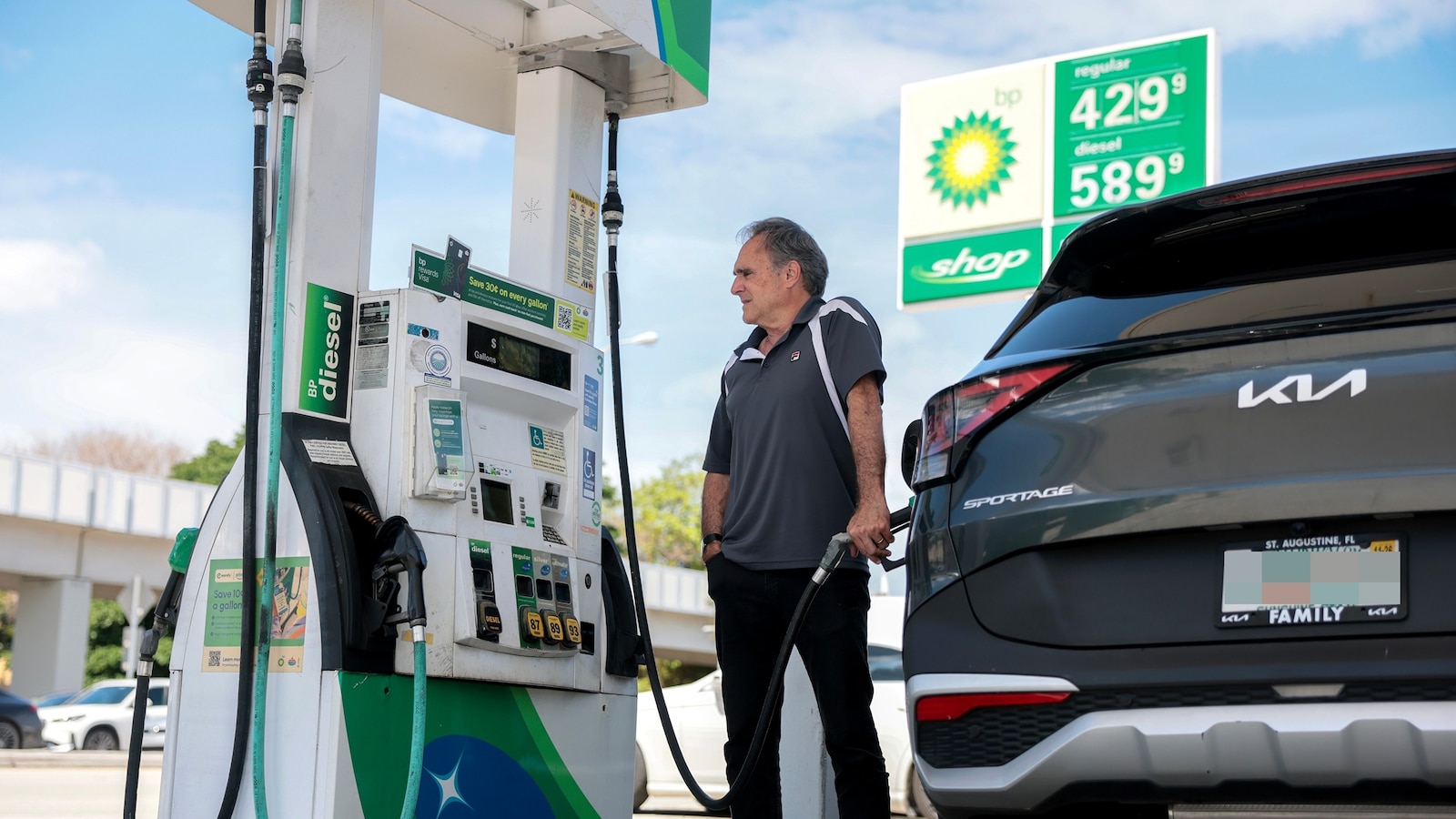

On Wednesday, oil prices experienced a significant decline following the announcement of a two-week ceasefire between the United States and Iran, raising hopes for relief from escalating gasoline costs.
Consumers might not have to wait long for some relief. Analysts indicated to ABC News that gas prices could begin to decrease within days as retailers adjust to the falling oil prices. However, reversing a considerable portion of the price hikes caused by the conflict in the Middle East may take several weeks or even months.
The future remains uncertain, as the stability of the ceasefire and the restoration of tanker traffic through the crucial Strait of Hormuz, a key oil transit route, will significantly influence any sustained price drops.
“Gasoline prices are likely to decline, but the path ahead may be fraught with challenges,” stated Ramanan Krishnamoorti, a petroleum engineering professor at the University of Houston, in an interview with ABC News.
Each day, a substantial number of vessels transport approximately 20% of the world’s oil through the Strait of Hormuz. However, due to the ongoing conflict, Iran had effectively blocked this passage, leading to a global oil shortage and subsequent surge in gasoline prices, including in the U.S.
As of Wednesday, the average gasoline price in the U.S. rose to $4.16 per gallon, reflecting an increase of $1.18 since the conflict began, according to AAA data.
Under the terms of the ceasefire, Iran has pledged to permit tankers to navigate the Strait of Hormuz, provided they coordinate with the Iranian military.
Yet, the resumption of tanker traffic remains uncertain, especially after reports indicated that such operations were halted on Wednesday due to Israeli strikes in Lebanon, as relayed by Iran’s semi-official Fars News Agency.
If the ceasefire endures, investors seem optimistic that it could alleviate one of the most severe global oil shortages seen in decades.
On Wednesday, U.S. oil prices dropped by 15%, settling at around $95.50 per barrel, though this price is still significantly higher than the pre-war level of approximately $67 per barrel.
“The oil markets have reacted positively to the absence of further escalation,” commented Timothy Fitzgerald, a business economics professor at the University of Tennessee who specializes in the petroleum sector, in his conversation with ABC News.
Crude oil is a primary component of gasoline, accounting for more than half of the price consumers pay at the pump, as reported by the U.S. Energy Information Administration.
According to some analysts, the recent downturn in oil prices is expected to be reflected throughout the supply chain, ultimately benefiting consumers with lower prices soon. “Gas prices may begin to decline nationally within the next 48 hours, decreasing by a few cents each day,” noted Patrick De Haan, a petroleum analyst with GasBuddy, in a post on X. He further speculated that the national average could dip below $4 per gallon within one to two weeks.
De Haan reiterated his prediction on Wednesday, advising consumers: “WAIT TO FILL!”
Nevertheless, a more substantial reduction in prices could take longer, according to some experts.
Historically, gas prices tend to decrease more slowly than they rise, as retailers often prefer to maintain higher prices while selling off inventory purchased at elevated costs, Krishnamoorti explained.
Additionally, the spring season usually sees a rise in gas prices due to increased travel demand and the shift to a more expensive summer fuel blend at refineries. These seasonal factors may limit the savings associated with lower oil prices.
Opinions among analysts varied regarding the timing and magnitude of potential price reductions. Krishnamoorti predicted that the national average for a gallon of gas could fall to $3.60 in the coming months, representing a decrease of approximately 56 cents from current levels. Fitzgerald estimated a reduction of 50 cents by the end of April.
“I anticipate that decline will occur within weeks, rather than days,” Fitzgerald remarked.
However, the outlook remains uncertain, particularly regarding the ceasefire’s sustainability and the reopening of the Strait of Hormuz, as noted by some analysts.
“The situation regarding the conflict in the Middle East is evolving rapidly,” stated Steve Allen, an economist from North Carolina State University, in an interview with ABC News. “Given the prevailing uncertainty, it’s challenging to assume that those involved in gasoline supply are feeling overly optimistic.”
If oil prices stabilize at lower levels, gas prices should decrease, but a resurgence of conflict could lead them to climb back toward pre-ceasefire levels, Allen warned.
“The situation could worsen in a week or two,” he added.
Even if the ceasefire remains intact, experts suggest that gas prices are unlikely to revert to pre-war figures in the near future, as damaged energy infrastructure in the Gulf will require extensive repairs. Ongoing geopolitical tensions and potential new costs associated with a toll system in the strait could also impact prices.
“Consumers should prepare for the reality that gasoline prices at the pump will remain elevated compared to levels before this situation began,” Fitzgerald concluded.