
Last week, the Central Board of Secondary Education (CBSE) unveiled significant updates to its curriculum, aligning with the National Education Policy (NEP) 2020.
The revised curriculum will allow students in class 9 to choose between two levels of math and science, with the advanced option featuring additional content. Furthermore, subjects such as art education, vocational training, physical education, and computational thinking, including artificial intelligence, will become mandatory for students in classes 9 and 10 in the near future.
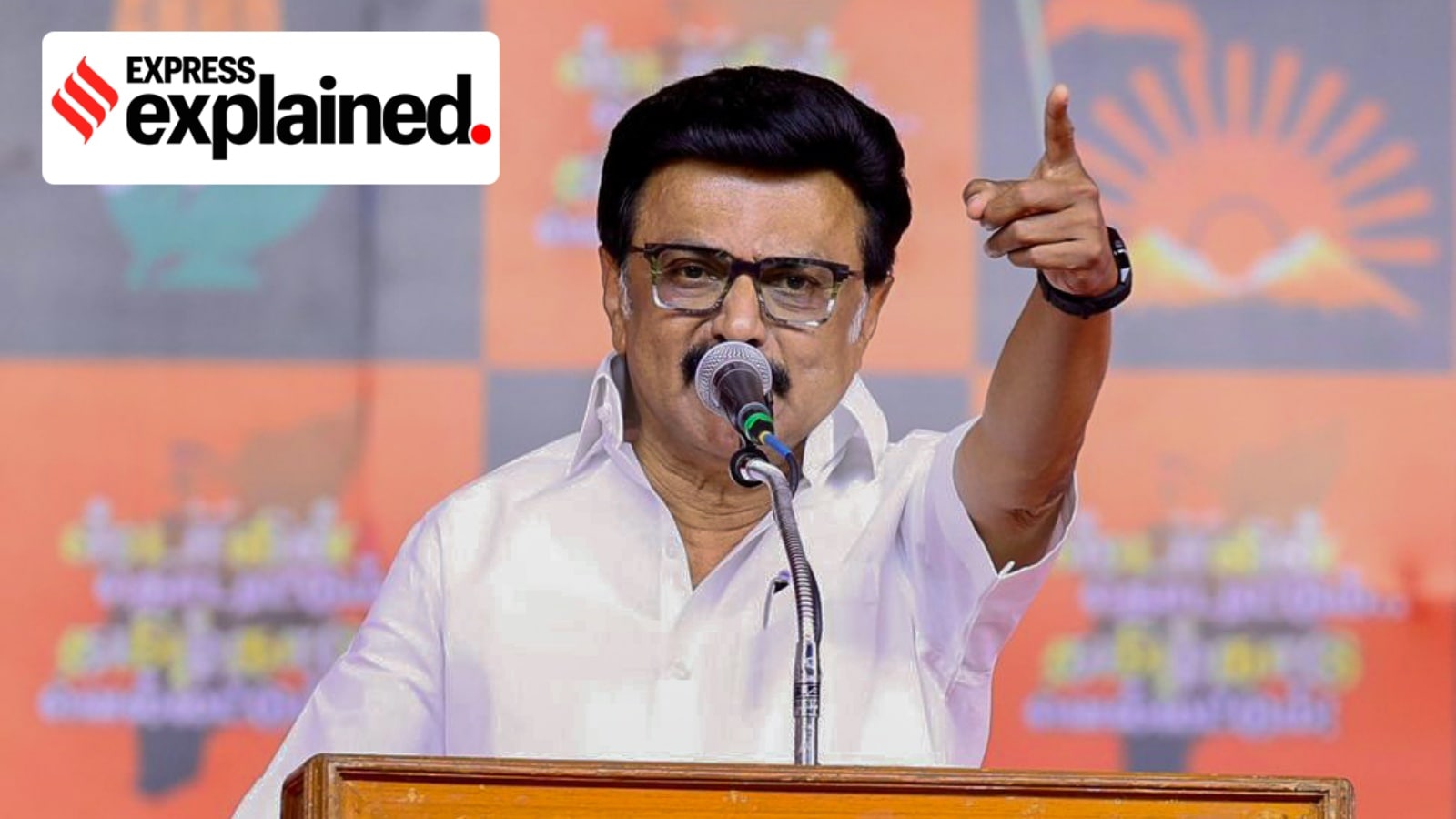
Among the changes announced, the three-language policy has sparked renewed debate, with Tamil Nadu’s Chief Minister MK Stalin criticizing it as an “attempt at linguistic imposition.” In contrast, Union Education Minister Dharmendra Pradhan defended the initiative, asserting that it aims to “promote all languages equally.”
The newly released curriculum for classes 9 and 10 incorporates recommendations from both the NEP and the National Curriculum Framework for School Education (NCFSE) 2023. The NCFSE suggests that students should learn three languages from class 6 through class 10, referred to as R1, R2, and R3, and it outlines the competencies expected to be developed in each language. This marks a shift from the previous system, which only required the third language to be taught from classes 6 to 8.
Under the new curriculum, the introduction of the third language (R3) will be mandatory starting from class 6 in the 2026-27 academic year. The teaching and learning process for this language will adhere to the curricular goals set by the NCFSE 2023. According to the NCFSE, students in classes 6 to 8 will be encouraged to enhance their communication skills in the third language, enabling them to engage in daily conversations, convey ideas through descriptions and narratives, and develop writing skills for various types of correspondence.
In line with these educational objectives, the CBSE plans to release online learning materials for R3 languages for class 6 later this month, as confirmed by an official statement. The curriculum specifies that at least two of the three languages must be Indian languages. If a foreign language is chosen as the third language in class 6, it must be accompanied by two Indian languages, according to official sources.
This requirement to introduce a third language in class 6 is seen as a precursor to eventually making it compulsory in class 10. The cohort of students currently in class 6 will be the first to study a third language when they reach class 10 in the academic year 2030-31. The curriculum indicates that the assessment for the third language at that level will be internally conducted by schools rather than through a board examination. Educational resources for the third language will also need to be made available for higher classes.
The introduction of this new curriculum has led to controversy. Following its announcement, Tamil Nadu’s CM Stalin reiterated the state’s opposition to the three-language policy, characterizing it as a calculated move toward linguistic imposition that validates longstanding concerns.
Both the ruling DMK and the opposition AIADMK in Tamil Nadu have voiced their disapproval of the three-language formula. Schools governed by the state board are currently required to teach only two languages, Tamil and English, up to class 10. Stalin argues that this framework effectively mandates the learning of Hindi, asserting that the three-language policy acts as a covert mechanism to promote Hindi in non-Hindi speaking regions.
In response, Pradhan countered Stalin’s claims by stating that misrepresenting a flexible policy as “compulsory Hindi” does not protect Tamil; instead, it creates barriers that prevent youth from becoming multilingual global citizens. He described the NEP as a manifesto for linguistic liberation, emphasizing that promoting additional languages does not undermine Tamil but rather enriches linguistic diversity.
While previous education policies from 1968 and 1986 recommended a three-language formula that included Hindi alongside regional languages and English in non-Hindi speaking states, the NEP 2020 does not dictate which specific languages should be taught. Instead, it allows states, regions, and students to choose their three languages, as long as at least two are native to India.
The three-language policy will apply to CBSE-affiliated schools in Tamil Nadu, many of which already offer a third language to students. According to data released in response to a parliamentary question last year, only 3.2% of schools in Tamil Nadu, totaling around 1,905, currently teach three languages. The CBSE lists over 1,800 affiliated schools in the state.
The Tamil Nadu Tamil Learning Act of 2006 mandates the phased implementation of Tamil as a compulsory subject for classes 1 to 10 in all schools, including private institutions. Meanwhile, in neighboring Karnataka, the Congress government has suggested a two-language policy, although the state board requires three languages in class 10.
Additionally, Karnataka’s government has recently announced that only grades will be awarded for the third language in the state board class 10 examination, which they claim is intended to alleviate the academic pressure on students struggling with the third language subject.