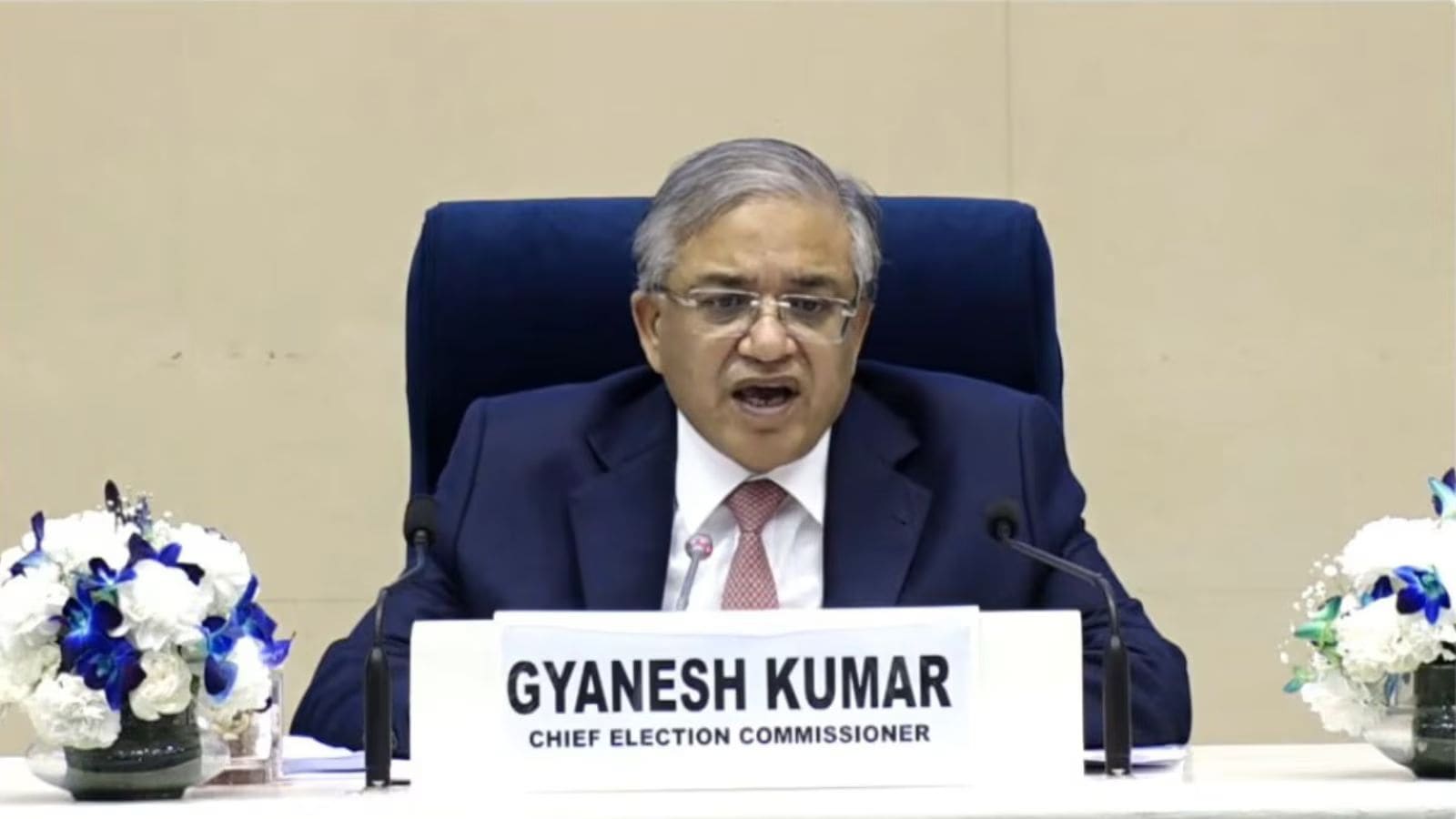

The Election Commission conducted a standard briefing for its election observers in states preparing for upcoming elections on Wednesday, which escalated into a tense exchange. Chief Election Commissioner Gyanesh Kumar posed a question to observer Anurag Yadav regarding the number of polling stations in his designated Assembly constituency of Cooch Behar Dakshin in West Bengal. Reports indicate that Yadav was unable to provide the correct figure, leading to dissatisfaction from the CEC. It is also noted that Yadav expressed his discomfort with the manner in which the question was posed. Subsequently, an official from the Election Commission announced that the observer had been “immediately recalled” by the Commission.
Meanwhile, the Union Cabinet approved a draft Bill aimed at amending the Women Reservation Act on Wednesday. In response to this development, the Congress Working Committee is scheduled to convene on Friday to formulate a strategic approach regarding the legislation, especially in light of Parliament’s special session set for April 16, during which the Bill is anticipated to be passed. Sources indicate that the party faces a challenging situation; it must avoid the perception of opposing women’s reservations while also preventing the government from gaining undue credit ahead of elections. The intricacies of navigating this dilemma will be a key topic of discussion in Friday’s meeting.
During proceedings before a nine-judge bench of the Supreme Court on Wednesday, Solicitor General Tushar Mehta argued against the uncritical acceptance of foreign court rulings. He provided insights into the nature of dissenting opinions, stating that “dissent is a call for the brooding spirit of the future generation.” Justice Joymalya Bagchi swiftly interjected, recognizing that Mehta was quoting former U.S. Supreme Court Chief Justice Charles Evans Hughes, who remarked that “dissent is a call to the brooding spirit of the law.” Mehta acknowledged this reference but clarified that he did not rely on any foreign judgments in his legal arguments.