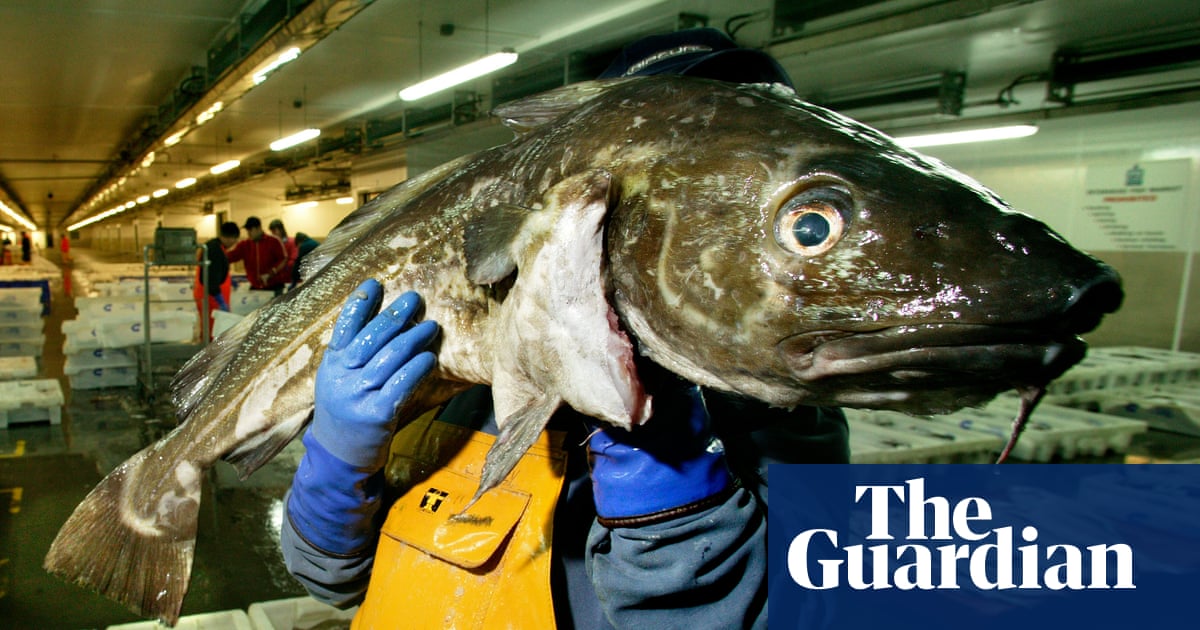

The Marine Conservation Society (MCS) has urged consumers to completely refrain from purchasing cod sourced from the UK, citing alarming declines in cod populations that have reached critical levels despite recommendations for zero catches.
As an environmental organization, the MCS provides a Good Fish Guide aimed at assisting both consumers and businesses in making informed choices regarding sustainable seafood.
Recently, the MCS assigned the lowest possible rating to all UK-caught cod, advising consumers to consider European hake as a suitable alternative for flaky white fish.
Kerry Lyne, the manager of the Good Fish Guide, described the rating downgrade as a “warning signal,” emphasizing the need for the UK government to take action to facilitate the recovery of fish stocks.
Similarly, the ratings for trawled scampi have also been lowered, with the guide now only recommending pot- or creel-caught varieties.
Cod populations have been steadily declining since 2015, primarily due to overfishing, along with factors such as changing sea temperatures and additional pressures on the ecosystem that impact breeding and the survival of juvenile fish.
Last year, the International Council for the Exploration of the Sea (ICES) advised implementing a zero-catch policy for North Sea cod and surrounding waters by 2026. They warned that continuing commercial fishing at this decline stage could jeopardize the cod population’s ability to reproduce safely.
Although this guidance has not been fully adopted, in December, Angela Eagle, the minister for food security and rural affairs, announced a significant 44% reduction in cod fishing quotas for 2026. This decision was reached during annual discussions with the EU and Norway regarding shared fish stocks.
Industry reports indicated that fishers were “reluctantly resigned” to the cuts as they had been noticing a shortage of cod.
The concerns surrounding cod fishing mirror those raised last year regarding mackerel, where persistent overfishing due to quota disputes between the UK and neighboring countries led to the fish being removed from the Good Fish Guide’s recommended list.
Recently, Waitrose declared it would cease selling mackerel by April 29, emphasizing the necessity to maintain fishing within “sustainable limits.”
Last year, the government set the allowable catch level for mackerel at 32% higher than ICES’s recommendations.
Chris Graham, the head of sustainable seafood at the MCS, expressed deep concern over the increasing pressures faced by iconic fisheries such as cod and mackerel. He reiterated Lyne’s appeal for the government to take decisive action towards adopting low-impact fishing practices, which would aid in rebuilding fish stocks and lessen reliance on imports, as approximately 80% of the seafood consumed in the UK is imported.
The MCS encourages consumers to explore more sustainable alternatives to UK-caught cod, such as Icelandic cod, which is plentiful and not at risk of overfishing. European hake and haddock, particularly those sourced from the North Sea or west of Scotland, are also recommended as sustainable options.
For shoppers interested in making environmentally friendly choices, seabass or plaice from the North Sea, along with UK-farmed seafood like blue mussels and freshwater trout, are viable alternatives.
The MCS updates its Good Fish Guide biannually, based on the latest scientific information, focusing particularly on fish stock levels and management plans.