
Farmers are raising concerns about the effectiveness of current food labeling regulations in accurately representing the Australian ingredients present in various products. They have observed that in a carton of soy milk labeled as ‘Made in Australia’, a significant portion—91%—is actually water.
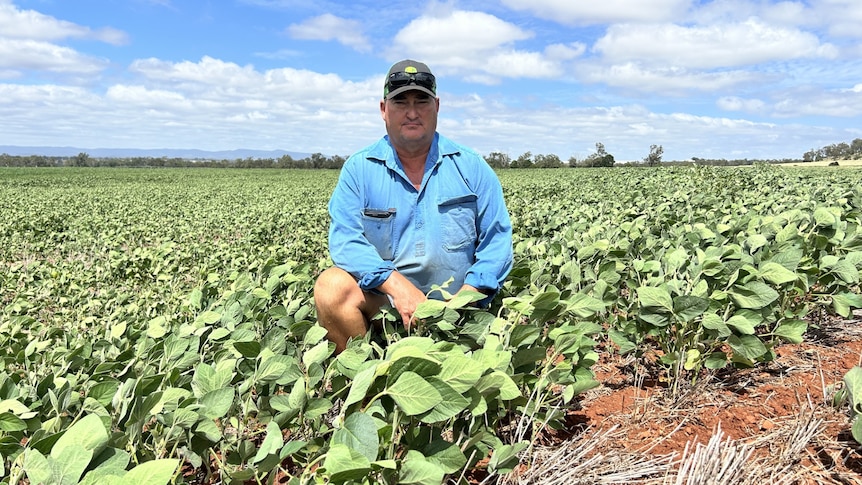
In light of competition from cheaper imported goods, agricultural producers are advocating for a reassessment of country of origin labeling laws to enhance consumer awareness regarding their purchases. Peter Howlett, a farmer from Kingaroy, transitioned to soybean cultivation following the downturn of the navy bean and peanut industries in Australia. He fears that the soybean sector could also suffer due to the influx of imported soy products and rising production expenses.
Howlett expressed that these imported products arrive at a much lower price, establishing a challenging benchmark. He stated, “If we can’t compete, our businesses don’t survive.” He, along with other farmers, is calling for modifications to labeling laws that would provide clearer information to consumers about the origin of the produce they buy.
Judy Plath, a soybean grower and agronomist from Wide Bay, believes that labeling regulations should be strengthened to require soy milk manufacturers to disclose the origin of the soybeans used in their products. She suggested that labels should clearly indicate if the soy milk contains beans sourced from countries like China, with only water being from Australia.
In defense of their labeling practices, supermarket chains Coles and Woolworths both describe their soy milk as made in Australia using 91% Australian ingredients. However, they have not specified which ingredients are sourced from Australia. A spokesperson for Woolworths commented that they prioritize Australian ingredients when feasible, while a representative from Coles stated that they source from both domestic and international suppliers to ensure consistent availability throughout the year.
Plath has expressed dissatisfaction with these explanations and has lodged a complaint with the Australian Competition and Consumer Commission (ACCC). She noted, “The ACCC is now investigating whether the soy being processed in China violates the clause that Coles and Woolworths appear to be taking advantage of.” She emphasized that the average consumer may find it difficult to understand the complexities of labeling regulations.
Consumer confusion over food labels is common, particularly with the well-known Australian Made logo, which features a kangaroo within a green triangle and has been in use since 1986. This logo is regulated by two different entities: the not-for-profit Australian Made Campaign Limited for non-food items, and the federal Department of Industry, Science and Resources for food products. The department declined to comment on current labeling laws.
Tim Ayres, the Minister for Industry and Innovation, remarked that the labeling laws are regularly monitored to ensure they serve the interests of Australians. He cited an example of forthcoming mandatory seafood country of origin labeling for hospitality venues, set to take effect on July 1, 2026.
The Australian Made logo encompasses seven classifications, each with varying requirements. “Australian Grown” and “Product of Australia” indicate that both ingredients and manufacturing are sourced from Australia, whereas “Australian Made” signifies that the last significant transformation occurred in Australia, without guaranteeing that any ingredients are domestically produced.
Food labeling expert Courtney Stewart noted that while businesses generally understand the labels they can use, consumers remain “very confused” about the distinctions between different labels. She observed, “Many of these terms can be misinterpreted by consumers. Some wording is even used interchangeably.” It has been ten years since national country of origin labeling laws were enacted, featuring a bar chart alongside text that indicates the percentage of Australian ingredients in a product.
Stewart remarked, “Many of the foods available today differ significantly from what was on the market a decade ago. Perhaps the current labeling does not accurately reflect the modern food supply and assist consumers in making informed choices.”