
Flora Garamvolgyi, a journalist for the Guardian, noted in an interview with Helen Pidd that Hungary has served as an inspiration for the Trump administration for some time. She pointed out that American Republicans have looked to Hungary over the past few years as a model to emulate, particularly under the leadership of Prime Minister Viktor Orbán, who is currently serving his fourth consecutive term. Garamvolgyi highlighted that Orbán’s success and his alignment with Republican ideologies, especially concerning immigration, have drawn the interest of U.S. political figures eager to study his approach.
However, as public opinion polls indicate potential challenges ahead for Orbán in the upcoming elections, questions arise about whether the Hungarian electorate will choose to end his tenure. Despite these challenges, Orbán has dismissed any notions of being closely aligned with Russia. During a recent rally, he emphasized that it was the U.S. vice president who came to Hungary to show support, not Russian officials.
In comments recorded by his spokesperson Zoltán Kovács, Orbán reaffirmed Hungary’s commitment to the West, expressing discontent with developments in Western Europe. He criticized the German Christian Democrats for shifting toward leftist policies, stating that Hungary’s strongest connection to the Western world now lies with the Republican Party in the United States, rather than its traditional allies in Germany.
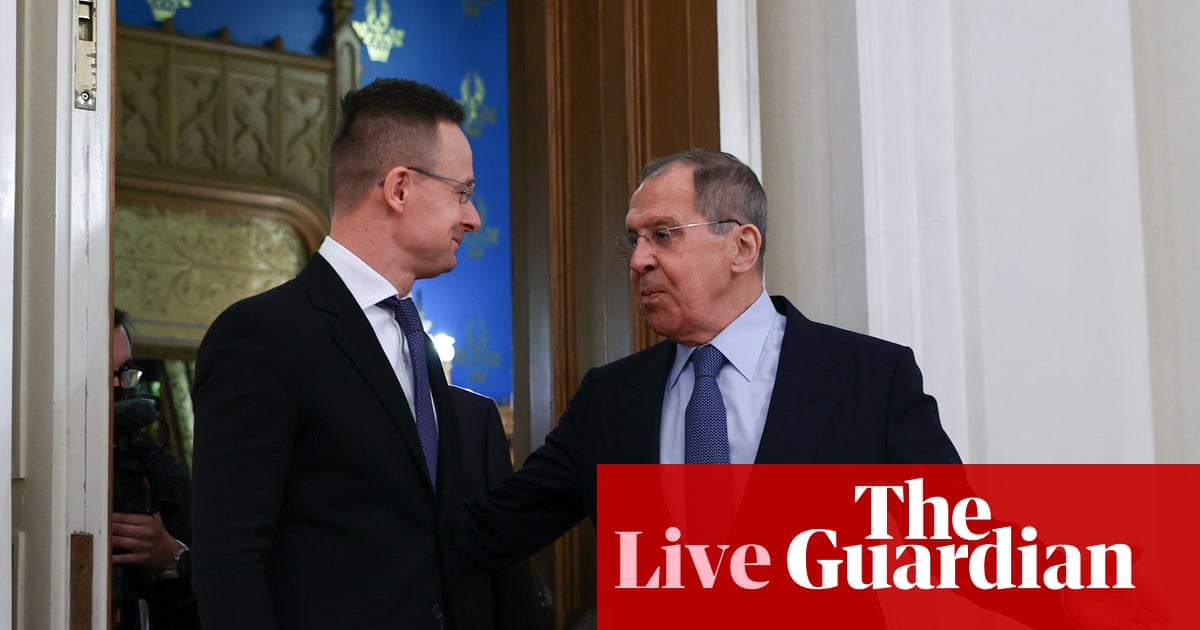
On the international front, French Foreign Minister Jean-Noël Barrot has accused Hungary of undermining the solidarity expected among European Union member states. This criticism arose following leaked recordings that suggested Hungarian Foreign Minister Péter Szijjártó offered to share information with Russian Foreign Minister Sergei Lavrov regarding Ukraine’s EU membership application. Barrot characterized this interaction as a betrayal of EU unity, insisting that for Europe to remain strong amid rising global powers, member nations must maintain solidarity.
Poland’s Prime Minister Donald Tusk also expressed his dismay over the leaked recordings, labeling them as “beyond shocking.” Meanwhile, discussions surrounding NATO continue to be contentious, particularly in Denmark, where political parties are still negotiating the formation of a new government post-election. Former U.S. President Donald Trump has repeatedly criticized NATO, especially after a lengthy meeting with Secretary General Mark Rutte, during which he expressed disappointment over allies’ reluctance to engage in Iran-related matters.
In a recent social media post, Trump reiterated his grievances with NATO, claiming it failed to support the U.S. when needed and made a reference to Greenland, emphasizing his discontent with its governance. Historically, NATO’s collective defense clause was invoked only once, after the September 11 attacks in the U.S., contradicting Trump’s narrative about the alliance’s reliability.
Despite previous admonitions from European leaders, Trump continues to assert his views, and Rutte’s comments highlighted the tense nature of their discussions. While acknowledging Trump’s disappointment, Rutte attempted to remind him that many European nations have upheld their commitments in various capacities.
Reports suggest that the White House might be contemplating punitive measures against certain NATO member states that Trump perceives as uncooperative during the Iran conflict. Rutte refrained from commenting directly on these reports, acknowledging that while not all European nations have met their commitments, a significant number have. As Rutte prepares to deliver a speech in Washington later today, the outcome of his discussions with Trump remains uncertain.