
A new initiative in Tasmania is urging community organizations to publicly commit to actionable pledges aimed at decreasing gender-based violence. The domestic and family violence sector has reported a surge in demand for services, emphasizing that collective efforts are essential to assist victim-survivors.
The pledges made by organizations will be available online, with a requirement for them to provide updates on their progress. Additionally, any financial contributions and their allocations will also be disclosed.
This initiative, recently introduced in Tasmania, seeks to facilitate the community’s engagement in concrete and measurable actions to combat gendered violence.
According to the Australian Bureau of Statistics, one in three women in Australia has faced physical or sexual violence since the age of 15. In Tasmania alone, law enforcement responded to 6,488 incidents of family violence in the last financial year, marking an increase of over 1,000 cases from the previous year.
The Women’s Legal Service Tasmania (WLST) has initiated a campaign inviting both individuals and organizations to make public pledges outlining their commitment to reducing violence rates.
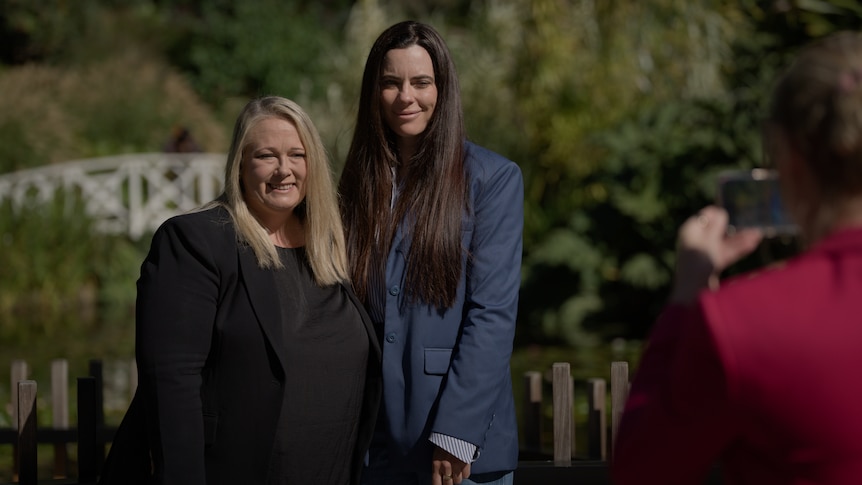
Sally Hayne, a board member, emphasized that this initiative aims to transcend mere awareness and encourage collective action. She noted that the statistics and narratives surrounding gendered violence can often seem daunting, which may lead to inaction. “Justice For Her is fundamentally about inviting everyone into the dialogue and facilitating tangible actions,” Ms. Hayne stated. “It aims to empower individuals to engage in everyday actions that contribute to the solution.”
The platform provides a variety of suggested commitments for individuals and organizations. For organizations, these include pledges to offer paid family and domestic violence leave, adopt flexible work arrangements, create safe reporting channels, and review policies with a focus on women’s safety. Individuals are encouraged to speak out against sexist remarks, pursue educational opportunities, and challenge prevalent myths and misinformation.
Ms. Hayne mentioned that WLST would follow up with those who make pledges after eight to ten months to assess their progress and produce a report. “This initiative is very much measurable,” she stated.
Organizations can also make one-time or ongoing financial pledges to address critical funding shortages, with a fundraising dinner planned for next month in Hobart. These funds will support frontline services, covering expenses such as safety locks, transportation, and childcare for court and legal appointments. “Every dollar we allocate will be accounted for,” Ms. Hayne added. “For example, if we spend $578.60 in a month, the community will see exactly where that money went and its impact.”
Carolyn Self, another board member and representative of the support service Engender Equality, described the funding crisis for domestic and family violence services as “overwhelming.” She highlighted that the demand for support is significantly high in Tasmania, yet services often lack the capacity to meet this need. Many individuals seeking help encounter waitlists that can extend up to two years.
Last financial year, a staggering eight out of ten women were turned away from the Hobart Women’s Shelter due to capacity issues, a statistic that remained unchanged from the previous year. Additionally, Anglicare Tasmania reported a 28% increase in people citing domestic violence as their primary reason for seeking housing assistance.
In a recent submission regarding family violence in Tasmania, it was noted that domestic and family violence is the leading cause for one in ten clients of the Housing Connect Front Door service seeking housing support. “When individuals are met with responses like ‘I’m sorry, we have a waitlist’ or ‘I’m sorry, we can’t assist you due to funding constraints,’ it reinforces the trauma of family violence, making victims feel unheard or invalidated,” Ms. Self explained, stressing that this is not a reflection of their experiences.
Jane Howlett, Minister for Women and Prevention of Family Violence, reaffirmed that addressing family and sexual violence is a top priority for the state government. She indicated that over $140 million has been allocated to this issue over the next five years, which includes funding for three support centers.
“Achieving meaningful change necessitates commitment from all levels of government and collaboration with community organizations,” Ms. Howlett stated.
Ms. Self emphasized the importance of initiatives like Justice For Her in fostering accountability within the community. “The statistics show that one in three women in Tasmania is affected by family violence,” she said. “It is crucial for everyone to recognize that they likely know someone impacted by this issue.”
She urged anyone experiencing gendered violence to reach out for help, stating that even if there are waitlists, support options are available. “The main message from the entire sector is that if you contact us for help, we will believe you and provide the necessary support,” she affirmed.
For those in need, contact information for various domestic violence services is available, including crisis lines and support services across different regions.