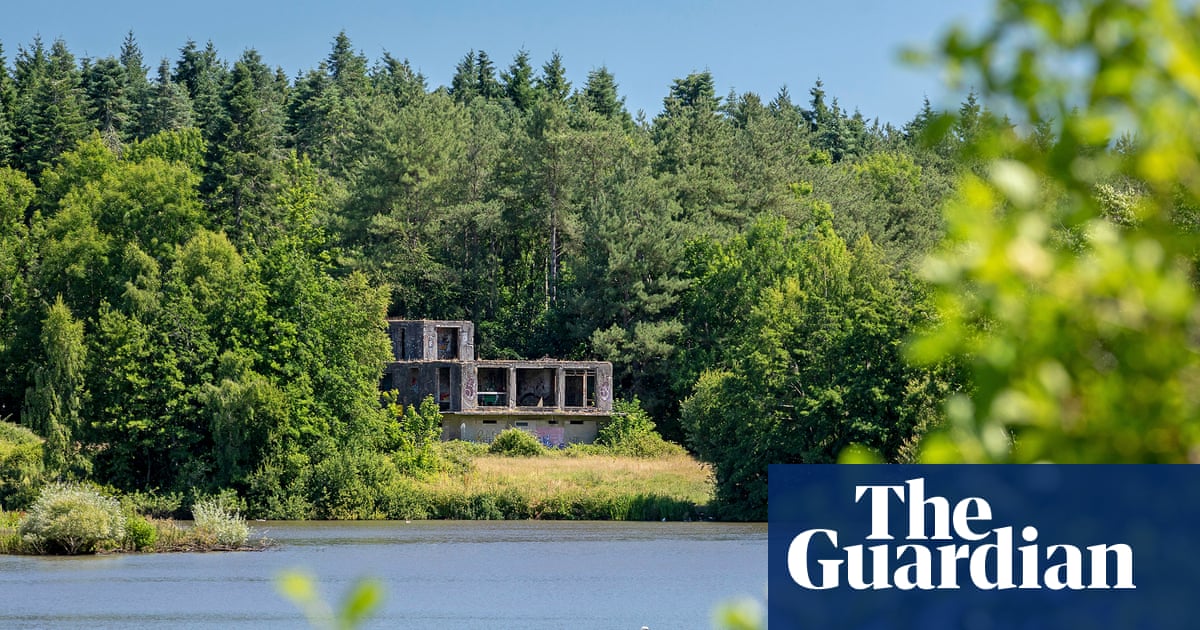

A historically significant RAF watch office, which has been in decline for many years, is set to be transformed into a contemporary holiday home. This new retreat will not only accommodate vacationers but also the bats that have made the site their home.
The Landmark Trust, an organization dedicated to the preservation of endangered buildings, has received the go-ahead to renovate the dilapidated structure located in Hampshire into a four-bedroom holiday destination complete with a rooftop terrace.
A crucial stipulation of the project is the preservation of the facility’s old teleprinter and forecast rooms, which will continue to serve as habitats for the resident bat population that has thrived in the deteriorating environment.
During World War II, RAF Ibsley, situated in the New Forest, was a base for British and American forces, where Hurricane and Spitfire aircraft were stationed, ready to intercept enemy aircraft and protect shipping routes across the Channel.
Notably, actors Leslie Howard and David Niven filmed parts of the wartime movie “The First of the Few” on this base, aiming to uplift British spirits during the conflict.
Constructed rapidly yet tastefully at the onset of the war, the watch office or control tower is regarded as an excellent example of military architecture from that era.
A report by Jessica Cooke, a planning officer with the New Forest council, highlighted the building’s considerable local importance due to its architectural, artistic, and historical significance, as well as its substantial conservation value for bats, which include six different roosting species.
Cooke noted that the structure has been abandoned for a while and is in a severely deteriorated condition, with visible decay throughout.
Initially, Natural England, the governmental environmental advisory body, expressed concerns regarding the potential effects on the bat population. However, the Landmark Trust has assured that it will ensure adequate accommodations remain for the bats.
While the majority of the building will be designed to be bright and welcoming for guests, certain areas will be preserved in darkness for the bats. Additionally, there are plans to repurpose a wartime blast shelter as another roosting site for the bats.
The Airfield Research Group, a charitable organization, endorsed the renovation plans, stating that a thoughtful conversion would honor the air and ground personnel who bravely served at Ibsley.
Local council members approved the project with several conditions, emphasizing the importance of protecting the bat population during the renovation process.
The Landmark Trust has successfully raised nearly £700,000 for the conversion, asserting that their initiative will prevent the building from falling into ruin or facing demolition while maintaining a balance between safeguarding the site’s historical integrity and the surrounding ecological environment.
Work on the Ibsley site is anticipated to commence later this year. A representative from the Trust remarked, “This represents a significant achievement and illustrates how collaborative efforts can lead to the respectful restoration of historical sites, all while considering ecological and environmental factors.”
They added, “Many young pilots conducted missions from this site during the Battle of Britain, with some tragically not returning. There is a strong public sentiment in favor of this initiative.”
Caroline Stanford, the Trust’s historian, remarked on the building’s modernist design and expressed amazement at its longevity.