
As Pakistan gears up to facilitate peace discussions between the United States and Iran in Islamabad, India is proactively engaging with various regional partners, including Oman, the UAE, Saudi Arabia, and Qatar, regarding the potential reopening of the Strait of Hormuz.
This diplomatic initiative unfolds amid a precarious ceasefire with Iran, which has been in effect since its announcement earlier this week. The situation remains tense, particularly due to Israel’s intensified military actions against Hezbollah, an ally of Iran, in Lebanon.
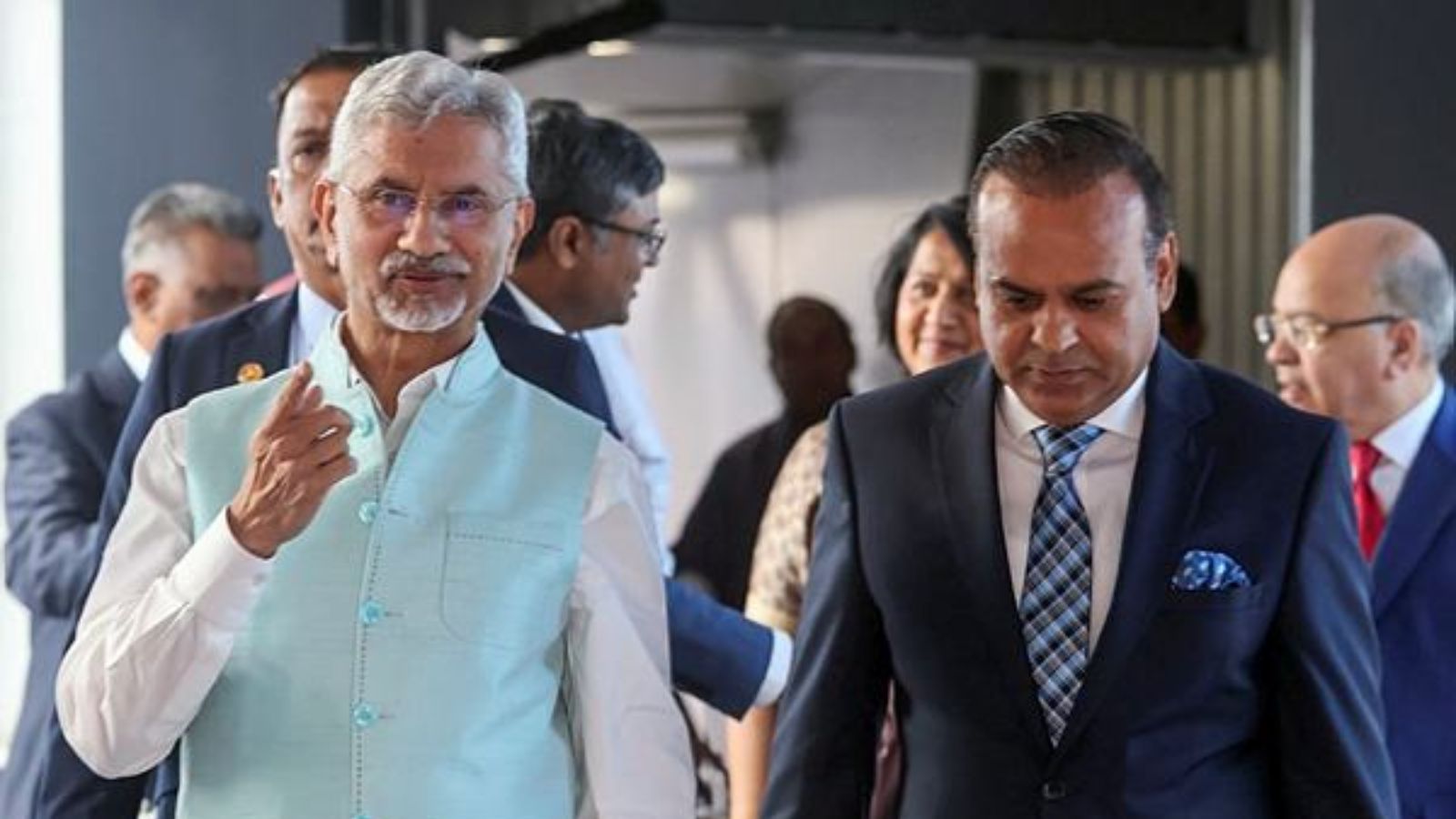
External Affairs Minister S. Jaishankar arrived in Port Louis, Mauritius, on Thursday to attend the 9th Indian Ocean Conference. Over the next two days, he will engage in bilateral discussions with representatives from Indian Ocean nations.
These talks will include ministers from West Asian countries such as Oman, Saudi Arabia, and Egypt, as well as maritime neighbors like Sri Lanka, the Maldives, Seychelles, Madagascar, and Tanzania, and Southeast Asian nations including Thailand, Singapore, and Cambodia, along with neighboring countries Bhutan and Bangladesh. The discussions will address the ongoing challenges that have arisen in the aftermath of 40 days of conflict.
Scheduled meetings with Oman’s Foreign Minister Sayyid Badr Hamad Al Busaidi, Saudi Arabia’s Vice Minister of Foreign Affairs Waleed Elkhereiji, and Egypt’s Deputy Foreign Minister for African Affairs Mohamed Abu Bakr are anticipated to occur during the conference.
On April 11, Jaishankar will embark on a two-day trip to the UAE, a nation that has faced repercussions from Iranian assaults on US military installations and its own economic and energy sectors. The ongoing conflict has also resulted in civilian casualties, which have tarnished the perception of Dubai and Abu Dhabi as safe havens. Notably, the UAE hosts a significant Indian expatriate community.
The Ministry of External Affairs announced that Jaishankar will confer with UAE leadership to evaluate their close ties and strengthen the Comprehensive Strategic Partnership between India and the UAE.
Additionally, Petroleum Minister Hardeep Singh Puri is set to visit Qatar for two days, a nation that stands as India’s primary supplier of liquefied natural gas (LNG) and liquefied petroleum gas (LPG).
Sources indicate that discussions in Qatar will likely prioritize the supply of LNG and LPG to India. Joint Secretary of the Petroleum Ministry, Sujata Sharma, mentioned that further details about Puri’s visit will be shared upon his return.
Puri’s trip coincides with recent statements from Tehran, asserting that the safe transit of vessels through the Strait of Hormuz will require collaboration with Iran’s military, taking into account “technical limitations.”
India relies heavily on LNG imports to satisfy approximately half of its natural gas requirements, with 55-60% of these imports originating from West Asia via the Strait of Hormuz. Notably, Qatar contributes to over 40% of India’s LNG imports. According to data from the Commerce Ministry, India imported 27 million tonnes of LNG in 2024-25, with 11.2 million tonnes, or 41.4%, sourced from Qatar. India has long-term contracts with QatarEnergy that amount to 8.5 million tonnes per annum and also procures Qatari LNG from the spot market. Furthermore, India’s dependency on LPG imports stands around 60%, with 90% of these supplies transiting through the Strait, of which Qatar is the leading supplier, accounting for over 20% of imports.
The disruption of vessel movements through the Strait of Hormuz has adversely affected India’s LPG and LNG supplies, with no LNG tankers arriving from the Persian Gulf since early March and only a limited number of Indian-flagged LPG tankers navigating the Strait.
In response to the supply challenges, the Indian government has reduced natural gas allocations to certain industries to ensure priority sectors receive adequate resources. The impact on LPG supplies has been more pronounced, with substantial cuts implemented for commercial customers and industries to guarantee that households have sufficient cooking fuel.
Additionally, concerns surrounding LNG supplies have been exacerbated by attacks on Qatar’s Ras Laffan Industrial City, which includes damage to part of QatarEnergy’s major LNG facility. Most of India’s LNG imports from Qatar are sourced from Ras Laffan.
Meanwhile, a spokesperson for the Ministry of External Affairs, Randhir Jaiswal, shared on social media that Foreign Secretary Vikram Misri met with US officials at the Department of Commerce to discuss enhancing bilateral trade and investment in strategic and emerging technologies, as well as dialogues on new export control frameworks.
Misri also engaged with US Under Secretary of War Elbridge Colby to discuss developments in West Asia, focusing on ways to strengthen defense industrial ties, technology collaboration, and supply chain connections between New Delhi and Washington. Colby had visited India the previous month.
Shubhajit Roy, a seasoned journalist with over 25 years of experience, serves as the Diplomatic Editor at The Indian Express. He has been associated with the publication since October 2003, primarily covering foreign affairs. Based in Delhi, he has led the National government and political bureau at The Indian Express. Roy is a recipient of the Ramnath Goenka Journalism Award for Excellence in Journalism for his coverage of the Holey Bakery attack in Dhaka and the IIMCAA Award for Journalist of the Year in 2022 for his reporting on the fall of Kabul in August 2021.
Sukalp Sharma, Deputy Associate Editor at The Indian Express, specializes in a variety of topics, particularly in the fields of energy and aviation. With more than 16 years of journalistic experience, he has written extensively on politics, development, equity markets, corporations, trade, and economic policy.