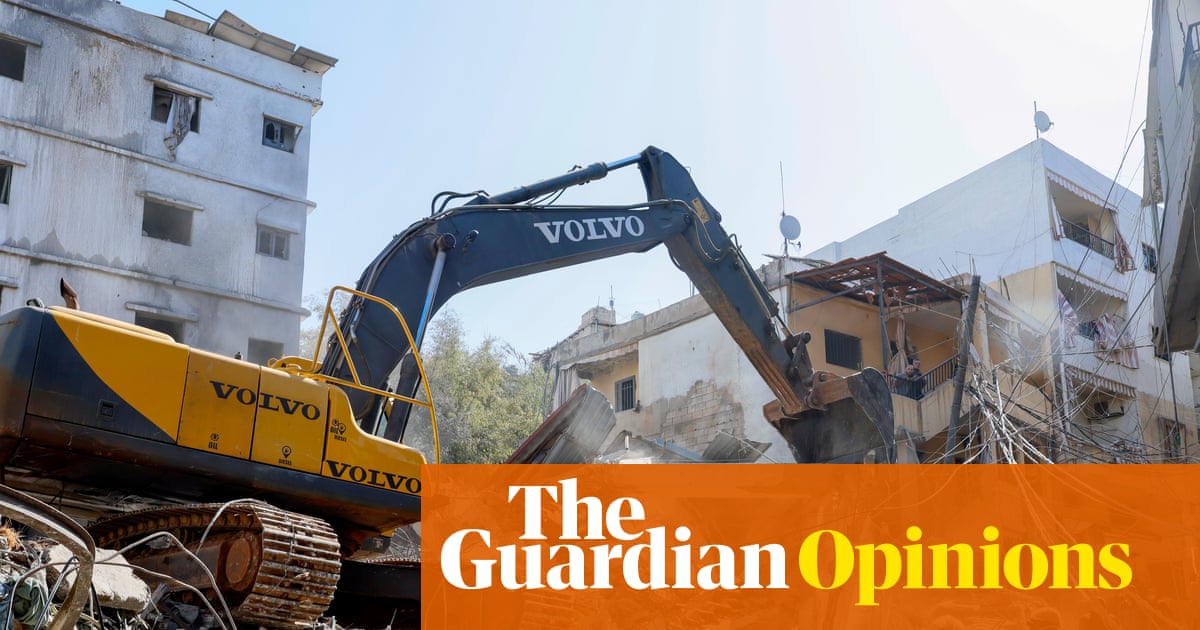

The Easter weekend heralded one of the most severe episodes in the ongoing conflict between Israel and Lebanon. On Sunday afternoon, approximately 2 PM, the Israel Defense Forces launched an airstrike on a heavily populated residential district adjacent to Rafik Hariri University Hospital, the largest public medical facility in Lebanon. This attack resulted in the deaths of at least five individuals and left over 50 others injured.
During my tenure at the hospital in 2020, I had the opportunity to care for some of the most marginalized groups in Lebanese society, including migrant laborers, stateless Palestinians, and Syrian refugees. The events of Sunday align with what appears to be a wider Israeli strategy in Lebanon. Human rights advocates and healthcare professionals report that the IDF is systematically undermining healthcare systems, with deliberate strikes against hospitals and medical personnel, even targeting them while they are in ambulances or first aid stations. Additionally, Israel is driving mass civilian displacement, making significant areas of the country uninhabitable. Prime Minister Benjamin Netanyahu’s assertion that a recent ceasefire with Iran does not extend to Lebanon suggests that the situation is far from resolution.
Israel is employing tactics in Lebanon that mirror its operations in Gaza. This approach has proven successful, normalizing attacks on medical facilities and inadvertently discouraging individuals from seeking necessary healthcare services. Save the Children has reported that healthcare facilities in the Middle East face an assault every six hours, demonstrating that hospitals are effectively turning into conflict zones.
In 2023 and 2024, I collaborated with Palestinian medical personnel in Gaza, witnessing remarkable acts of bravery. They endured long shifts, often declaring their colleagues deceased in the emergency room, then leaving to search for food and shelter amid forced evacuations. The Israeli Coordination of Government Activities in the Territories had assured us that al-Aqsa hospital and our accommodation would remain secure. However, as the conflict intensified, danger encroached closer. In January 2024, a bullet struck the walls of the ICU, and shortly after my departure, our guesthouse was bombed, prompting many patients and medical staff to evacuate in response to nearby threats. I remain uncertain about the well-being of my young patients.
The hardships faced by Palestinian healthcare workers are unparalleled. CNN reported that in November 2023, medical personnel were urgently evacuated from al-Nasr hospital under Israeli military orders, leading to tragic discoveries of infants left deceased in their beds. Since December 2024, Dr. Hussam Abu Safiya, the director of Kamal Adwan Hospital, has been detained, with reports of torture and denial of medical care. In March 2025, the United Nations found the remains of 15 paramedics and rescue workers in a mass grave, victims of Israeli gunfire.
Having evaded repercussions for its actions in Gaza, Israel is now acting with similar disregard in Lebanon. The World Health Organization has documented over 90 attacks on healthcare facilities in Lebanon since March 2, resulting in 137 injuries and 53 fatalities. Perhaps equally concerning is the growing belief among patients that healthcare systems are no longer safe havens. Hospitals, once considered inviolable, have shifted the calculus for families: is it worth risking a trip to the hospital for a child’s asthma attack, knowing that they could be targeted?
The Israeli military has asserted that Hezbollah utilizes medical facilities in Lebanon for “terrorist activities,” yet has not provided substantiated evidence for these claims. Upon returning from Gaza, I was advised by my NGO on how to counter such unfounded allegations: simply recount what I witnessed, which showed no indication that hospitals were being used for military purposes. However, the more comprehensive and principled response is that it is irrelevant whether medical facilities have dual-use potential. Attacking a hospital is unequivocally a crime. Medical professionals must provide care without bias. If a child is experiencing a cardiac arrest, my priority is to perform lifesaving measures without questioning the political affiliations of her parents.
Having worked in Palestinian refugee camps for over two decades, I recall my time in Shatila in 2010, the site of the notorious 1982 Sabra and Shatila massacre. There, I met Fatima, a mother of three, who spoke of walking over numerous bodies and discovering her husband among the deceased. I do not know her current whereabouts, but as a stateless Palestinian, she would likely be ineligible for treatment at private hospitals in Lebanon. If she were in an ambulance, she could be at risk of being targeted. Her death would merely become another statistic in high-level briefings that often result in no accountability for those committing war crimes.
The dangerous precedent set in Gaza and now Lebanon poses significant risks for future conflicts. When even ambulances are deemed legitimate targets, the rules of engagement are fundamentally altered.
Seema Jilani is a pediatric physician based in Texas and a member of the Council on Foreign Relations.
If you wish to share your thoughts on the issues raised in this article, please consider submitting a response of up to 300 words via email for potential publication in our letters section.