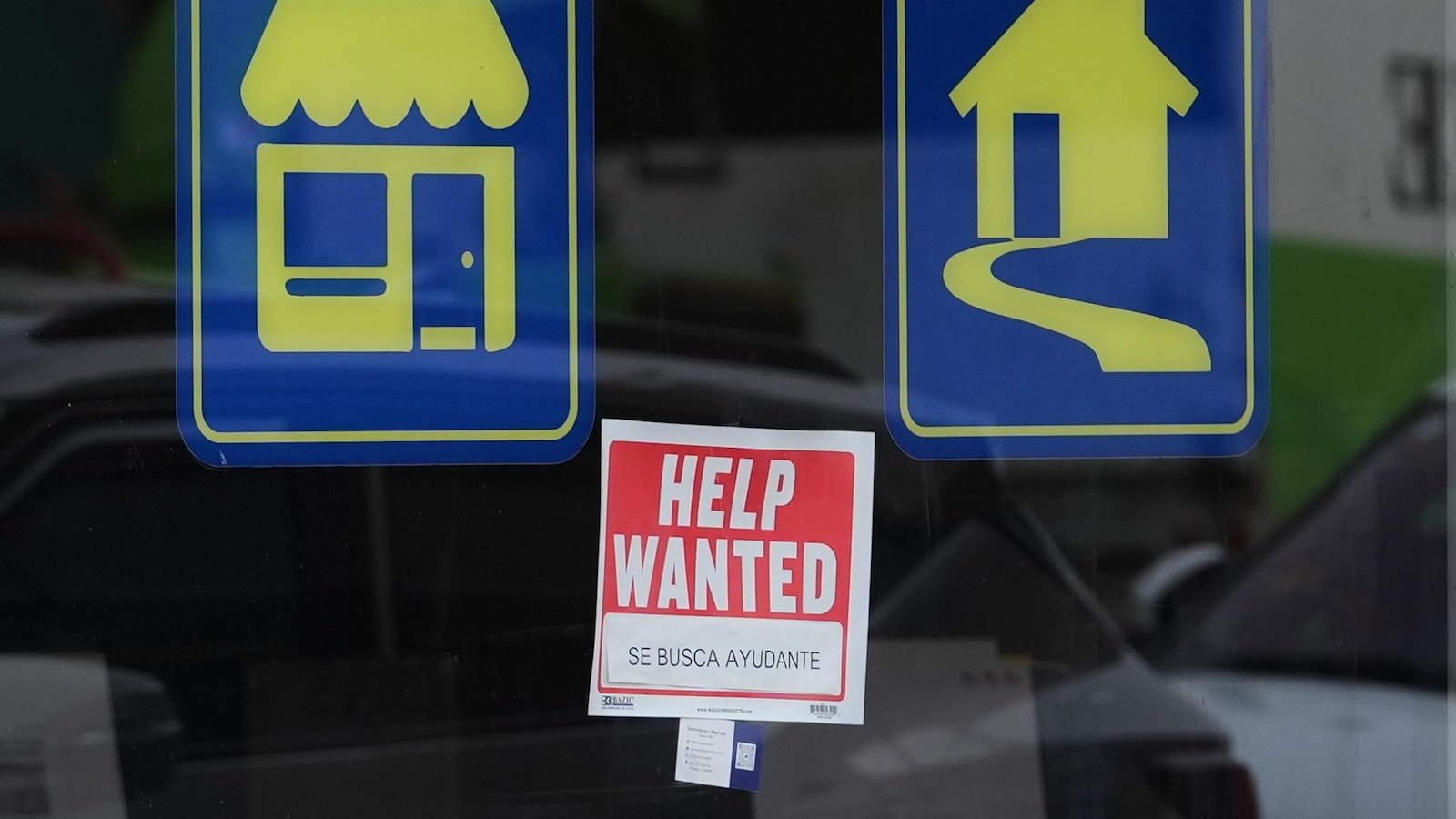

WASHINGTON — Last week, there was an increase in U.S. unemployment benefit applications, coinciding with the announcement of a two-week ceasefire agreement involving Iran, Israel, and the United States, which brought a slight sense of optimism amid ongoing global economic uncertainty.
According to a report from the Labor Department released on Thursday, the number of individuals seeking jobless benefits for the week ending April 4 rose by 16,000, reaching 219,000, compared to 203,000 the previous week. This figure surpassed the expectations of analysts from the data firm FactSet, who had forecasted 210,000 new applications, although it remains within the historical range observed over recent years.
Unemployment benefit applications are regarded as a reliable indicator of layoffs in the U.S. and provide insight into the current state of the job market.
The announcement of the ceasefire on Tuesday evening led to a significant drop in oil prices, which fell to $95 per barrel. However, prices rebounded to nearly $100 by early Thursday due to skepticism regarding the longevity of the agreement, especially after Israel conducted a series of strikes in Lebanon and Iran re-imposed restrictions on the vital Strait of Hormuz, through which 20% of the world’s oil shipments pass.
Financial markets experienced a downturn on Thursday following substantial gains the previous day.
Prior to the ceasefire announcement, the price of U.S. crude had surged to $112 per barrel, up from approximately $67 in the days leading to the outbreak of conflict. Despite the significant drop observed on Wednesday, businesses and consumers continue to face elevated energy costs as oil and gas prices remain high.
This situation arises as U.S. inflation rates are already exceeding the Federal Reserve’s 2% target, thereby reducing the likelihood of any imminent interest rate cuts by central bank officials. The government is set to release its consumer price report for March on Friday.
Additionally, a report that was postponed due to a government shutdown revealed that a crucial inflation measure remained high in February, prior to the military actions taken by the U.S. and Israel against Iran.
Fed officials had previously voted to raise interest rates three times to approach the end of 2025, citing concerns over a weakening job market, but they have refrained from making further cuts this year.
Last week, the Labor Department disclosed that U.S. employers added a surprising 178,000 jobs in March, which helped to decrease the unemployment rate to 4.3%. This followed an unexpected loss of 92,000 jobs in February. Revisions have also indicated a reduction of 69,000 jobs from payrolls in December and January, reflecting ongoing challenges in the labor market.
Several prominent companies have recently announced layoffs, including Oracle, which reportedly let go thousands of employees last week. According to the Wall Street Journal, The Walt Disney Co. is planning to reduce its workforce by 1,000 positions.
Other companies that have announced job cuts include Morgan Stanley, Block, UPS, and Amazon.
Weekly applications for jobless benefits have stabilized within a range of 200,000 to 250,000 since the U.S. economy began recovering from the pandemic recession. However, hiring has been slowing for about two years and has further diminished in 2025 due to the unpredictable tariff policies of former President Donald Trump, his reduction of the federal workforce, and the ongoing impacts of high interest rates aimed at curbing inflation.
Data from FactSet reveals that employers added fewer than 200,000 jobs last year, in stark contrast to around 1.5 million in 2024.
The American labor market seems to be in what economists describe as a state of “low-hire, low-fire,” which has helped maintain a historically low unemployment rate, but has left many individuals without jobs struggling to secure new employment.
The report from the Labor Department on Thursday indicated that the four-week moving average of jobless claims, which smooths out some of the weekly fluctuations, increased by 1,500 to 209,500.
Moreover, the total number of Americans filing for unemployment benefits for the week ending March 28 fell by 38,000, totaling 1.79 million, marking the lowest level in nearly two years.