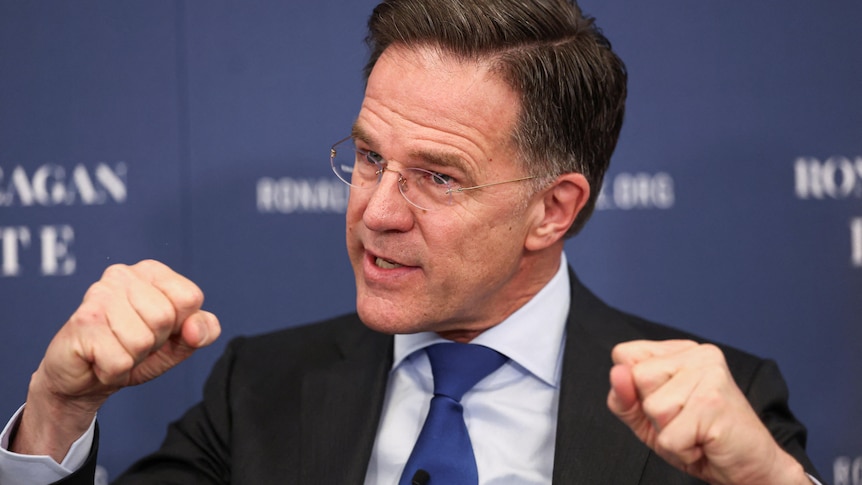

NATO Secretary General Mark Rutte has emphasized the crucial contributions of European nations and other U.S. allies in bolstering American military efforts, particularly in light of criticisms from former President Donald Trump. Trump has disparaged the alliance as a “paper tiger,” expressing dissatisfaction with the lack of support from member countries during U.S. military actions against Iran.
Following a candid discussion with President Trump, Rutte stated that it is essential for Australia and other allies to engage in securing the Strait of Hormuz as the peace process advances to its next stage. He defended NATO against Trump’s escalating verbal attacks, asserting that European allies are fulfilling their commitments to support the U.S.
Rutte pointed out that both NATO member states and other partners, including Australia, are prepared to take on a larger role in safeguarding the critical Strait of Hormuz. Despite Trump’s repeated claims that the alliance is ineffective, Rutte highlighted that European nations are increasing their investment in defense capabilities to ensure the alliance remains effective.
He acknowledged that while European allies have been providing substantial logistical support, some were slow to respond when the U.S. sought assistance in Iran. Rutte remarked that the unexpected outbreak of hostilities caught many allies off guard, complicating their ability to contribute effectively. He noted that the U.S. decision to maintain operational secrecy limited the opportunity for prior coordination.
With a tentative ceasefire between the U.S. and Iran seemingly holding, Rutte affirmed that NATO and its allies must collectively participate in the next phase of addressing the situation in the Strait of Hormuz. He stated, “This is why we have allies and coalitions,” emphasizing that this effort includes nations such as Japan, South Korea, and Australia.
On the same day, Admiral David Johnston, Australia’s Chief of Defence, confirmed that the Australian Navy stands ready to deploy a warship to the Strait of Hormuz if needed. German Chancellor Friedrich Merz expressed to Trump that Germany is also willing to assist in securing the strait once a long-term ceasefire is established.
Australia, however, has refrained from direct military engagement against Iran, opting instead to provide support to Gulf states in their defense against Iranian drone and missile threats. Despite this, Trump has accused various allies, including Australia, of not doing enough to back U.S. operations.
Rutte also addressed concerns regarding potential U.S. troop withdrawals from European bases, which Trump has suggested might occur as a reaction to European nations’ lack of involvement in military actions against Iran. The NATO chief indicated that any troop realignments would align with Trump’s desire for European nations to enhance their defense spending while the U.S. shifts its focus to the Indo-Pacific region.
Chancellor Merz reiterated the importance of U.S. participation in NATO during a conversation with Trump, expressing his hope to prevent any division within the alliance. He asserted that NATO remains a cornerstone of security for Europe, urging the U.S. to pursue diplomatic discussions with Iran swiftly.
In a related development, Trump reignited a longstanding dispute over Greenland in a social media post, recalling NATO’s absence during key moments and suggesting it would not be there in the future. Greenland’s Prime Minister Jens-Frederik Nielsen responded by urging NATO allies to uphold international law, affirming that Greenland is home to a proud population committed to being responsible global citizens. He highlighted the significance of preserving the post-war geopolitical order and the NATO alliance amid current challenges.