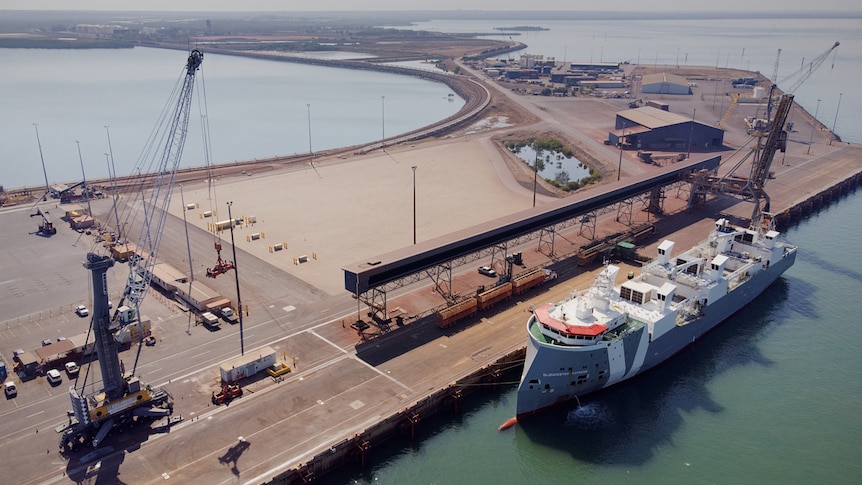

Over 1,000 small fish have perished at the East Arm Wharf of Darwin Port due to acidic runoff from a nearby iron ore stockpile contaminating a stormwater pond.
The Northern Territory’s environmental authority has stated that the broader implications for Darwin Harbour are not expected to be significant.
In response, authorities are collaborating with the port’s management to ensure that their environmental practices are robust and effective.
This incident, which took place on March 30, was reported by the port’s operator after the discovery of numerous dead oxeye herring in one of the stormwater containment ponds at East Arm Wharf.
Darwin Port confirmed that water quality tests indicated that the deaths were due to the release of acidic water from the iron ore stockpile during heavy rainfall.
According to the report, no other fish appeared to be affected, and the deceased fish measured approximately 50 millimeters in length.
Rhys Jones, the acting chief executive, expressed that prompt action had been initiated to address the unfortunate incident affecting the aquatic life in the affected pond.
The source of the contamination was identified as an iron ore stockpile managed by AG River Energy, a mining company based in South Australia.
Owned by Yonggang Shan, AG River Energy is engaged in an iron ore project located at the former Peko mine site, situated 10 kilometers east of Tennant Creek. Mr. Shan also has interests in various iron ore operations across South Australia.
In its statement, AG River Energy acknowledged the incident at Darwin Port and confirmed its willingness to cooperate with the ongoing investigation.
The company added that the findings from the investigation would inform any necessary additional measures to prevent future occurrences.
Simultaneously, the NT Environmental Protection Authority (EPA) announced its commitment to working alongside Darwin Port to enhance its environmental control protocols.
The stormwater ponds are designed to collect excess runoff, which can eventually flow into the adjoining Darwin Harbour, as per an environmental planning document released by the port’s operator.
However, the EPA assured that the environmental risk was “extremely low,” indicating that the acidity levels in the pond returned to normal due to dilution following the fish deaths.
Adele Pedder, manager of the local environmental group Keep Top End Coasts Healthy, remarked on the fortunate circumstance that the pollution did not extend into the harbour.
“We are not always so fortunate, as the historical context of Darwin Harbour illustrates,” she noted. “Industrial activities inherently pose risks, and the harbour has faced more than its fair share.”
Oxeye herring, which are also known as tarpon, possess the ability to survive across a broad range of pH levels, according to the Fishes of Australia database, which is backed by the Commonwealth.
Darwin Port is operated by Landbridge, which manages both the commercial wharf facilities at East Arm and the cruise ship terminal at Fort Hill Wharf, located closer to the city center.