
Leaders in Pakistan were nearing a state of despair as the situation escalated. Following over two weeks of intense negotiations, calls, and diplomatic meetings aimed at quelling the US-Israeli conflict with Iran, the potential for resolution seemed to be fading, raising alarm about a possible worst-case scenario for Islamabad.
During a cabinet meeting on Tuesday evening, Prime Minister Shehbaz Sharif expressed his concerns, stating, “We must prepare for the consequences of this war. The outlook is quite grim, and the prospects for peace are diminishing.”
Earlier that day, optimism for a ceasefire had significantly waned. Israeli airstrikes had severely impacted an Iranian gas facility, while Iranian retaliatory strikes hit a key petrochemical site in Saudi Arabia, escalating tensions and raising fears that Saudi Arabia might enter the conflict. In response to what they deemed a “dangerous escalation,” the leadership of Pakistan’s military issued a stern public statement, criticizing Tehran for undermining peace efforts.
In the United States, former President Donald Trump intensified his rhetoric, issuing a dire ultimatum that threatened the destruction of Iran’s infrastructure if they did not comply with his ceasefire demands by the end of the day.
For Pakistan’s government and military, which effectively governs the country, facilitating a resolution to the conflict was not merely a matter of international standing; it was crucial for the nation’s economy, defense, national security, and sectarian stability. A newly signed defense agreement with Saudi Arabia implied that if Riyadh entered the fray, Pakistan would inevitably be drawn in as well. “We were in a very precarious situation and urgently needed negotiations to commence,” remarked a government official.
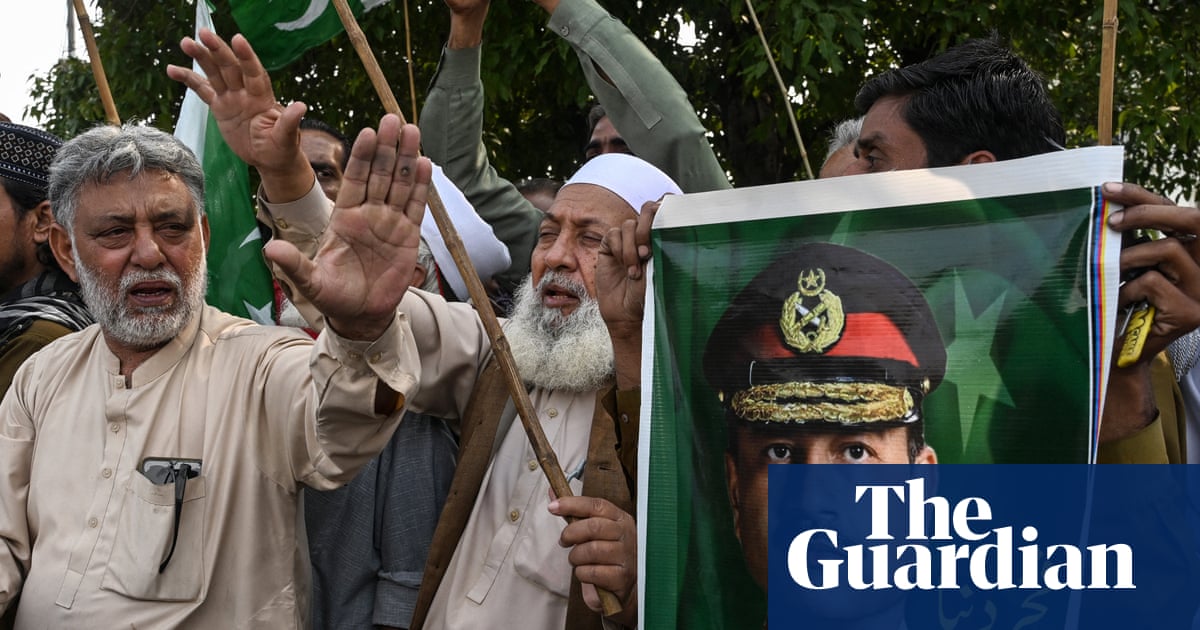
Behind the scenes, Army Chief Asim Munir and Asim Malik, head of military intelligence and national security adviser, were actively engaged in negotiations. Munir was in a unique position to act as a mediator, having developed strong personal ties with Trump and a longstanding rapport with Iran’s Revolutionary Guards.
In a confident press briefing at the White House on Wednesday, US Secretary of Defense Pete Hegseth claimed that Iran had “pleaded” for a ceasefire.
However, Pakistani officials offered a different perspective, asserting that both parties were inclined towards ending hostilities, but the primary impetus for a ceasefire came from Trump, who found himself “trapped” in a conflict he had initially believed would be short-lived.
Throughout the day, numerous calls ensued—primarily between Munir and Malik, along with Trump, Secretary of State Marco Rubio, Vice President JD Vance, and US Special Envoy Steve Witkoff on one side, and senior Iranian officials including Parliamentary Speaker Mohammad Bagher Ghalibaf and Foreign Minister Abbas Araghchi on the other. Sharif also reached out to the Iranian leadership and Saudi Crown Prince Mohammed bin Salman.
By Tuesday evening, Iran remained hesitant to agree to a ceasefire, harboring skepticism about the Trump administration’s intentions, fearing it might be a ruse for further military action.
Significantly, a new influential player entered the fray: China. Previously cautious about becoming embroiled in the conflict, China began to take a more active role as the war’s economic ramifications began to affect its own interests.
Just over a week prior, Pakistan’s Foreign Minister Ishaq Dar had visited Beijing to discuss avenues for peace in the Middle East and to solicit greater Chinese involvement in resolving the conflict.
In a notable shift, Pakistani officials indicated that “friendly nations” had persuaded China to make a crucial intervention in the negotiations. “Pakistan had to engage China to urge Iran towards a ceasefire,” noted one official.
By 8 PM, a more positive atmosphere enveloped Sharif’s cabinet meeting. “A glimmer of hope has emerged for negotiations and a ceasefire,” he announced, crediting Munir for facilitating a breakthrough.
Reports suggested that China had directly encouraged Iran to accept a ceasefire, assuring Iranian leaders of their safety during potential negotiations and guaranteeing that there would be no targeted assassinations if they attended the talks.
“We acted as the mediator, not the guarantor,” stated a Pakistani official. “China took on the role of the guarantor for the ceasefire, assuring that the US would uphold the agreement and that discussions would progress smoothly in Islamabad. They urged Iran to accept the proposed deal.”
Pakistani officials claimed that the US was aware of and supported China’s involvement. Trump later seemed to corroborate this narrative in an interview, suggesting that he believed China had played a role in persuading Iran to engage in negotiations.
By 4 AM in Islamabad, a ceasefire agreement—though temporary and fragile—was reached between the US and Iran. Michael Kugelman, a South Asia expert at the Atlantic Council, described this achievement as Pakistan’s “greatest diplomatic triumph in years.”
On Wednesday, Sharif celebrated the ceasefire as a “historic moment” for Pakistan and a “first step” toward achieving lasting peace. He confirmed that peace talks involving both the US and Iran would take place in Islamabad on Friday, with the Serena Hotel being prepared as the venue. An Iranian source indicated that Ghalibaf and Araghchi would represent Tehran in the discussions.
Despite the progress, Pakistani officials privately expressed concerns that Israel and the United Arab Emirates might attempt to undermine the peace process, particularly since Israel had indicated that Lebanon was not included in the ceasefire agreement, and trade through the Strait of Hormuz remained a contentious issue.