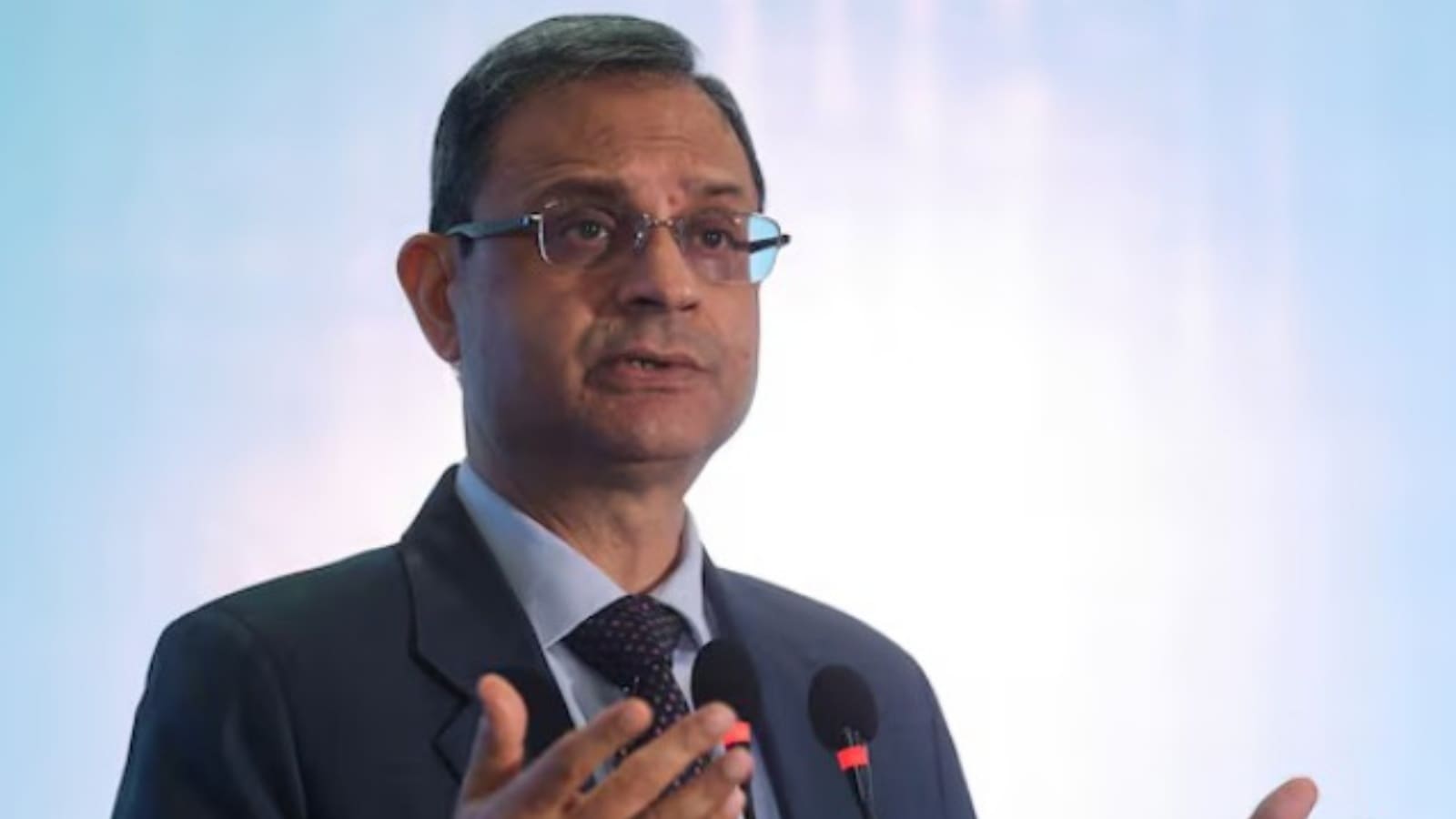

The Reserve Bank of India (RBI) maintained its key policy rate, the repo rate, at 5.25% during a meeting of its Monetary Policy Committee (MPC) on Wednesday. This decision reflects a cautious strategy in light of economic uncertainties stemming from the ongoing conflict in West Asia, which has created challenges for both inflation and growth forecasts, despite a recently agreed two-week ceasefire between the US and Iran.
RBI Governor Sanjay Malhotra noted in a press briefing that the ceasefire was factored into the monetary policy decision, though the full implications remain to be seen. The conflict has significantly impacted crude oil prices and caused broader energy supply disruptions following Iran’s closure of the Strait of Hormuz. This situation has intensified price pressures, leading to increased input costs and strained supply chains across various industries.
Although the Strait of Hormuz has reopened, concerns linger regarding the energy infrastructure of Gulf nations. Malhotra mentioned that the MPC believes the conflict’s intensity and duration have jeopardized energy and other infrastructure, ultimately affecting inflation and economic growth prospects.
Given these uncertainties, the RBI has adopted a more cautious outlook, projecting a decline in India’s GDP growth to 6.9% for FY27, down from 7.6% in FY26. Conversely, the central bank anticipates that headline retail inflation will average 4.6% this fiscal year, an increase from the 2% average seen in FY26. While growth forecasts carry downside risks, inflation projections are now seen as having upward risks.
Malhotra emphasized that the risks to the inflation outlook have escalated, citing elevated energy prices and potential disruptions in input availability due to the Strait of Hormuz situation, which could adversely affect growth in FY27.
The RBI has revised certain assumptions underlying its growth and inflation predictions. It now estimates that the price of India’s crude oil basket will average $85 per barrel in FY27, a significant increase from the previous projection of $70 per barrel made in October 2025. In March, the crude oil basket price surged by 64% from February to reach $113 per barrel after remaining below $70 for seven consecutive months. By early April, the average price had further climbed to $129 per barrel, according to data from the petroleum ministry.
In terms of the exchange rate, the RBI expects the rupee to average 94 per dollar for the current fiscal year, a revision from the earlier assumption of 88 per dollar for the latter half of FY26. The delay in finalizing the India-US trade deal triggered foreign investment outflows, causing the rupee to weaken beyond 90 and 91 per dollar in December. A second wave of risk aversion related to the conflict further caused the rupee to drop past 92, 93, 94, and 95 per dollar in March.
As of Wednesday, the rupee closed at 92.58 per dollar. Malhotra clarified that the RBI’s approach to exchange rate management remains unchanged, stating that interventions in the foreign exchange market are intended to mitigate excessive volatility rather than target a specific rate level. The governor reaffirmed the RBI’s commitment to a market-determined exchange rate policy while managing disruptive fluctuations to prevent self-fulfilling expectations from exacerbating currency movements.
Regarding the RBI’s recent measures to discourage speculative trading against the rupee, Malhotra indicated that these measures would not be permanent. When questioned about potential future rate hikes, he mentioned the evolving nature of risks, making it challenging to provide clear predictions.
Keeping the policy rate steady at 5.25% is likely to provide significant relief to borrowers across various sectors. A stable repo rate generally means that lending rates from banks and financial institutions are unlikely to increase shortly. Consequently, monthly payments on loans—whether for homes, vehicles, personal needs, corporate financing, or small businesses—are expected to remain stable. Deposit rates are also anticipated to hold steady for the time being.
By maintaining the current rates, the MPC signaled its intention to closely monitor economic conditions before making further adjustments, ensuring a stable environment for both borrowers and lenders. Lavanya Venkateswaran, Senior ASEAN Economist at OCBC Bank in Singapore, expressed the expectation that the RBI will keep the policy rate unchanged at 5.25% throughout FY27.
Throughout his address, Malhotra emphasized the term ‘fundamentals,’ arguing that macroeconomic fundamentals are currently stronger than in previous crisis situations and relative to many other economies, which enhances resilience to shocks. He also pointed out that high-frequency indicators up to February indicate robust economic activity momentum.