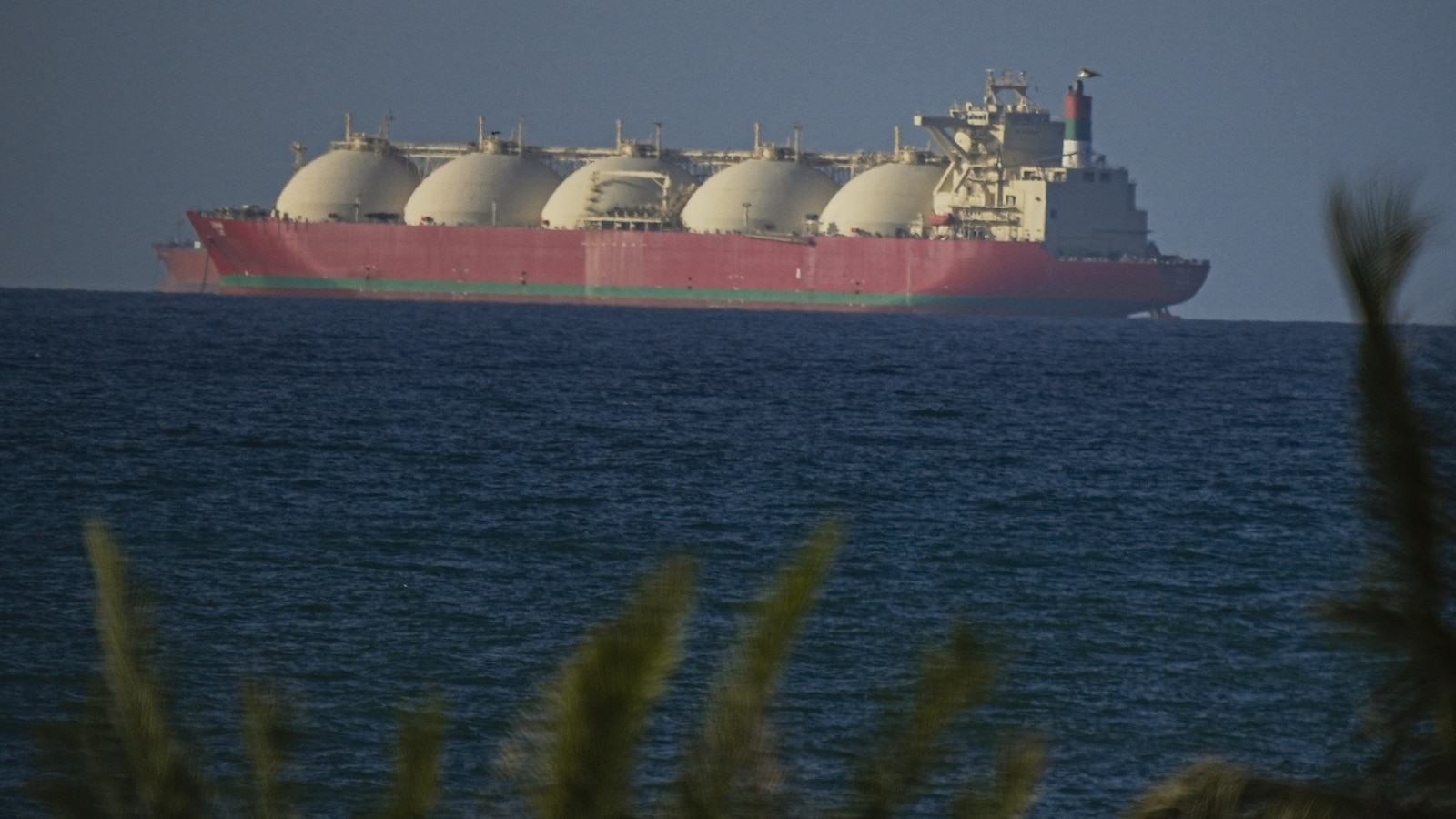

Following a statement from Secretary of Defense Pete Hegseth and General Dan Caine, the Chairman of the Joint Chiefs of Staff, declaring the reopening of the Strait of Hormuz under a ceasefire agreement, Iran contradicted this by announcing its closure of the strait, attributing the situation to Israel’s alleged breach of the terms.
This ceasefire, established late Tuesday night just prior to a deadline set by President Trump, is contingent upon Iran reopening this crucial maritime route for trade and oil shipments before dialogue for peace can commence.
On Wednesday, after permitting a few vessels, including two oil tankers, to navigate through the Strait of Hormuz, Iran claimed it had reclosed the passage. This decision was justified by accusations that Israel had violated the ceasefire by executing a significant military operation against Lebanon, as reported by Iran’s Far News agency, which is linked to the Islamic Revolutionary Guard Corps (IRGC).
Iran’s Foreign Minister, Abbas Araghchi, expressed on social media that the terms of the Iran-U.S. ceasefire are unambiguous: the U.S. must decide between pursuing peace or continuing hostilities through Israel, stating, “It cannot have both.” He highlighted the ongoing violence in Lebanon, emphasizing that the responsibility now lies with the U.S. to fulfill its obligations.
Araghchi also referenced a social media post from Pakistan’s Prime Minister Shehbaz Sharif, which included a statement affirming that both Iran and the U.S. had consented to an immediate ceasefire across all conflict zones, including Lebanon.
The IRGC issued a warning to both Israel and the U.S. on Wednesday, asserting that any further attacks on Lebanon would prompt a severe retaliation.
In light of Israel’s actions against Lebanon, Prime Minister Sharif reiterated the need for all parties to adhere to the ceasefire, as any violations undermine the peace process. He urged restraint and compliance with the agreed-upon ceasefire duration of two weeks to foster diplomatic efforts toward a resolution.
During a telephone interview with PBS, President Trump clarified that Lebanon was not encompassed within the ceasefire agreement, pointing out that Hezbollah, which is backed by Iran, has initiated attacks from Lebanese territory against Israel. White House Press Secretary Karoline Leavitt reinforced this position during a briefing, stating that Lebanon is excluded from the ceasefire, a message communicated to all involved parties.
Iran’s Parliament Speaker, Mohammad Bagher Ghalibaf, charged the U.S. with breaching the proposed ceasefire framework outlined in Iran’s 10-point peace initiative, citing three specific violations: Israel’s attack on Lebanon, unauthorized incursions into Iranian airspace by drones, and the restriction on Iran’s uranium enrichment rights. Ghalibaf remarked on the historical distrust between Iran and the U.S., attributing it to a pattern of repeated breaches of commitments.
Earlier in the day, Hegseth affirmed that the strait was indeed open, emphasizing the military’s vigilance over the situation. He remarked on the positive market reaction to the reopening and stated that international commerce would continue to flow.
In response to an inquiry on the status of the strait, Caine confirmed the diplomatic negotiations indicating it was open. President Trump, in a social media post late Tuesday, had indicated that Iran had agreed to a “COMPLETE, IMMEDIATE, and SAFE OPENING of the Strait of Hormuz” and added that the U.S. would assist in managing shipping traffic in the area.
Hegseth noted that the United States does not heavily rely on the strait for oil transport, but urged the global community to ensure its accessibility, crediting President Trump and the Defense Department for the current situation of Iran’s voluntary reopening.
In his statement on Tuesday night, Araghchi confirmed Iran’s acceptance of a ceasefire and the submission of a 10-point counterproposal for a broader peace agreement. He indicated that if hostilities against Iran ceased, the nation’s armed forces would also halt their defensive operations, allowing for safe passage through the Strait of Hormuz in collaboration with Iran’s military, while acknowledging unspecified technical limitations.
Hegseth commented on the challenges Iran faces in coordinating its military effectively due to significant operational setbacks. Meanwhile, Vice President JD Vance characterized the ceasefire as a “fragile truce” during a news conference in Hungary, detailing that both the U.S. and its allies had agreed to cease attacks.
Shipping analyst Ed Finley-Richardson noted that prior to Iran’s announcement regarding the ceasefire violation, there was a sense of optimism among shipowners, who were making arrangements to navigate through the Strait. However, this optimism dissipated swiftly with Iran’s reclosure of the strait, which had initially encouraged shipping activity for the first time since the onset of the conflict.