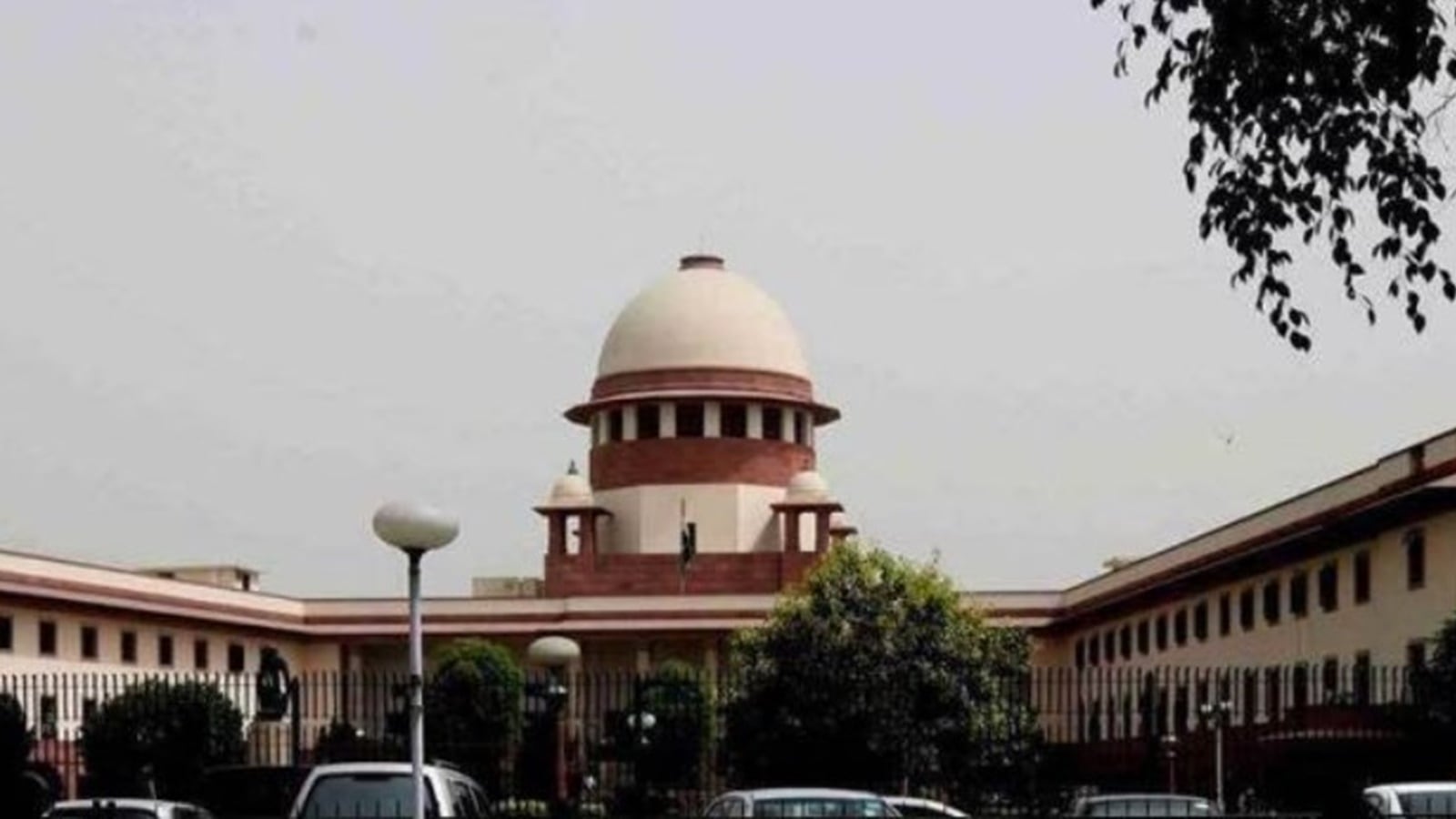

The Supreme Court of India is scheduled to continue hearing a contempt petition on Thursday, which addresses the alleged inaction of two senior IAS officials from Uttar Pradesh regarding unlawful constructions in Meerut’s Central Market. This follows an inquiry into their failure to comply with a court directive that prohibits the regularization of illegal buildings.
A bench comprising Justices J B Pardiwala and K V Viswanathan will evaluate the contempt petition concerning the Uttar Pradesh Awas Evam Vikas Parishad’s lack of action in demolishing unauthorized commercial structures located in residential areas of the Central Market.
During a session on Monday, the justices instructed that 44 of these illegally constructed properties be sealed promptly. In a ruling from December 2024, the Supreme Court emphasized that illegal constructions cannot be legitimized, regardless of their duration or the investment made in them.
The court noted, “We have been informed that all these plots were initially designated for residential use. Some of these plots had residential buildings constructed on them, but over time, unauthorized extensions were added to facilitate commercial activities. It is undisputed that no approvals for these additional constructions were granted, nor were any permissions sought, and there was a general disregard for these unlawful activities,” the bench remarked.
The justices questioned former Meerut commissioner Hrishikesh Bhaskar Yashod, who appeared in response to the contempt motion, regarding his directive from October 27, 2025, which stated that shops in the Central Market area would not be demolished.
On April 2, the court also interrogated P Guruprasad, the Chairperson of the Uttar Pradesh Awas Evam Vikas Parishad, on the same issue.
In a statement on April 6, Yashod clarified, “No formal order was issued on October 27, 2025; it was merely a review concerning the demolition of a structure.”
However, the bench, having reviewed the minutes from the meeting, indicated that there was a clear directive within those minutes stating that the other shops in the Central Market would not face demolition at that time.
The bench highlighted that the order from October 27, 2025, stipulated that the area would be designated as a market/street through an amendment to the Master Plan, contingent upon the payment of land use conversion fees and compliance with setback regulations, and that the Awas Evam Vikas Parishad was to submit a proposal within three days.
Justice Pardiwala pressed Yashod, asking, “Would you classify this as Minutes/Review or an official order?”
The court criticized Yashod’s actions, describing them as “extremely regrettable,” and expressed disapproval, stating that his behavior amounted to a blatant disregard for the court’s order.
When questioned about his decision to not proceed with the demolitions, Yashod cited “public outcry” following a previous demolition, a justification that did not sit well with the bench.
Justice Pardiwala responded, “Do you yield to the pressures of encroachers, or do you uphold the rule of law? As a public servant, you are expected to enforce the law. Our democratic system relies on the rule of law. Why did you give in to external pressures?”
The judge suggested that if Yashod faced any challenges in executing the court’s order, he should have returned to seek clarification from the court.
On April 2, after hearing further arguments, the court requested an affidavit regarding the illegal constructions.
After reviewing details about 44 out of 859 properties, the bench expressed its alarm, stating, “The statistics are shocking and deeply troubling.” They remarked, “The data presented is startling and illustrates the authorities’ negligence over time. The rule of law has been overlooked.”
Moreover, the court highlighted that there are multiple schools and hospitals operating within these unlawful structures, questioning how they managed to secure electricity connections while functioning illegally.
Additionally, the court noted the presence of numerous banks operating from these unauthorized buildings, expressing concern over how these institutions could enter into lease agreements under such circumstances.