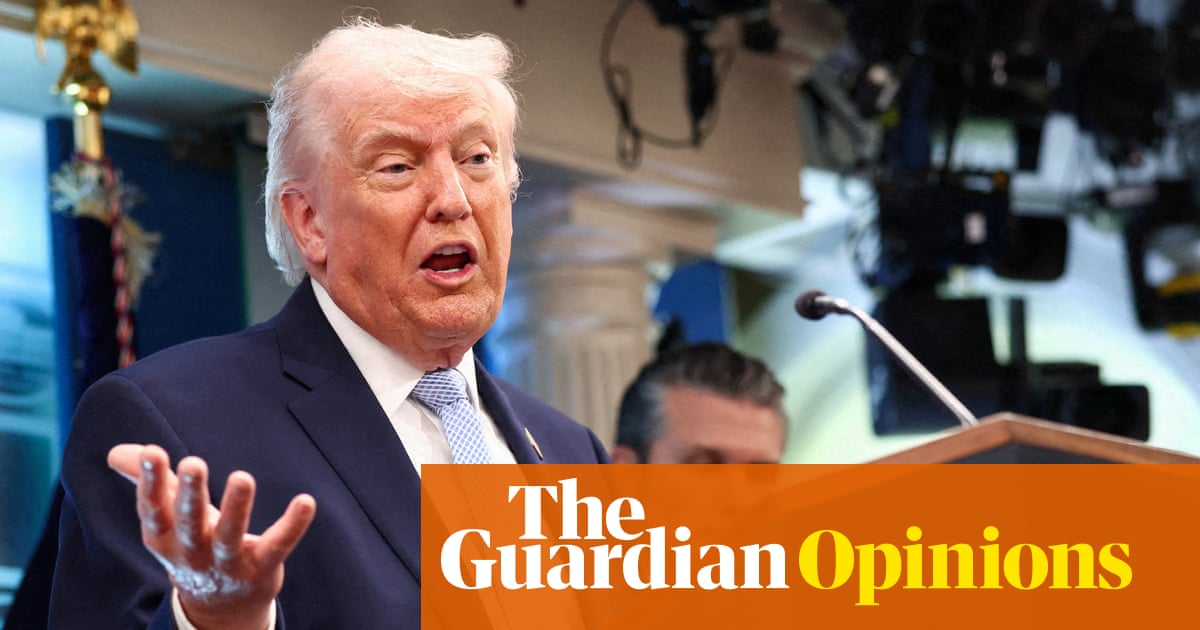

The Instability of President Trump. If you have not been living in isolation over the past few years, it is evident that the current American president exhibits a lack of intellectual capacity and displays troubling sociopathic tendencies. This troubling combination is dangerous. For instance, posting aggressive messages on social media, such as urging others to “Open the Strait or you’ll be living in Hell,” is not a sign of a stable individual, especially given the tense situation in the Middle East.
What may not be as obvious is that this chaotic behavior seems to have a contagious effect on those around him. The efforts to navigate this madness often lead to a shared sense of confusion, as individuals attempt to normalize clearly abnormal circumstances as part of their routine.
This phenomenon has been particularly evident during the recent two-week ceasefire, which has left many uncertain about its actual terms and has allowed Israel to continue its military actions in Lebanon under the guise of this so-called ceasefire.
Those in close proximity to Trump, particularly his White House aides, demonstrate the effects of his erratic behavior. When his advisors exhibit any semblance of rationality, it usually triggers Trump’s anxiety, often resulting in their dismissal. This dynamic leaves individuals like Secretary of Defense Pete Hegseth in a secure position, as he thrives in the realm of irrationality.
Just this past Wednesday, Hegseth was proclaiming the war a resounding success, despite the lack of regime change in Iran and the ongoing U.S. efforts to eliminate nuclear threats that were supposedly dealt with the previous year. He claimed, “No Americans have been put in harm’s way,” seemingly oblivious to the families grieving the loss of 13 service members in recent weeks, labeling the situation a “military victory.”
It is generally believed that Keir Starmer has managed to navigate the war situation relatively well, given the circumstances. He refrained from participating in a conflict of questionable legality and allowed British forces to engage only in defensive measures.
However, even Starmer is grappling with the ambiguous ceasefire situation. He remarked, “There is work to do,” which is an understatement given the uncertainty surrounding the ceasefire, which could change in a matter of hours. In Trump’s world, situations rarely remain stable for long. Just the day before, the U.S. president had issued threats of severe consequences against Iran.
Shortly after that, a ceasefire emerged, but its implications remained unclear, with many questioning its authenticity. Iran responded by proposing to impose fees on ships passing through the Strait of Hormuz, a notion that Trump quickly endorsed, suggesting the U.S. would also charge for passage. This shift is quite a change from a month ago when ships could navigate the strait freely.
Starmer and other NATO allies, with the notable exception of Spanish Prime Minister Pedro Sánchez, who criticized those who would applaud destructive actions, find themselves compelled to react to Trump’s decisions as if they were the actions of a rational leader. They are confronted with the uncomfortable reality that they must engage with his unpredictability, as they lack viable alternatives. A potentially flawed ceasefire is preferable to an ongoing conflict.
Consequently, Starmer has traveled to the Middle East with the aim of solidifying the ceasefire. However, this endeavor may also be somewhat performative, as the UK’s influence over the situation is limited.
While the UK can encourage successful negotiations at upcoming talks in Pakistan, the effectiveness of their appeals is uncertain. They can advocate for safe passage in the Strait of Hormuz, yet without naval presence in the region, enforcement remains impossible. The situation necessitates a form of engagement, however minimal, rather than inaction.
The chaos stemming from Trump’s leadership extends beyond his immediate circle, affecting other political figures as well. Kemi Badenoch, who initially supported the war, has recently attempted to reposition herself as a critic, despite her previous statements being available for scrutiny.
Badenoch’s behavior mirrors Trump’s in that she insists on a distorted perception of reality. The Conservative leader now chastises Starmer for lacking military strength, conveniently ignoring the role her party played in diminishing defense capabilities. She seems to believe military assets can be rapidly constructed.
Meanwhile, Nigel Farage recently downplayed his association with Trump, feigning ignorance about the U.S. president. This ironic disconnection comes from someone who has been closely aligned with Trump in the past, including a bizarre incident involving gold-painted candle holders as a gift. Farage now laments the deterioration of the U.S.-UK relationship, failing to recognize his own contributions to this decline and the difficulties inherent in dealing with a president who demands unwavering support.
The effects of this madness are pervasive and far-reaching, impacting all levels of the political landscape. Engagement with Trump, whether in support or opposition, complicates the ability to maintain a stable political environment. No one appears to be unaffected by the chaos that continues to unfold.