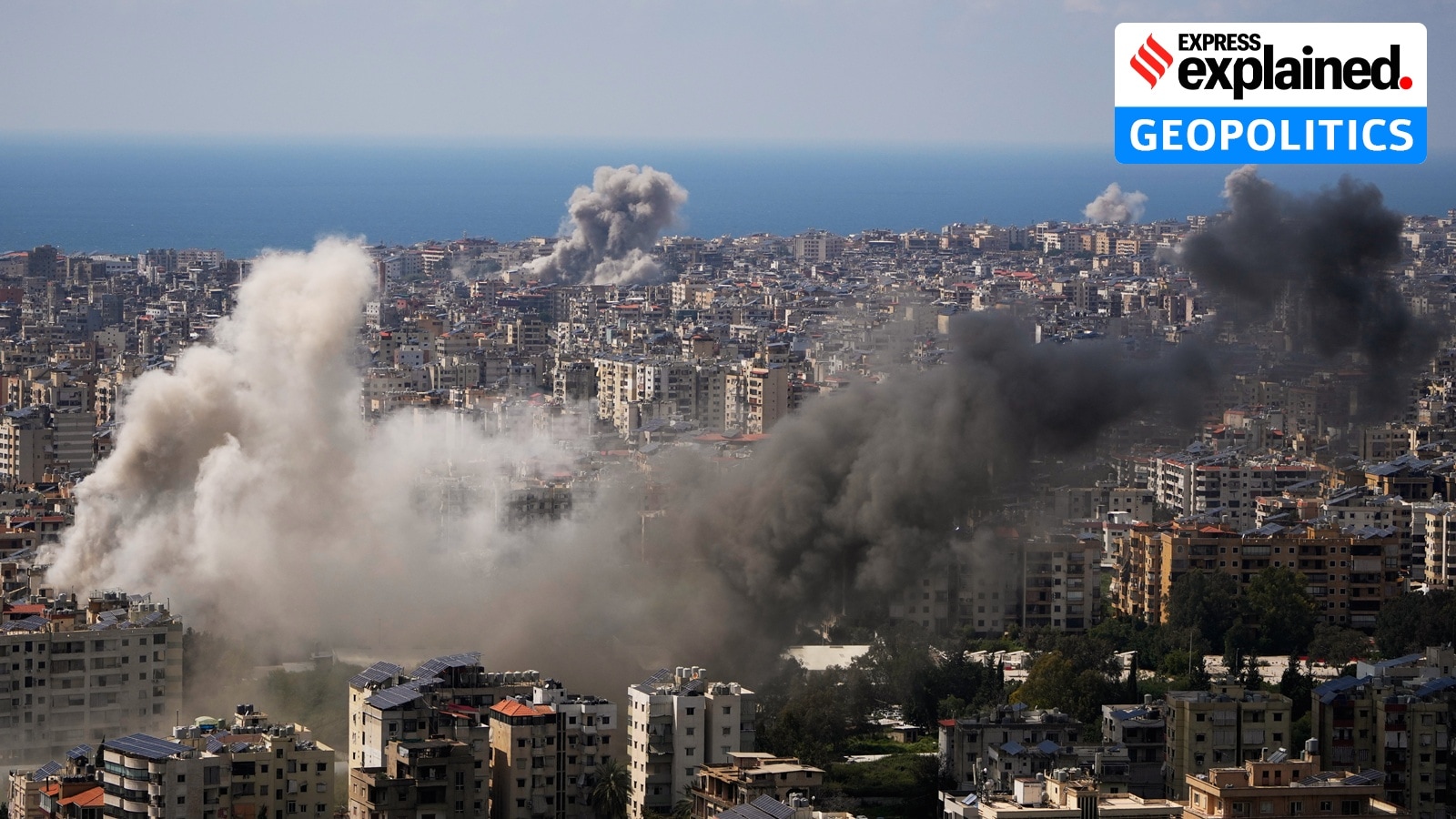

Shortly after the United States and Iran declared a ceasefire, Israel executed what its military described as “the largest coordinated strike across Lebanon,” targeting over 100 locations within a span of 10 minutes and resulting in approximately 250 fatalities. The fragile ceasefire has effectively collapsed due to these attacks, with Iran reportedly re-closing the Strait of Hormuz, while the U.S. maintains that halting operations in Lebanon was never part of the agreement.
The ceasefire was facilitated by Pakistan, with Prime Minister Shehbaz Sharif announcing on April 8 via social media that Iran and the United States, along with their allies, had consented to an immediate ceasefire effective immediately across all regions, including Lebanon.
However, Israeli Prime Minister Benjamin Netanyahu quickly responded, indicating that while Israel was in favor of the ceasefire, military actions against Lebanon would persist.
Iran’s Foreign Minister, Abbas Araghchi, later remarked on social media that the responsibility now lies with the U.S. to uphold its commitments, while the global community observes.
This raises the question of why Netanyahu continues to bombard Lebanon, potentially jeopardizing a ceasefire that his principal ally has just supported.
To grasp the rationale behind the Israeli airstrikes over Beirut shortly after the ceasefire announcement, one must consider the implications of the ceasefire for Netanyahu and its unpopularity among a significant portion of the Israeli populace.
The emerging agreement between Washington and Tehran appears to marginalize Netanyahu and undermine what he has identified as his primary objectives for military actions against Iran.
Netanyahu has outlined three main goals for his campaign against Iran: to prevent the development of nuclear weapons, to limit the advancement of ballistic missile technology, and to foster conditions that would enable the Iranian populace to overthrow the oppressive regime in power for nearly fifty years.
Despite these intentions, Iran retains substantial stockpiles of enriched uranium, which could potentially be utilized in nuclear weaponry, though Tehran consistently refutes such claims. Current estimates suggest that a significant portion of Iran’s missile capabilities remains intact, and some level of sanctions relief for Tehran seems probable. As noted by Israeli Opposition Leader Yair Lapid, the leadership of Ayatollah Khamenei has not fundamentally changed, with the same individual still in power but at a different age.
The ceasefire negotiations, initiated by former President Trump and the new Khamenei, seemingly did not involve Netanyahu. Upcoming discussions planned in Pakistan also appear to exclude a prominent role for the Israeli Prime Minister. In Lapid’s words, Israel has been regarded not as a strategic partner but rather as a “demolition contractor.”
As a result, the continued existence of the ceasefire does not align with Netanyahu’s interests. Additionally, with increasing criticism regarding his handling of the situation with Iran, achieving a decisive victory over Hezbollah in Lebanon has become increasingly vital for Netanyahu, especially with elections approaching later this year.
Historically, the conflict between Israel and Lebanon, particularly involving armed factions operating from Lebanese territory, has persisted for nearly fifty years. Israel has previously launched operations aimed at eradicating Hezbollah, albeit with limited success.
The 1982 invasion of southern Lebanon aimed to diminish the Palestine Liberation Organization’s influence, which had been using the area to launch attacks against Israel. This invasion culminated in an 18-year occupation, inadvertently leading to the formation of Hezbollah, which was established with Iranian support to expel Israeli forces. Upon Israel’s withdrawal in 2000, Hezbollah claimed a significant victory as the first Arab group to achieve a military success against Israel.
A subsequent conflict erupted in 2006, initiated by a Hezbollah ambush that resulted in the deaths of three Israeli soldiers and the capture of two others. Israel’s overwhelming military response resulted in over 1,000 Lebanese casualties and more than 150 Israeli fatalities, yet Hezbollah remained intact. This “defeat” sparked widespread anger in Israel, leading to the establishment of the Winograd Commission, which criticized the government for initiating the war without a coherent strategy—similar criticisms that Netanyahu faces today.
Following the 2006 conflict, both sides entrenched their positions, preparing for future confrontations. The latest escalation occurred in 2023, following Hamas’s attack on Israel on October 7, which allowed Israel to target and eliminate Hezbollah’s long-time leader, Hassan Nasrallah, alongside a significant portion of its senior command, severely impairing the group’s capabilities. A ceasefire, mediated by the U.S. and France, was reached in November 2024.
In March, following the assassination of Ayatollah Ali Khamenei, Hezbollah launched rockets into Israel, prompting a series of retaliatory strikes, indicating that the militia remains combat-ready.
Hezbollah operates primarily from southern Lebanon, from where it can launch rockets into northern Israel. Netanyahu’s administration has pledged to ensure that northern Israel feels secure.
After the recent U.S.-Iran ceasefire, Hezbollah expressed its intention to respect it; however, Israeli airstrikes have continued unabated.
On March 24, Israel’s Defense Minister, Israel Katz, stated that the country would occupy southern Lebanon up to the Litani River—approximately 30 kilometers north of the border—as a security measure against Hezbollah incursions.
The Lebanese government has sought direct ceasefire negotiations with Israel but has been met with rejection. Israel contends that previous ceasefire agreements mandated the disarmament of Hezbollah by the Lebanese state, which it believes has not been fulfilled, necessitating military action to achieve that objective.
In the meantime, civilian casualties have surpassed 1,000, with around a million people displaced. Many residents of southern Lebanon have fled to Beirut, which is also facing bombardment.
On Wednesday, France, Italy, and Spain condemned Israel’s military actions, with Italian Foreign Minister Antonio Tajani expressing a desire to avoid another conflict akin to the situation in Gaza.
However, Netanyahu is unlikely to alter his approach unless there is significant intervention from Trump, similar to the actions taken in June of the previous year when Israel targeted Iran following…